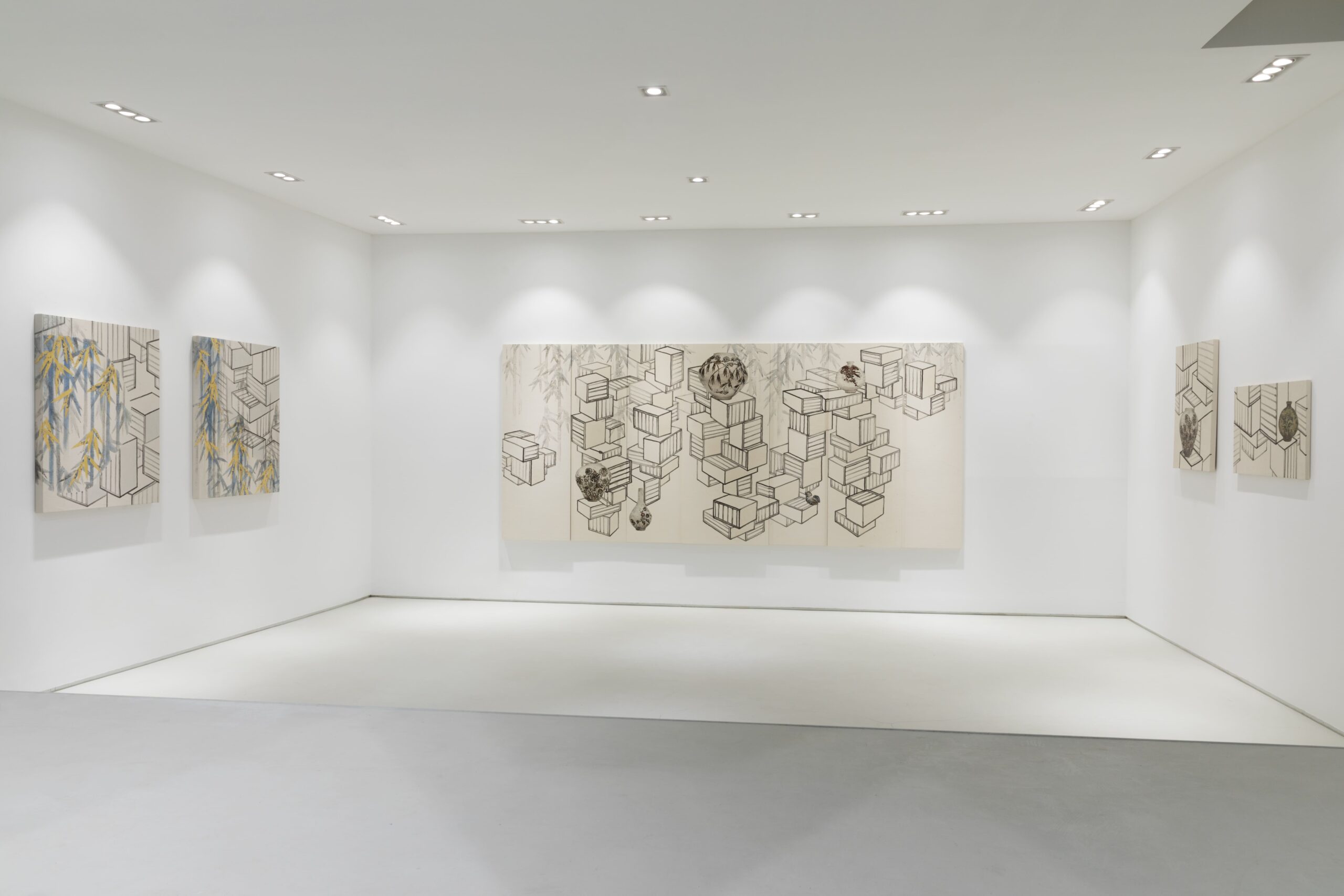
OMAE Gallery presents a solo exhibition by artist Kang-mi Kim, who offers an original reinterpretation of “Chaekgado,” a still-life painting style from the Joseon Dynasty that uses books as its subject, through a modern perspective.
The artist focuses on the inherent formal power and geometric essence of the historical composition known as chaekgado. It removes the classical chaekgado’s characteristic intense colors, decorative patterns, and iconography symbolizing immortality, leaving only the book and its protective cover, and outlines them with delicate, dense ink lines. As a result, a refined ink-wash world unfolds, blending vertical and horizontal grids with a pure abstract and geometric rhythm reminiscent of modernist minimalism.
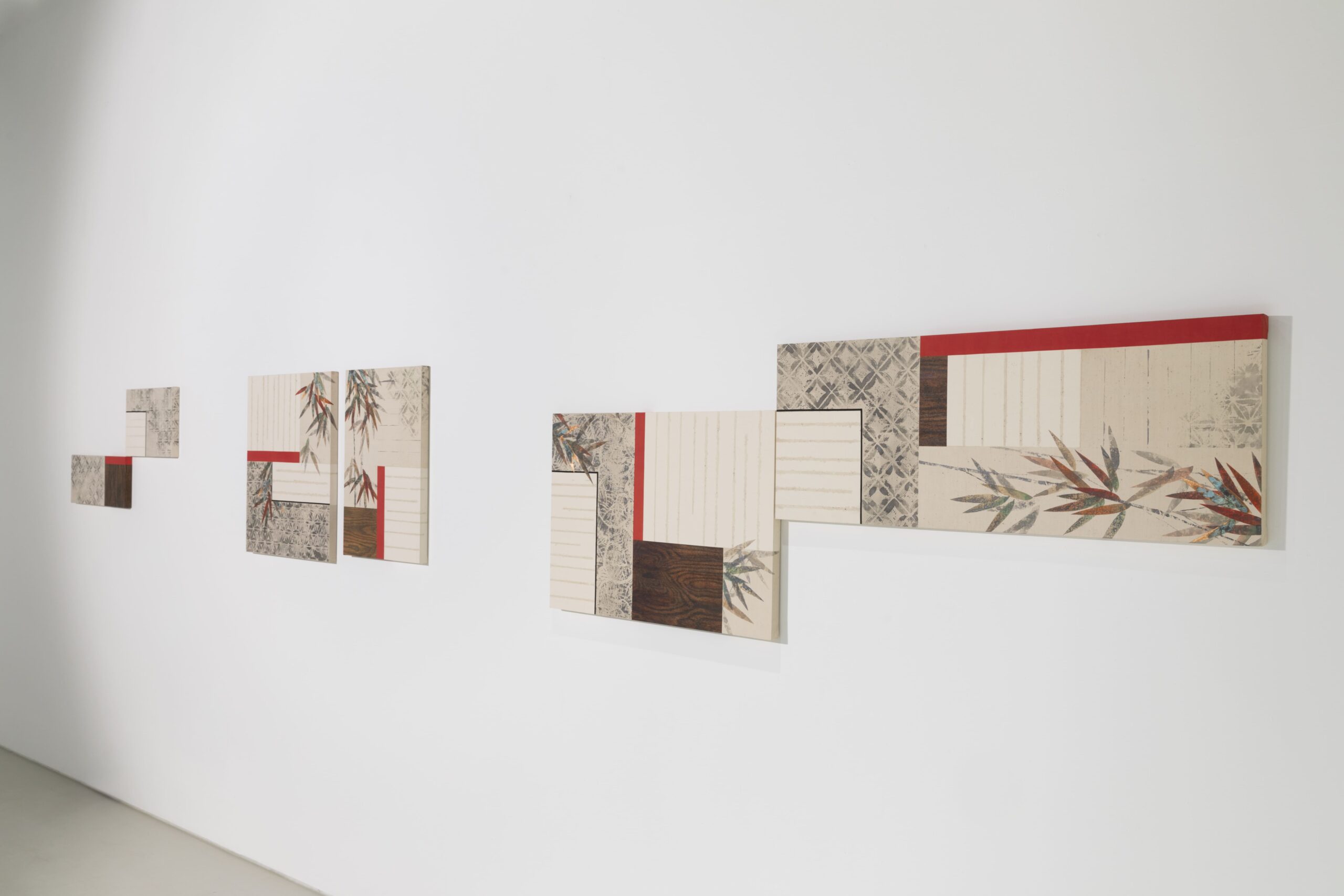
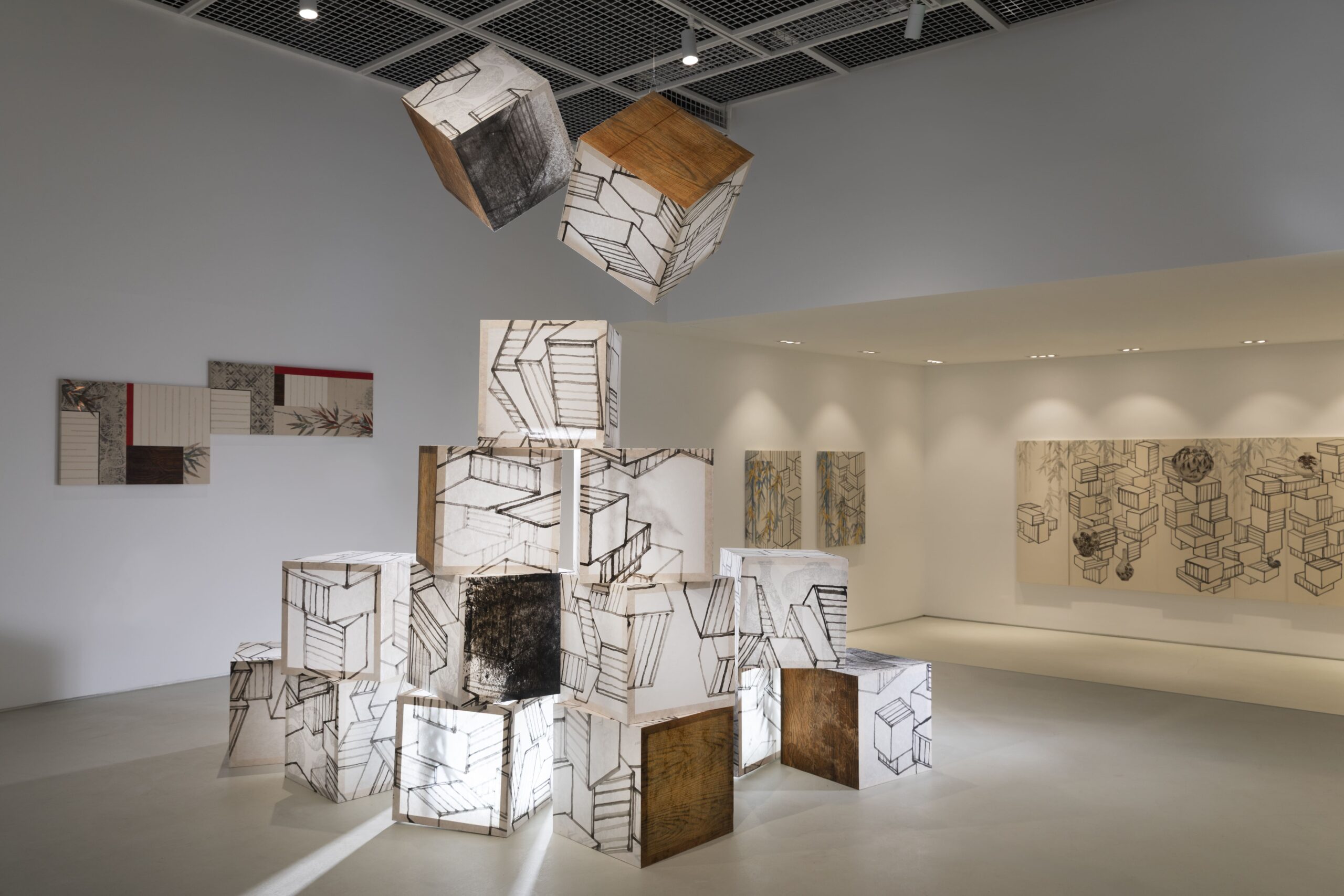
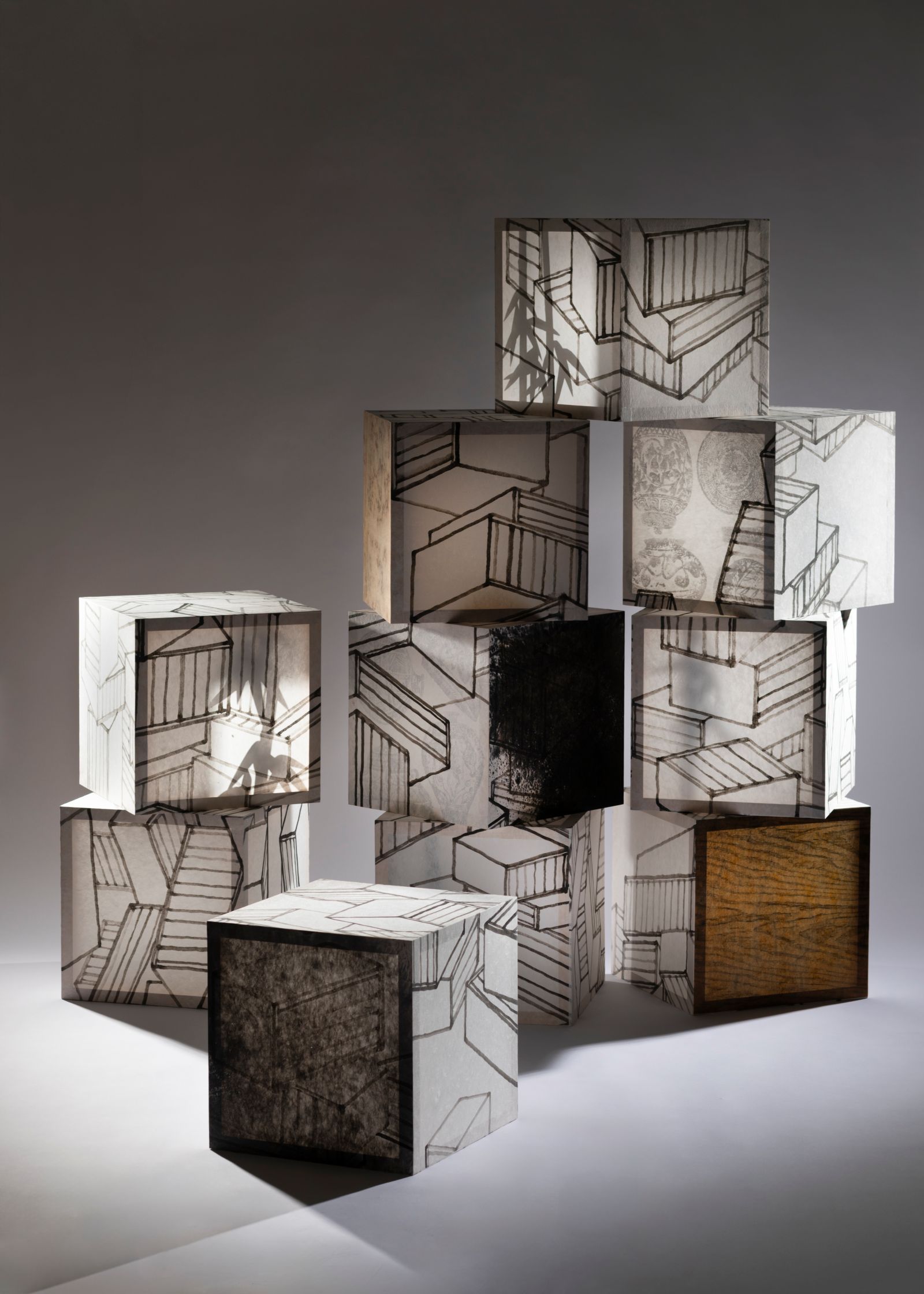
Kang-mi Kim’s work transcends the flatness of traditional painting and expands into three-dimensional space through an installation format that draws viewers into it. The hanging scrolls gently tilt downward, and by suspending the stacked books in midair as if they were a landscape, they break the conventional rectangular frame’s mold. On the floor, paper boxes wrapped in hanji paper hold drawings containing parts of the book, revealing a tactile presence that directly engages the gallery space. This spatial intervention encourages visitors to move through the space, and the physical presence of the visitors along with the shifting gaze reveal various perspectives, light, and time, dynamically bringing the work to life. What stabilizes the center of this linear composition is the three-dimensional bamboo structure attached to the wall.
In Eastern tradition, bamboo and books symbolized the ideals of the scholar, the voices of ancestors, and the pursuit of wisdom. However, in Kang-mi Kim’s artistic world, the striking black bamboo forms function as flexible “nodes” shaped through enduring hardship, expanding space into a place of introspective reflection. By combining the structural rhythm of chaekgado with the physical weight of bamboo, the artist bridges the aesthetic sensibility of Korean tradition with the language of modern space, offering serene contemplation and profound visual resonance.