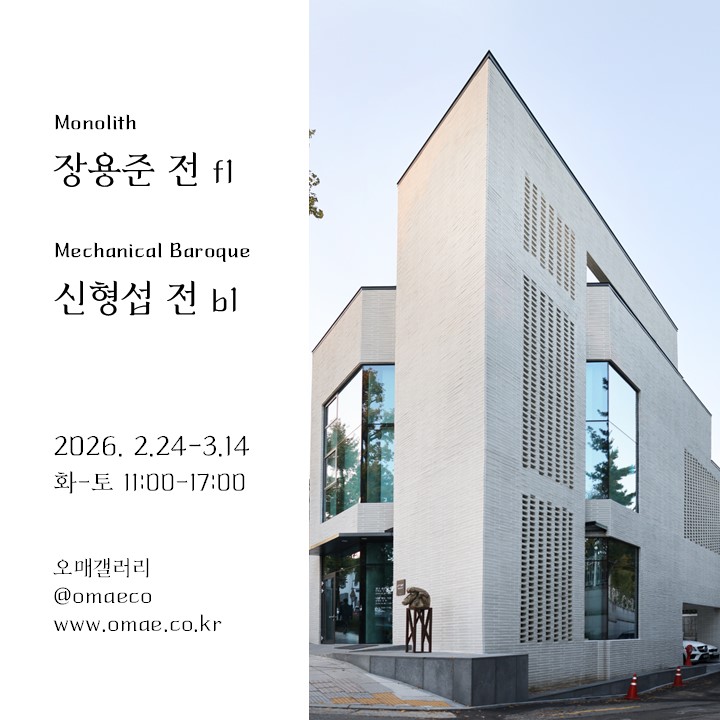
Mechanical Baroque


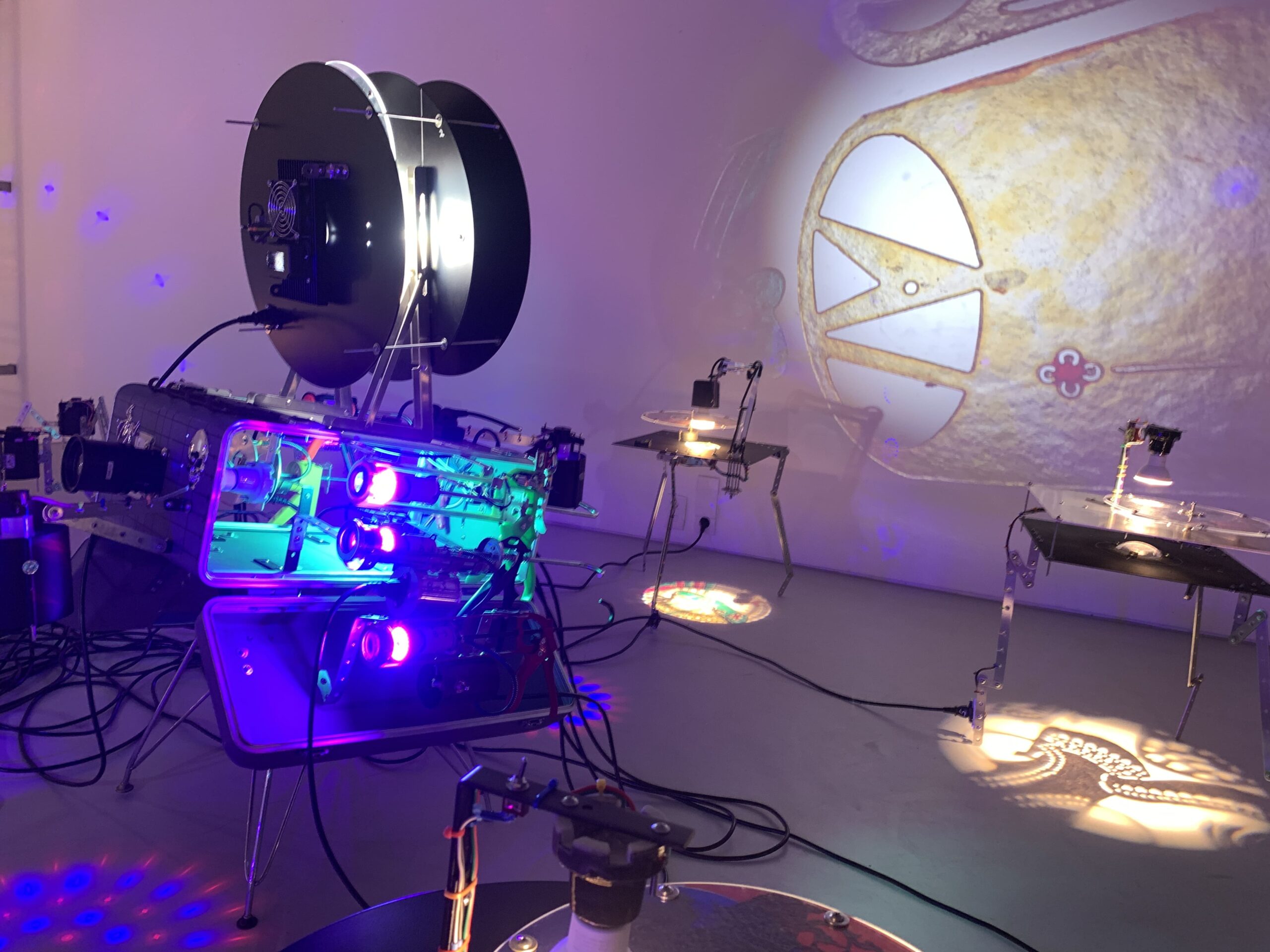
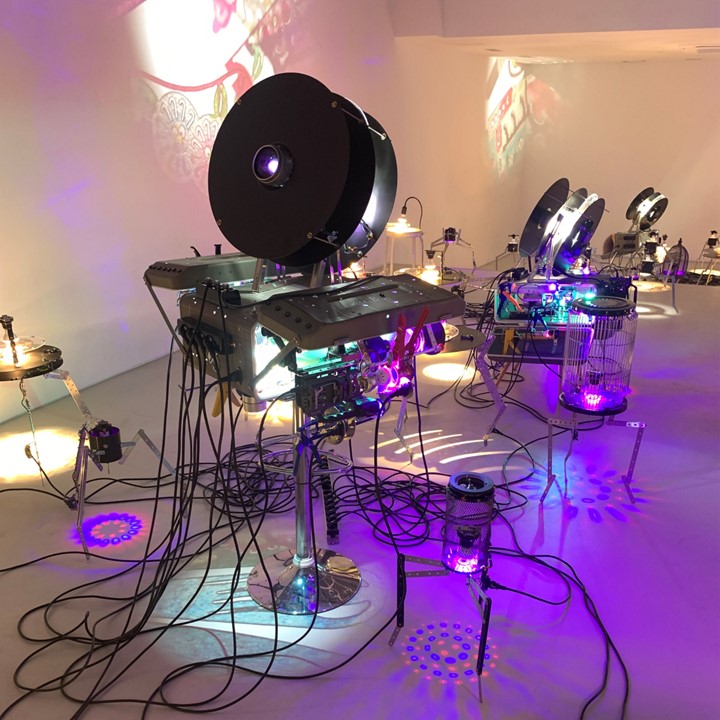
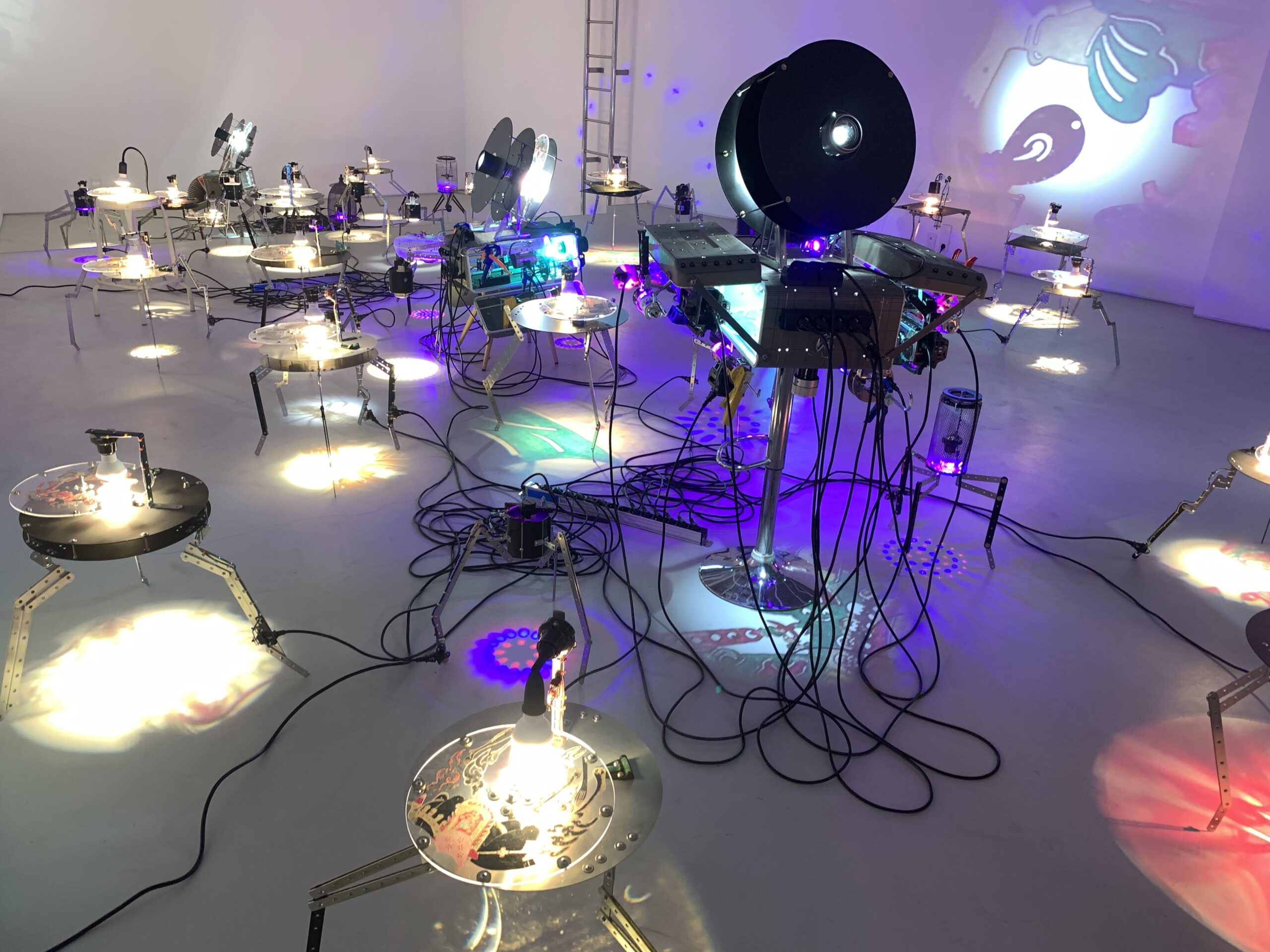
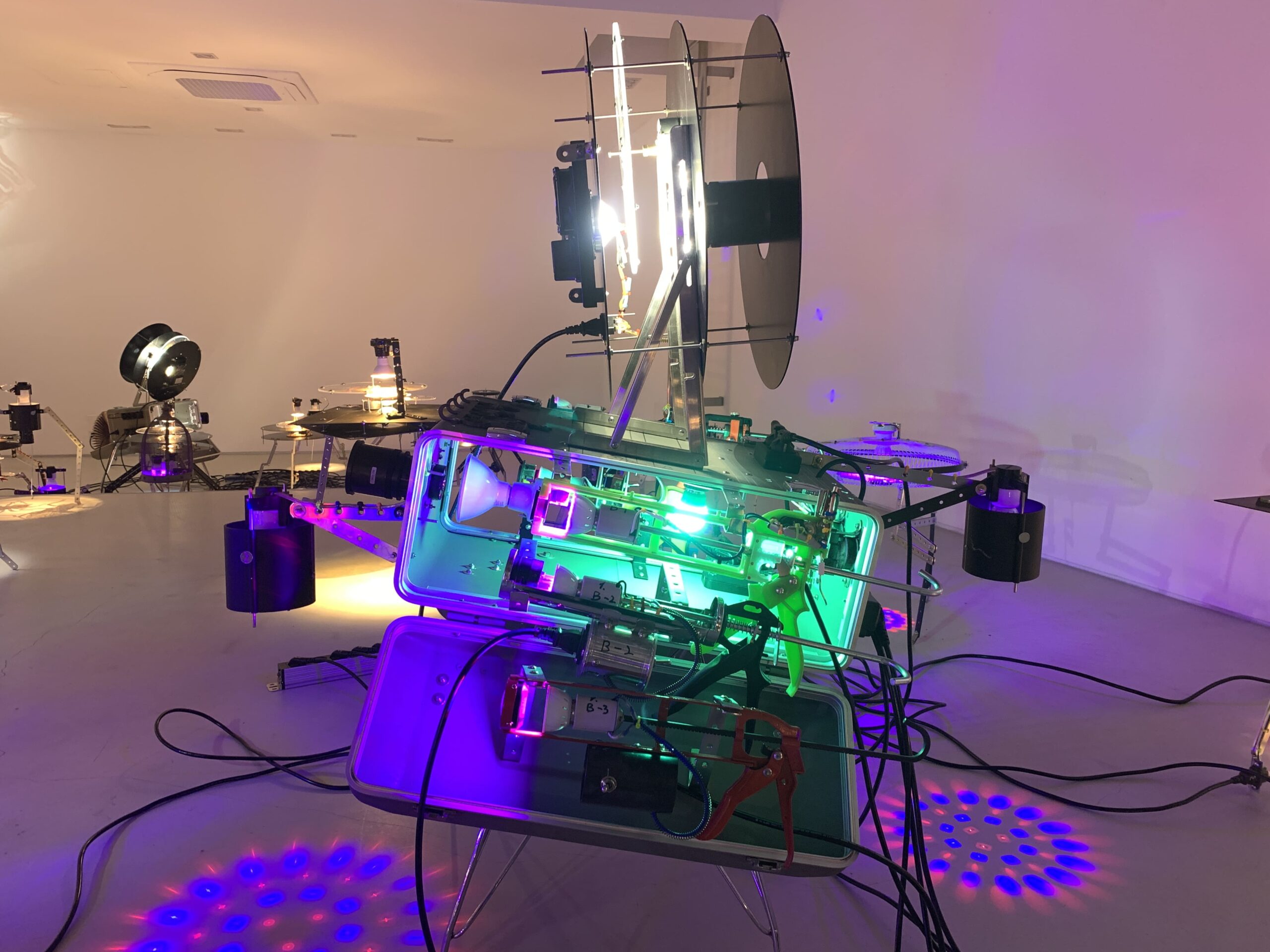
Hyung-Sub Shin’s solo exhibition, Mechanical Baroque, presents a series of mechanical apparatuses that traverse the boundaries between two pairs of mediums: sculpture and moving image, and lighting and cinema. Utilizing assemblages of lenses, light bulbs, motors, turntables, and shadow puppets, the artist shifts the focus of the exhibition away from the “playback” of images and toward the very conditions that allow an image to “emerge.”
In this exhibition, the moving image is not merely a projected result on a screen; it is an “event” generated within the physical relationship between light and machinery. Each apparatus occupies the space as a sculpture while simultaneously functioning as a projection device that produces cinematic time and motion. Through this process, sculpture transcends its fixed form to become a moving image, and the moving image expands beyond virtual representation into a sculptural entity possessing structure and weight.


Furthermore, Mechanical Baroque addresses the fusion of lighting and cinema as a central inquiry. Light does not serve as a secondary effect applied to an object; instead, it functions as a primary subject that creates narrative, rhythm, and duration. The “screening” is not a repetition of pre-edited footage, but an ongoing, present-tense process that constantly evolves through the subtle friction between the exhibition environment and the mechanical devices.


Through these excessive structures and overlapping movements, the artist reveals a time and space that folds and unfolds like Baroque pleats. As an experiment into “pre-cinematic cinema” and “post-sculptural sculpture,” Mechanical Baroque re-examines the very mode of image production within the contemporary media landscape.


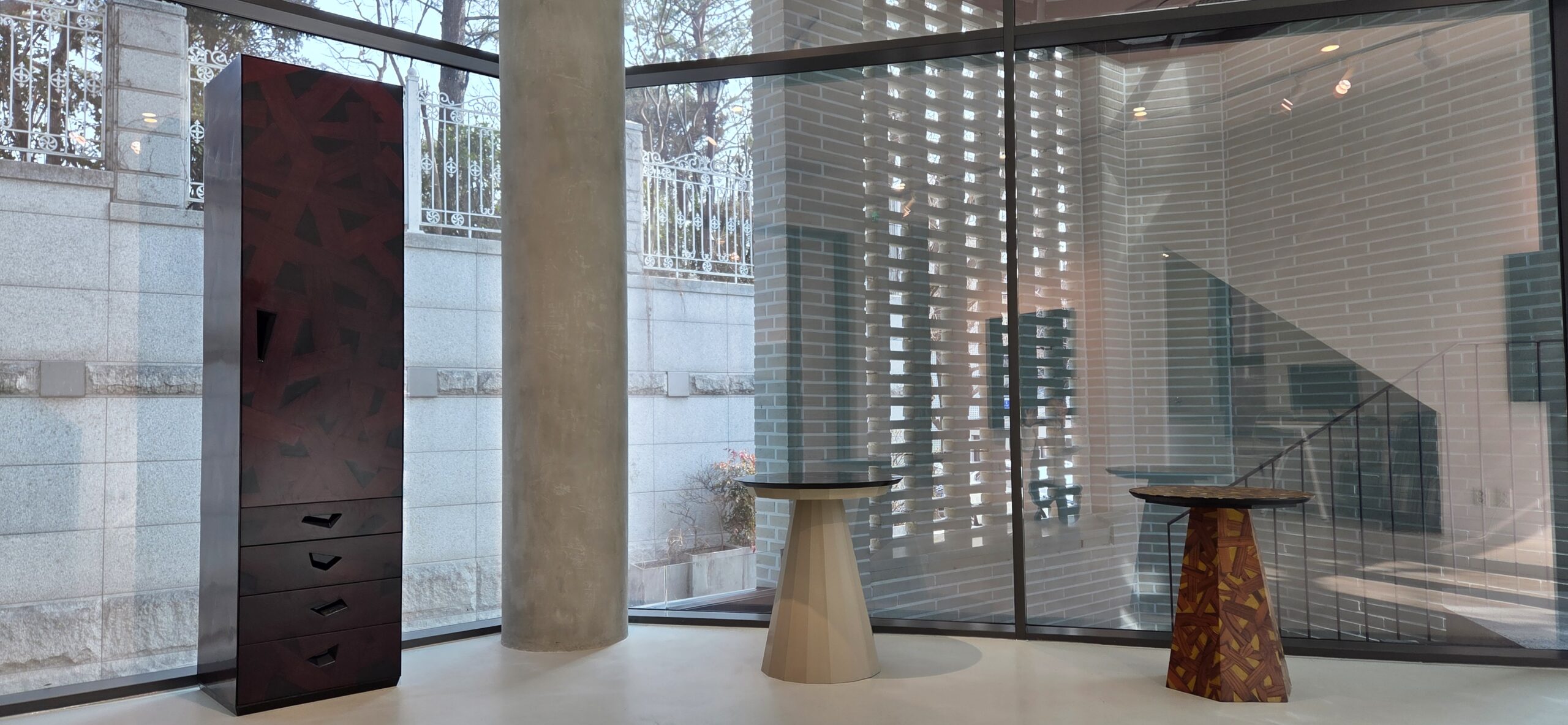
Monolith

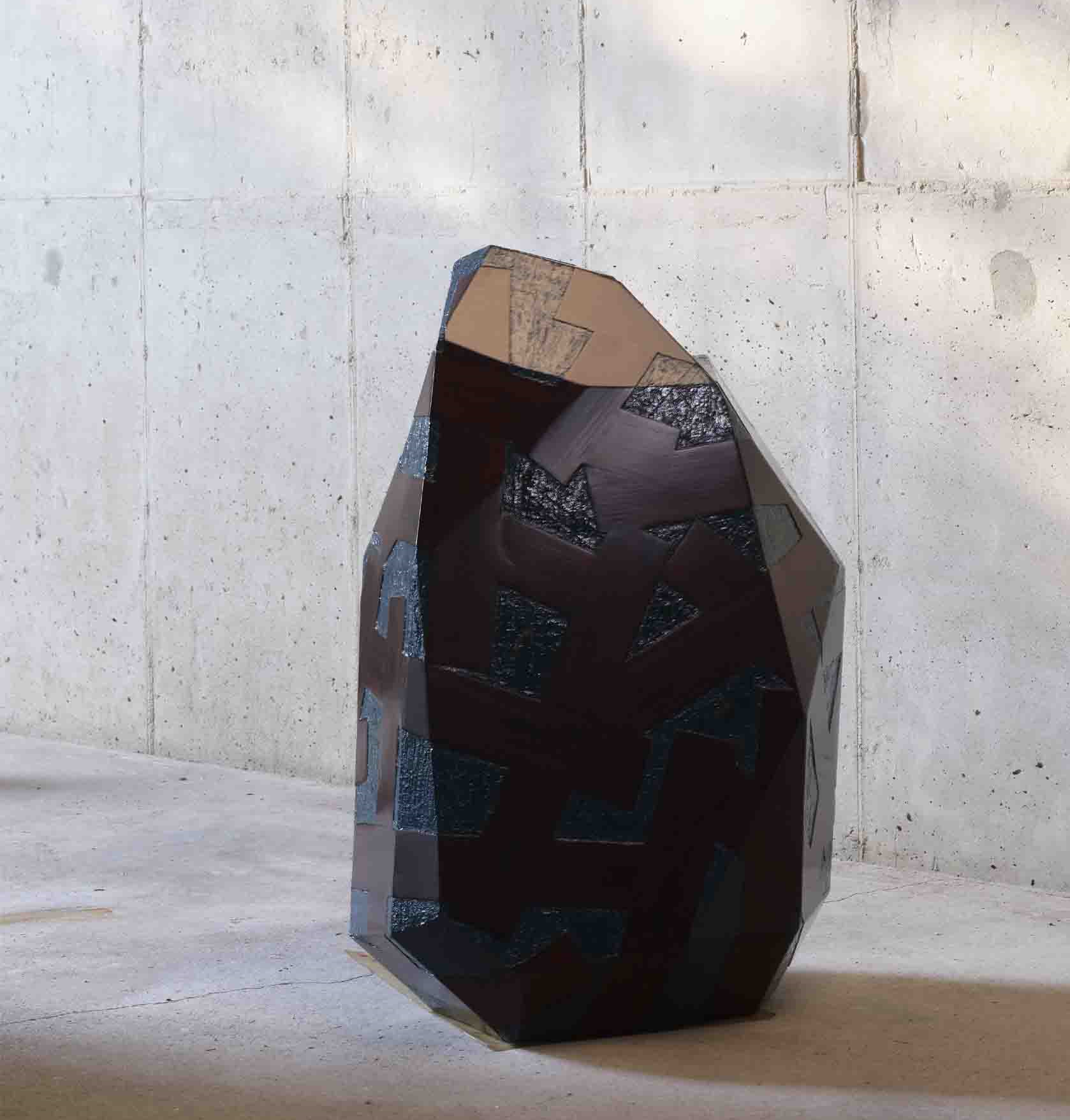
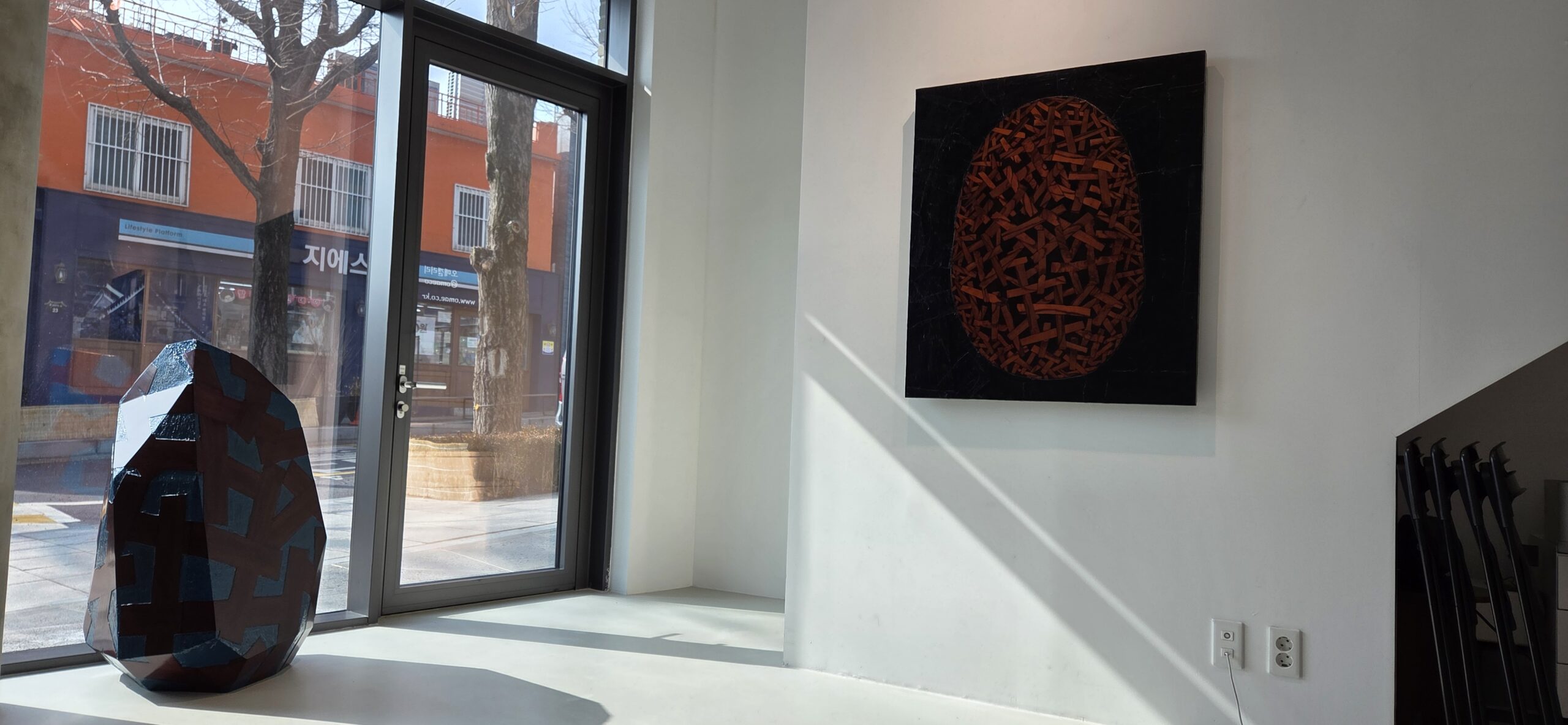
Monolith_larch, hemp fabric, ottchil_670x1030mm_2026 


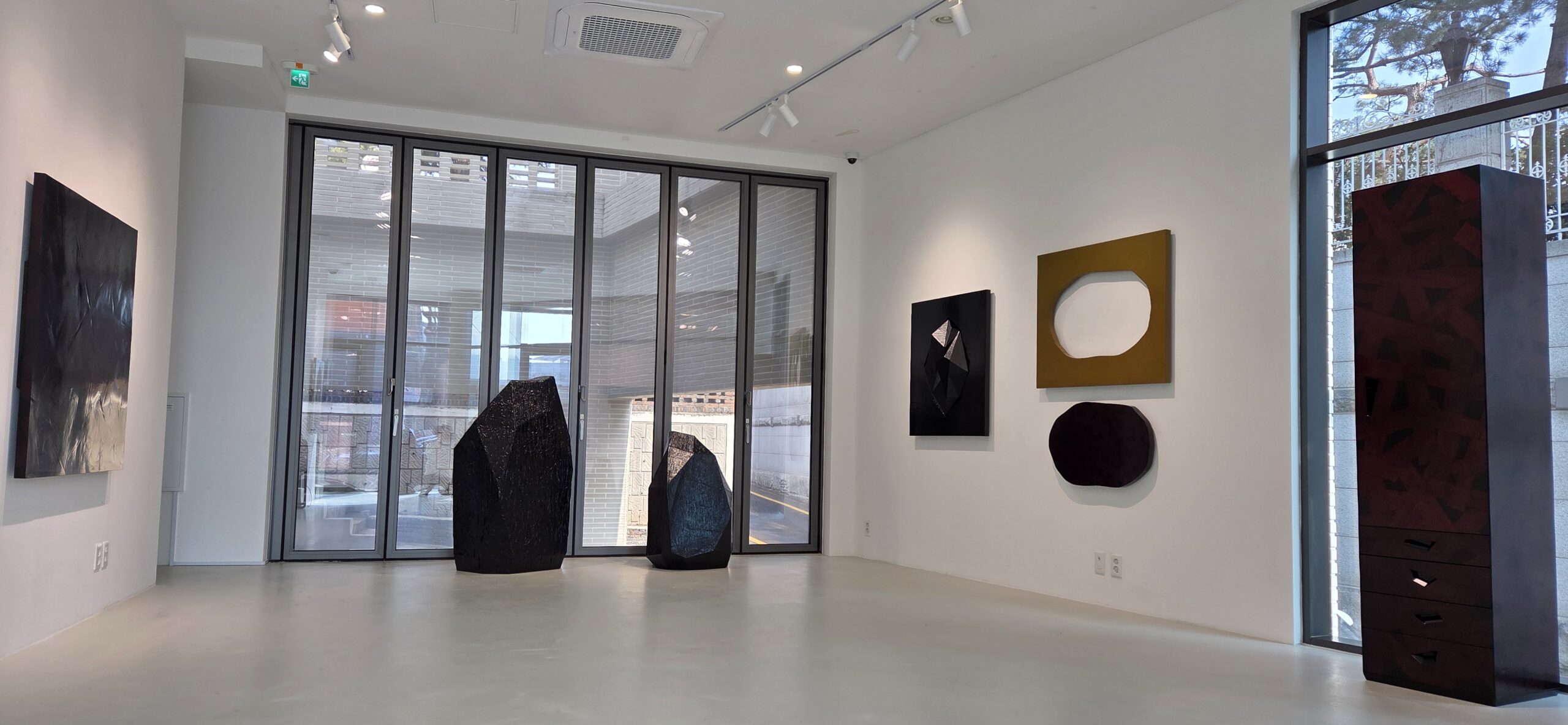
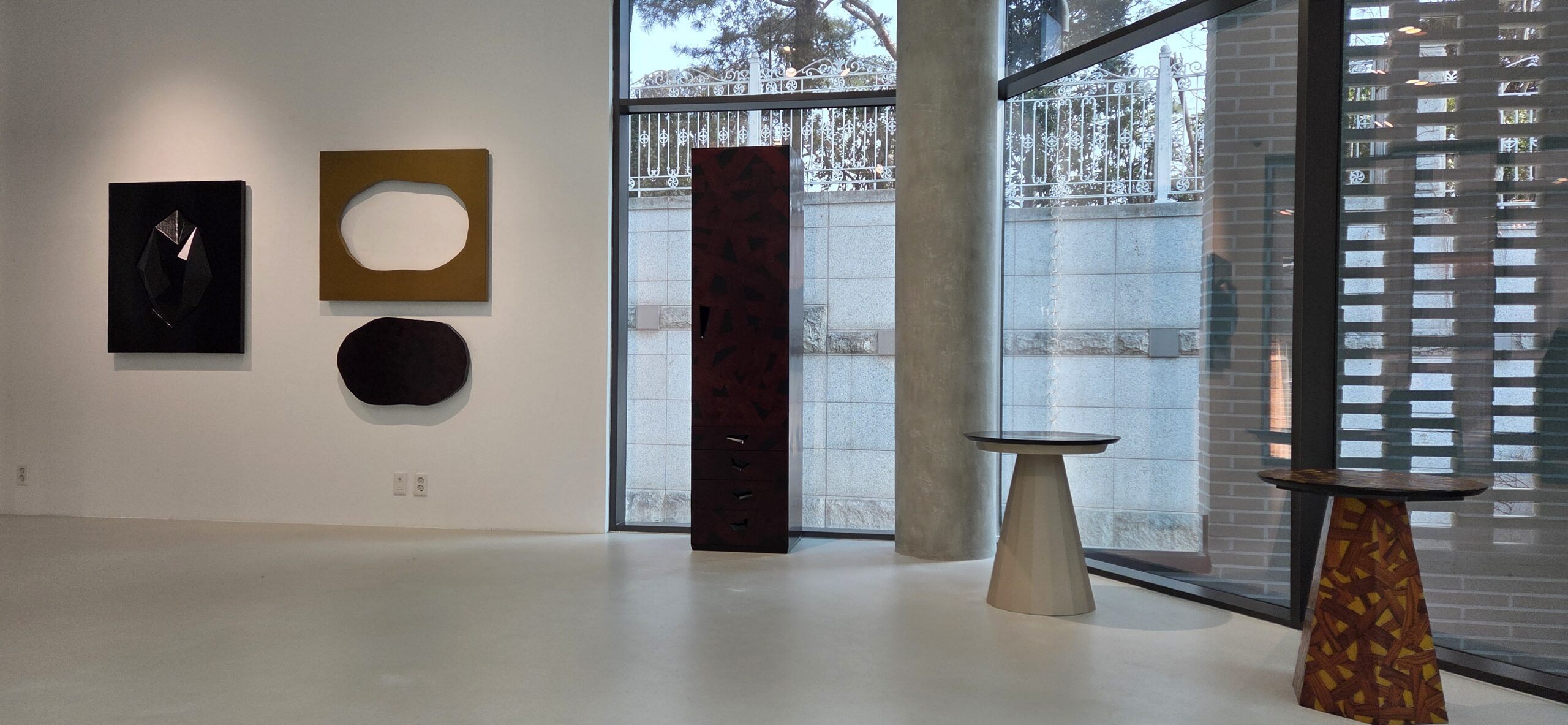
Yong-jun Jang, who has relentlessly explored his own “artistic language” through the long-standing practice of Ottchil (traditional lacquerwork), has titled his first solo exhibition <Monolith>.


The title stems from his realization that the human longing for eternity — often embodied in man-made monuments or markers—is merely trivial and ephemeral when viewed from the perspective of the universe and infinity. Consequently, the artist presents works in the form of a “Monolith” that appears strikingly alien to our reality, contrasted against traditional monuments. Rather than choosing stone or other durable materials, he deliberately selected wood — a material that is fragile and easily fades away.


Yong-jun Chang, who finds himself more moved by a nameless wooden cross (Bimok) commemorating the many who have vanished than by a stone monument honoring a single soul, quietly poses questions about eternity and extinction, solidity and fragility, stone and dust, and the very limits of existence.


We cordially invite you to the first exhibition of 2026 at OMAE Gallery.


In December’s warmth

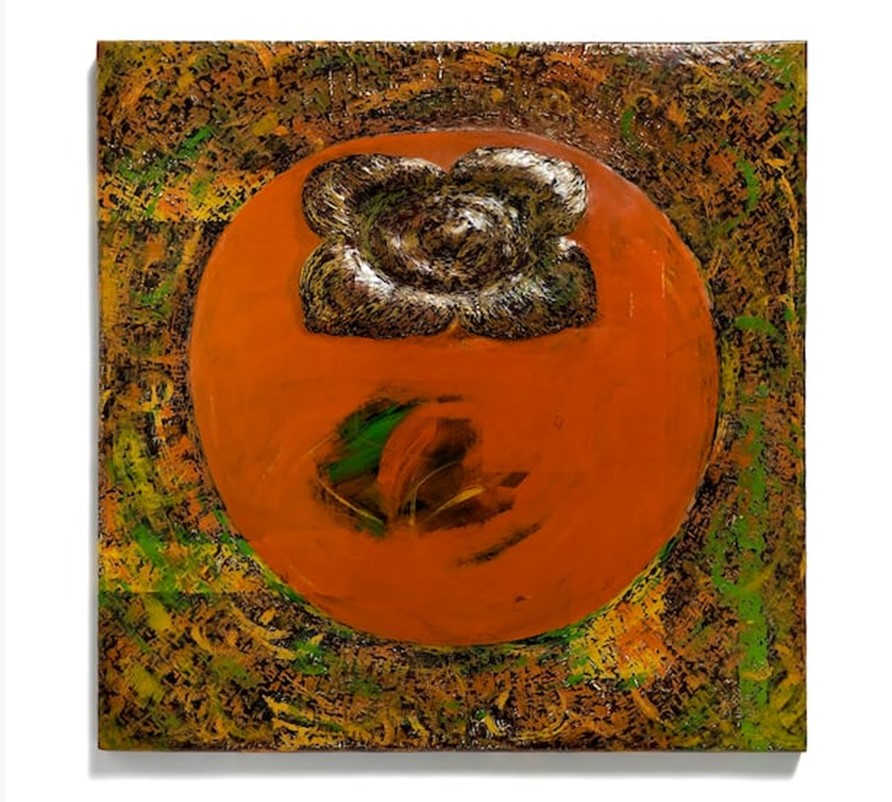
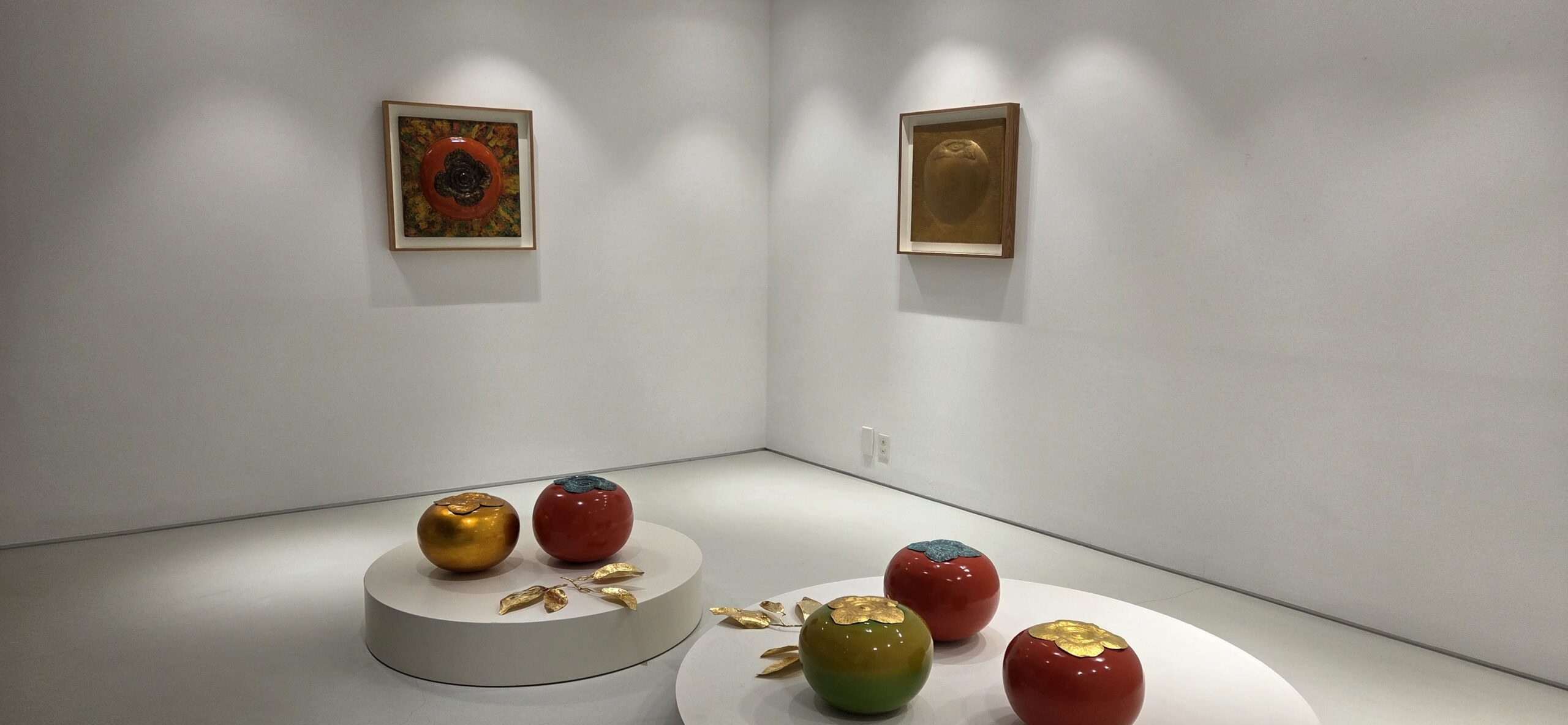
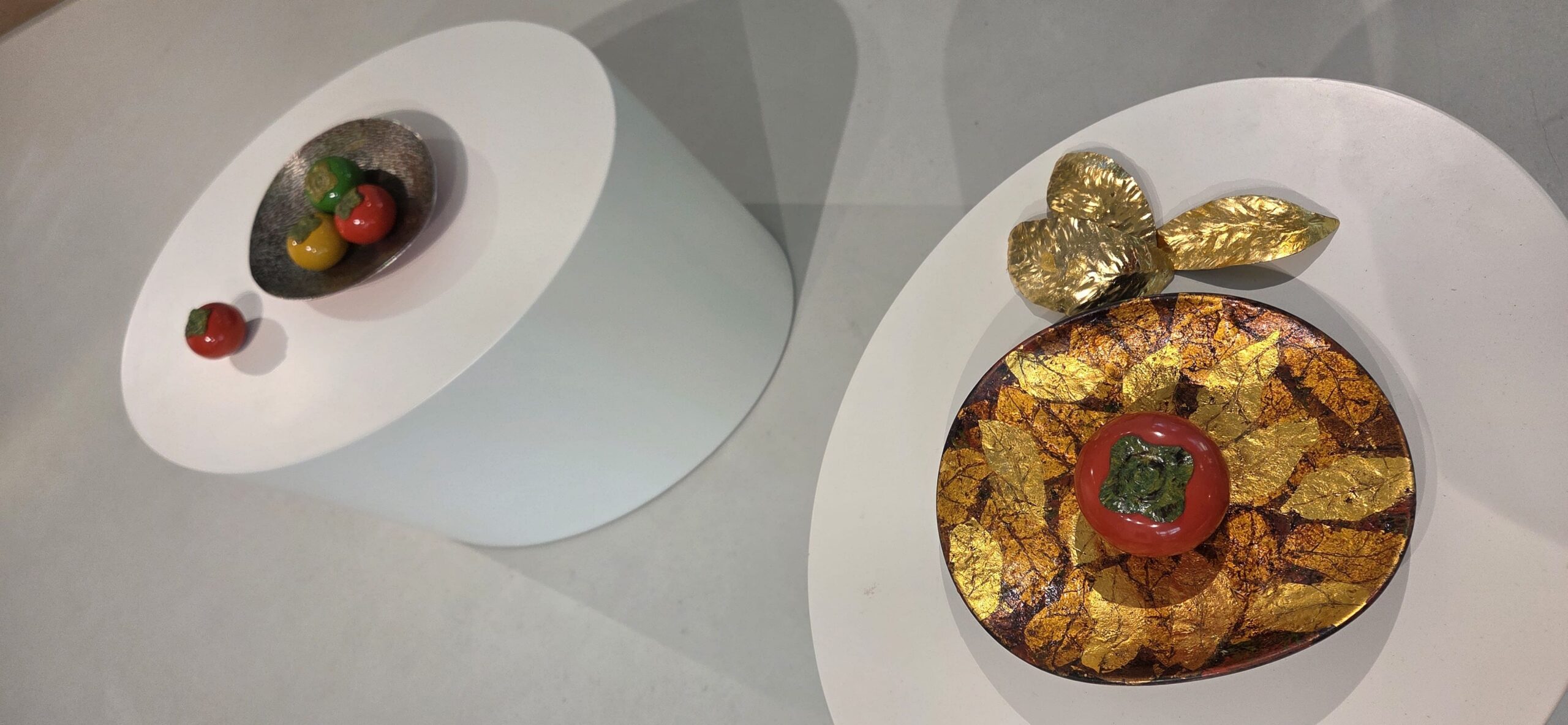
Ripe Persimmon 2025, brass, ottchil, 48x48x4cm, 2025 


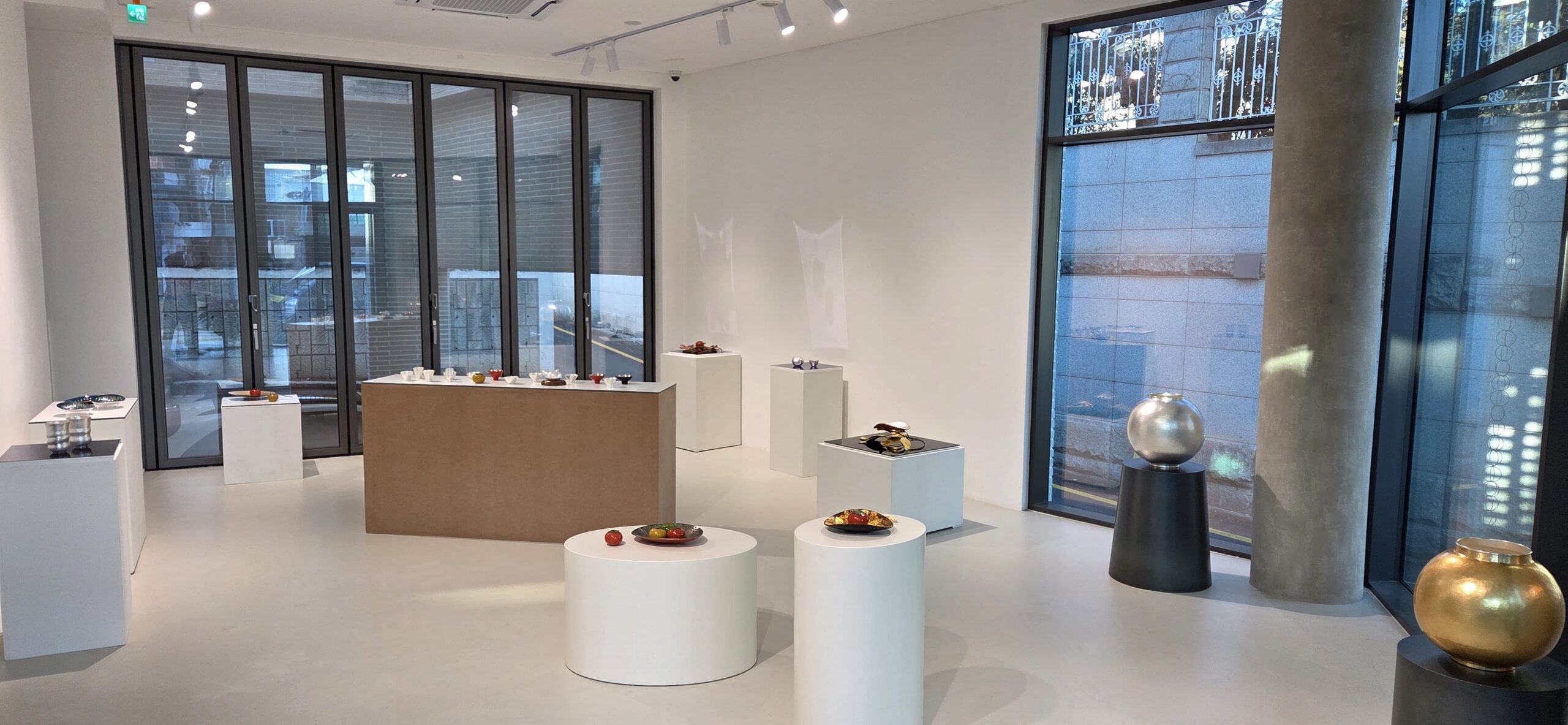
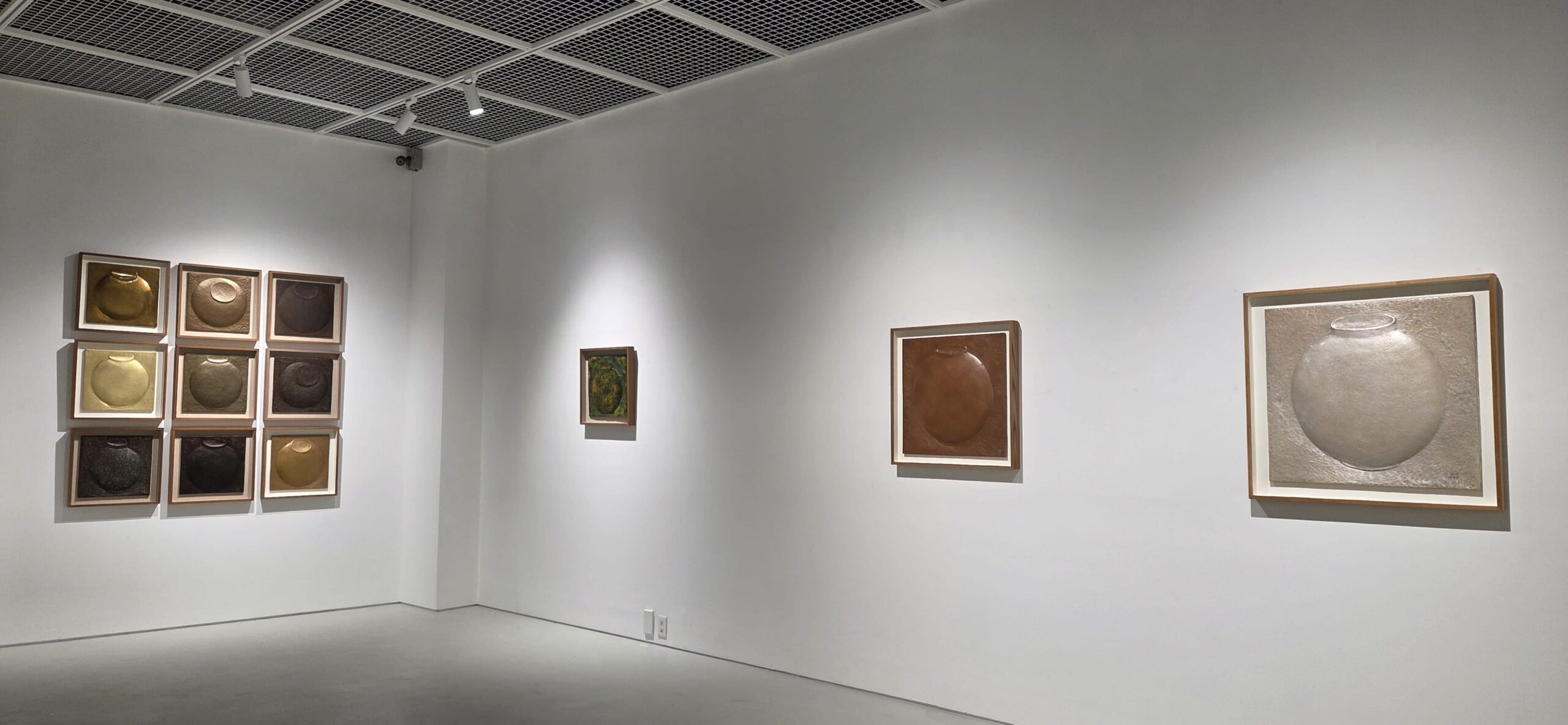
Professor Do-sik Seo, a long-time educator and researcher in metal crafts at Seoul National University, has continuously reinterpreted the beauty of nature in everyday life through refined forms. The exhibition “In December’s warmth” held at OMAE Gallery, presents a concise glimpse into his recent body of work, focusing on the warm motifs of persimmons and birds while capturing the essence of metal’s warmth and the depth of time.


On the first floor of the exhibition, tableware and interior decorations inspired by natural forms create a serene atmosphere. Bowls and cups shaped like birds, along with a tray holding ripe persimmons and a light, evoke the childhood winter landscapes and sensory memories that transcend the cold nature of metal. The artist’s delicate sense of form and warm emotions blend harmoniously, unfolding the space into a lyrical landscape.
 

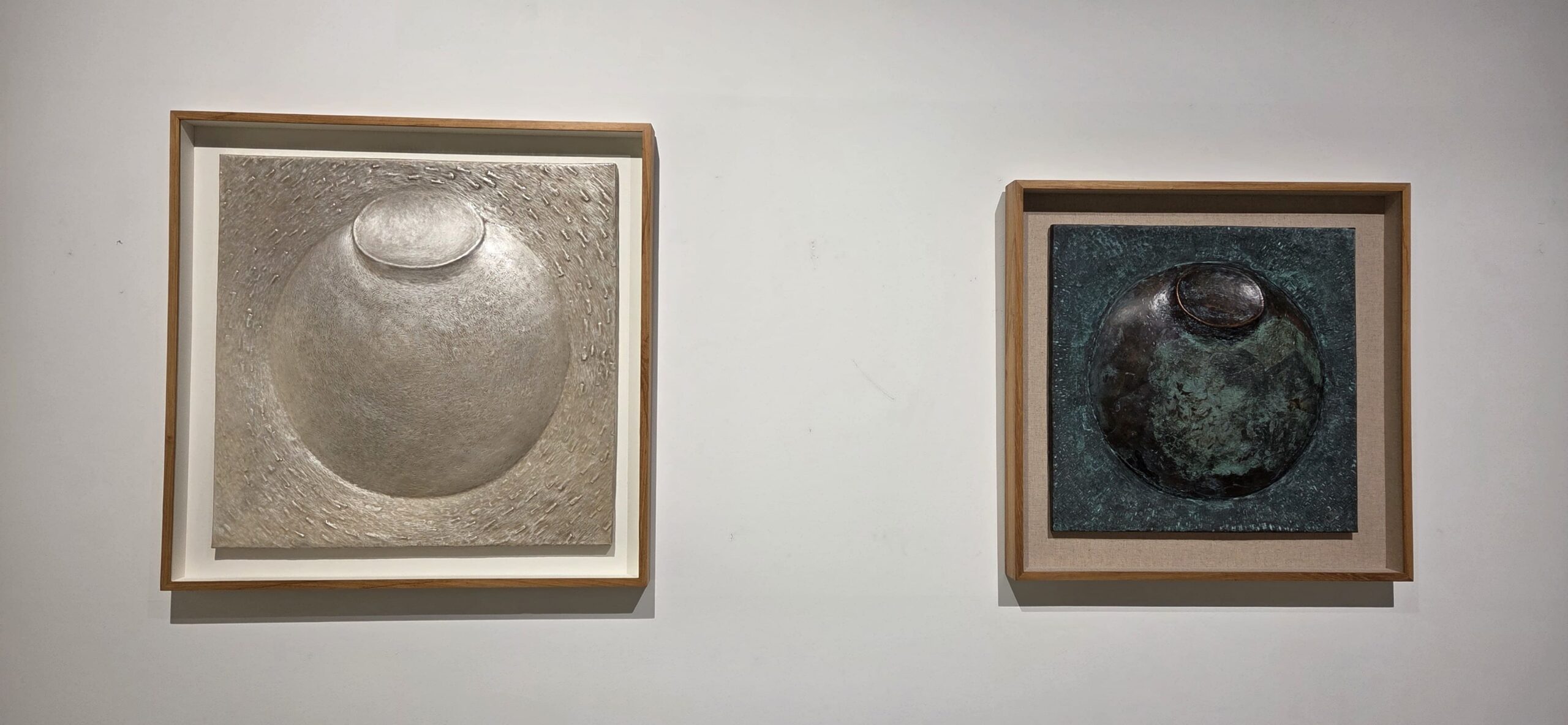
In the underground exhibition space, Do-sik Seo’s series of metal jars, which he has concentrated on in recent years, is prominently displayed. The exhibition features large persimmon installations embodying the theme, alongside metal jars and relief works that engage in a quiet dialogue through their textures and tones. Viewers will witness the refined techniques of metal surface manipulation, bold uses of lacquer colors, and a deep understanding of materials.


Since his retirement in 2021, Professor Seo has consistently held solo exhibitions, firmly establishing his unique sculptural identity rooted in his extensive mastery of metalworking techniques. His work encapsulates emotions, humor, and the simple beauty of nature within the solid substance of metal, offering viewers a warm invitation in December.


Contemplation; the Art of Play

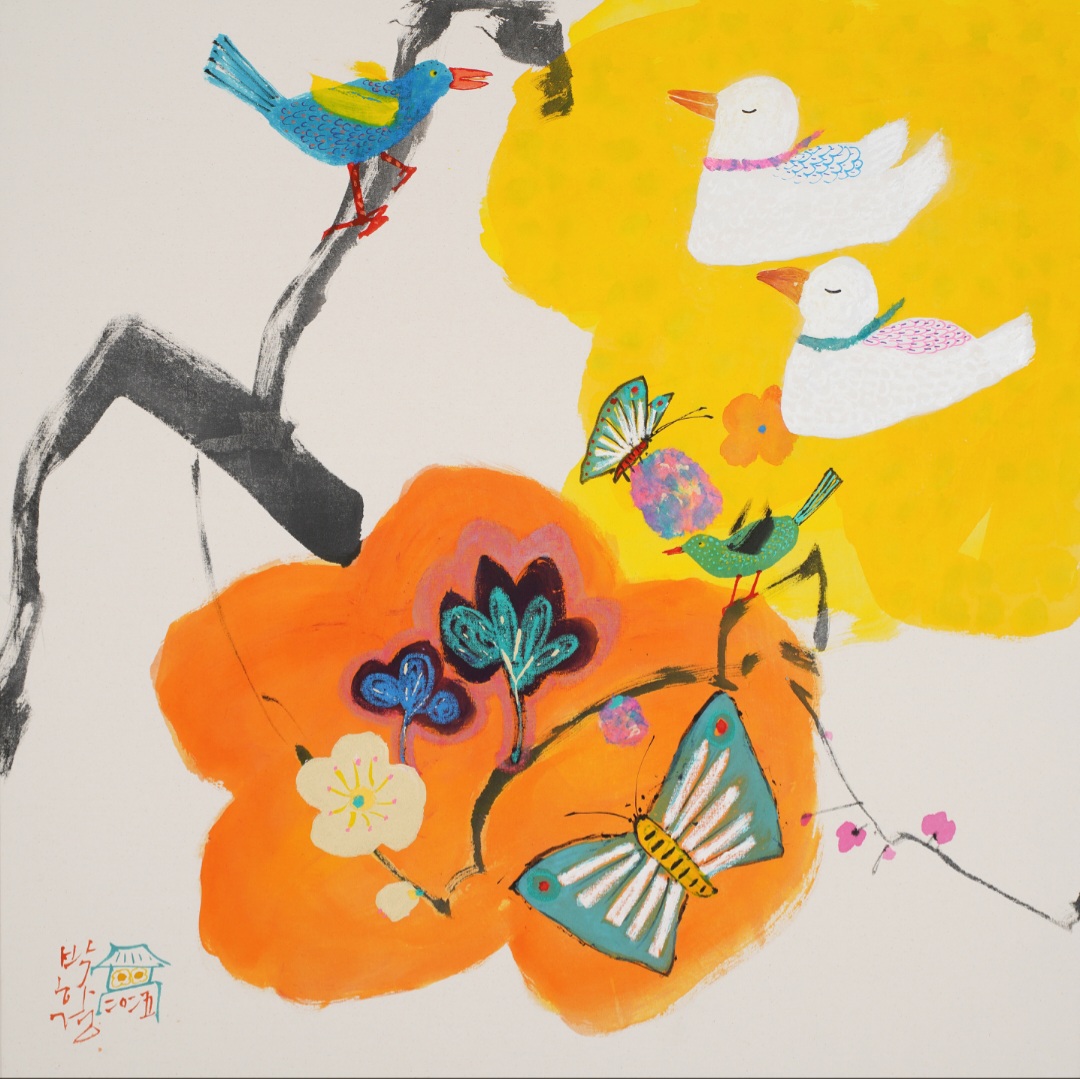
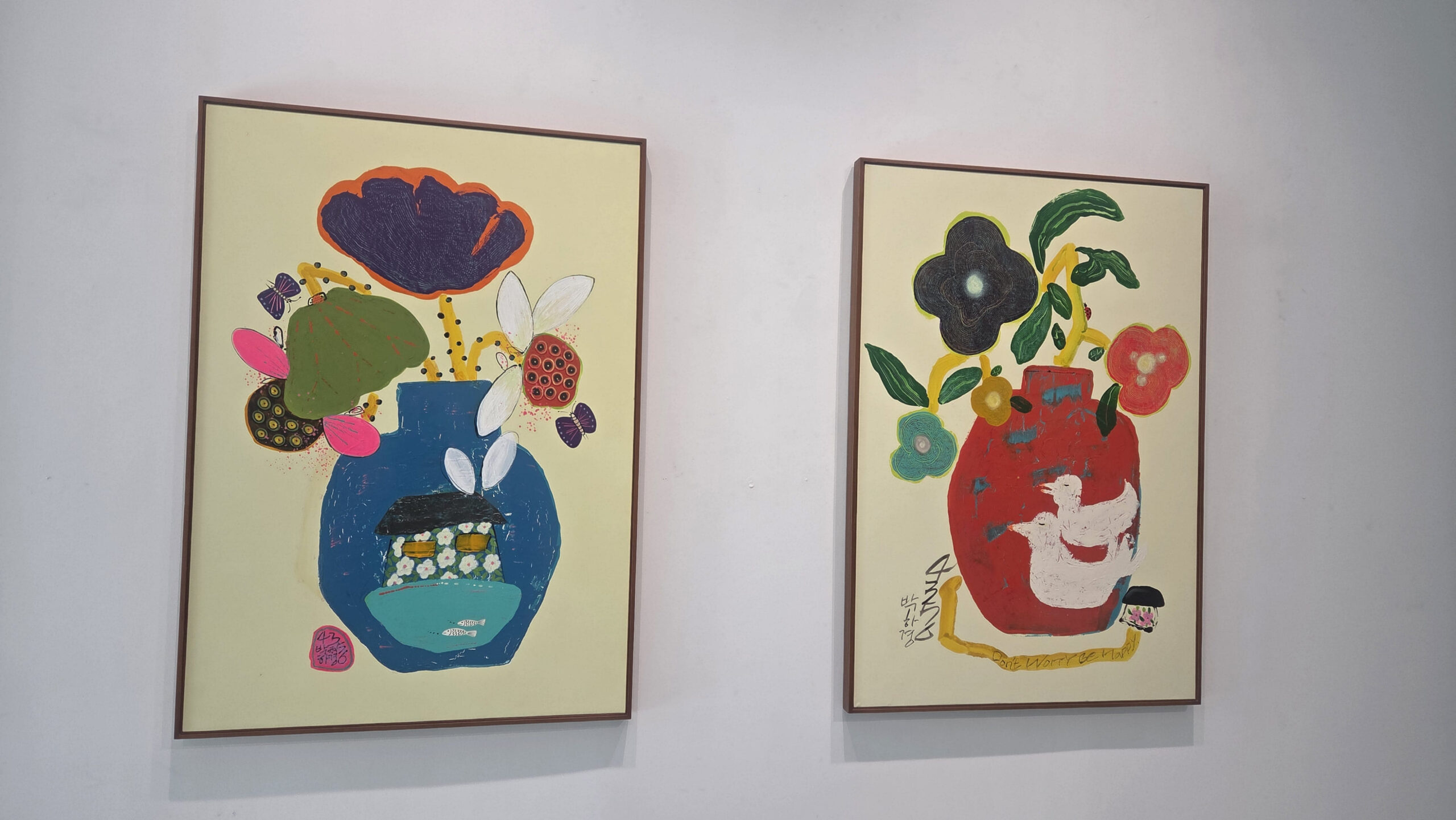
Contemplation; the Art of Play 50-1, mixed media on cotton cloth, 91x91cm, 2025


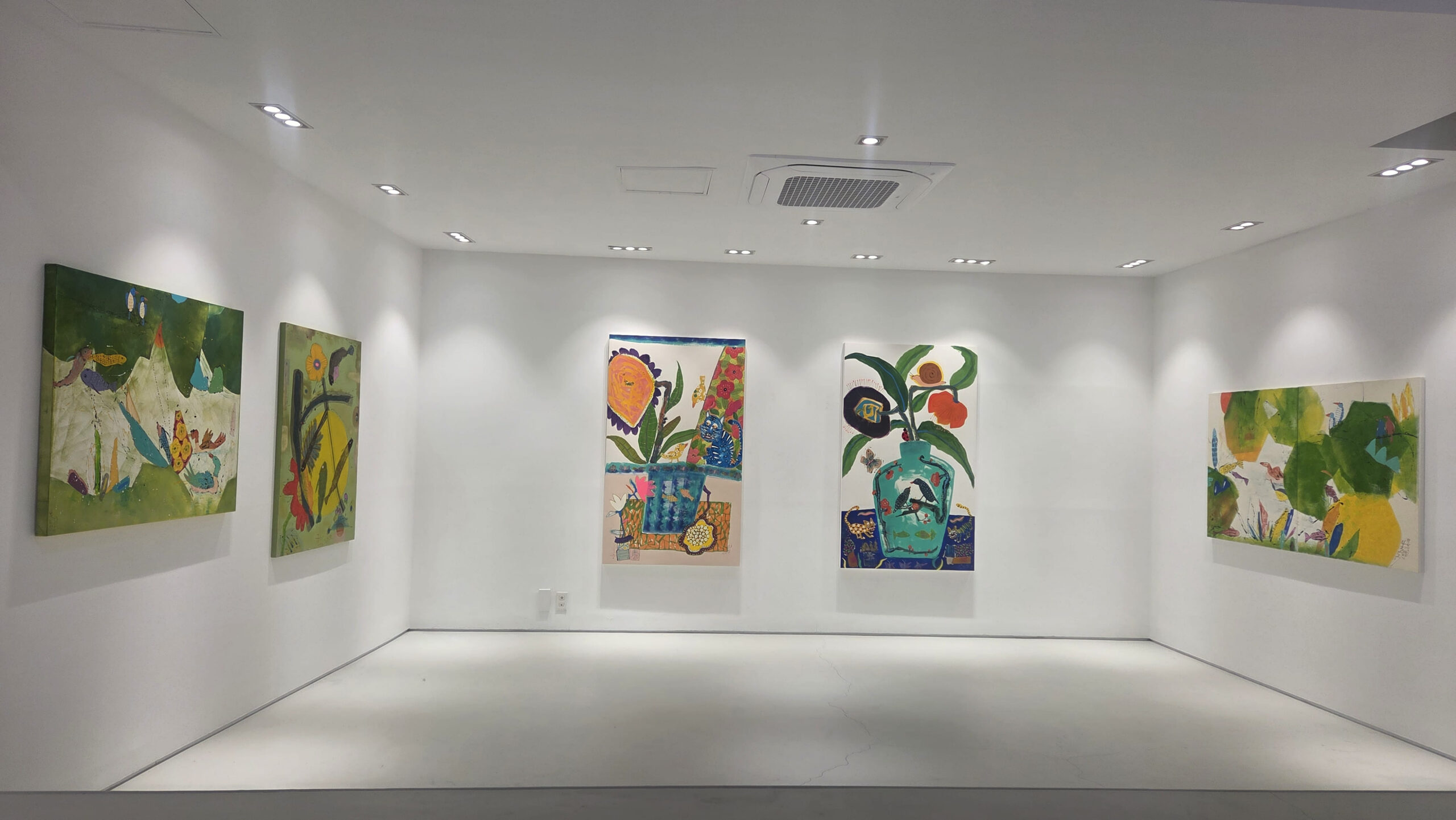
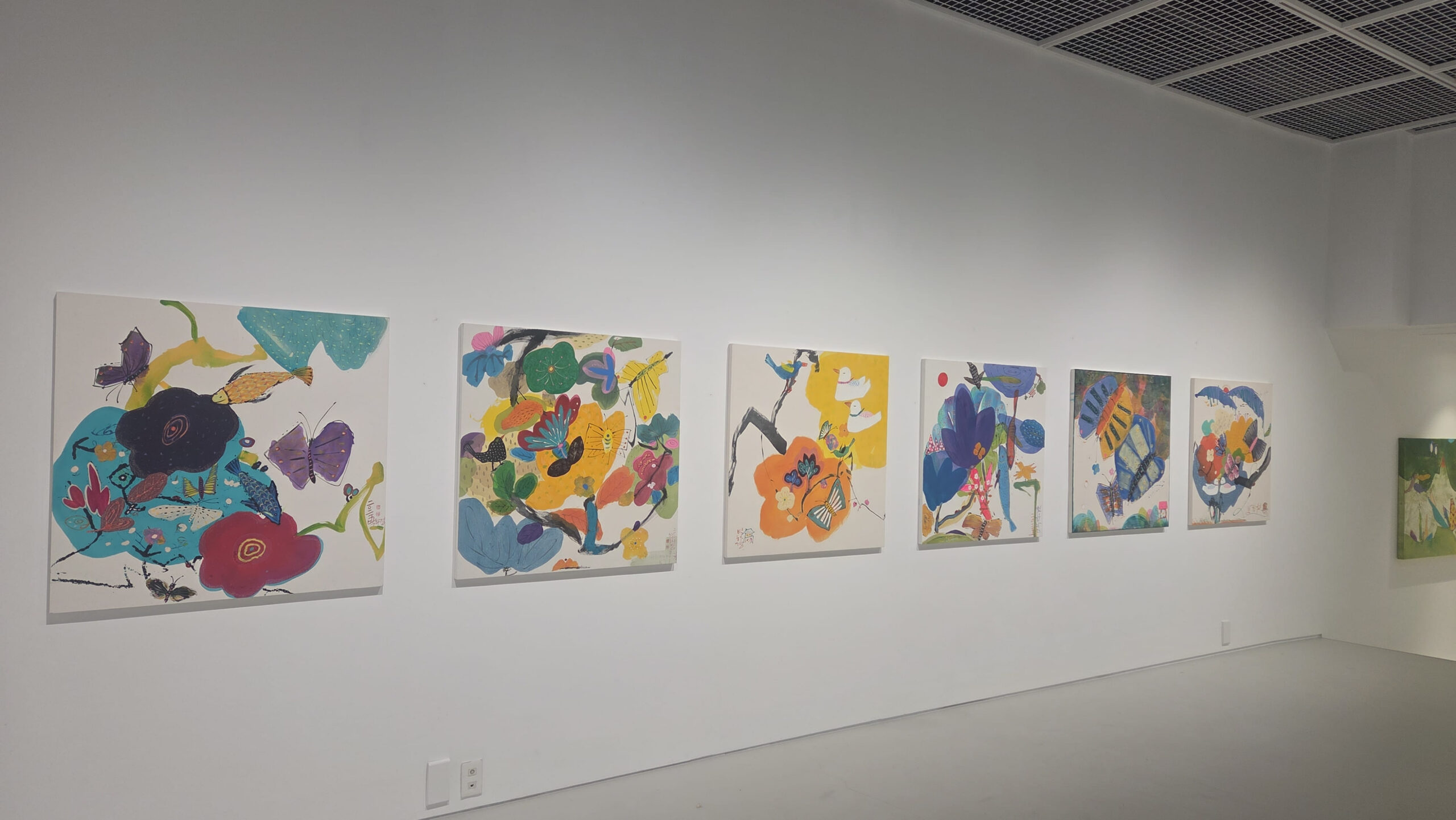
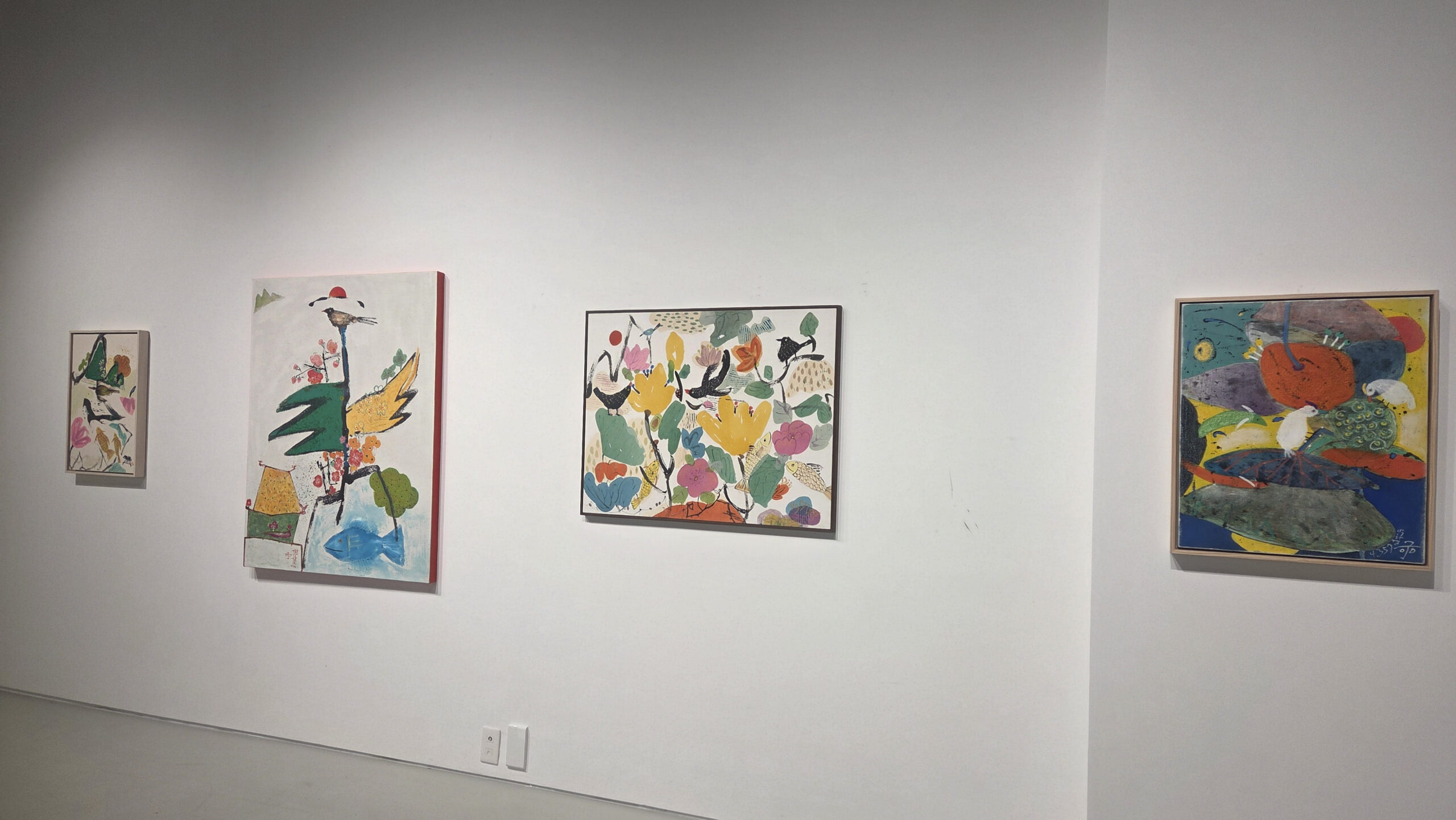
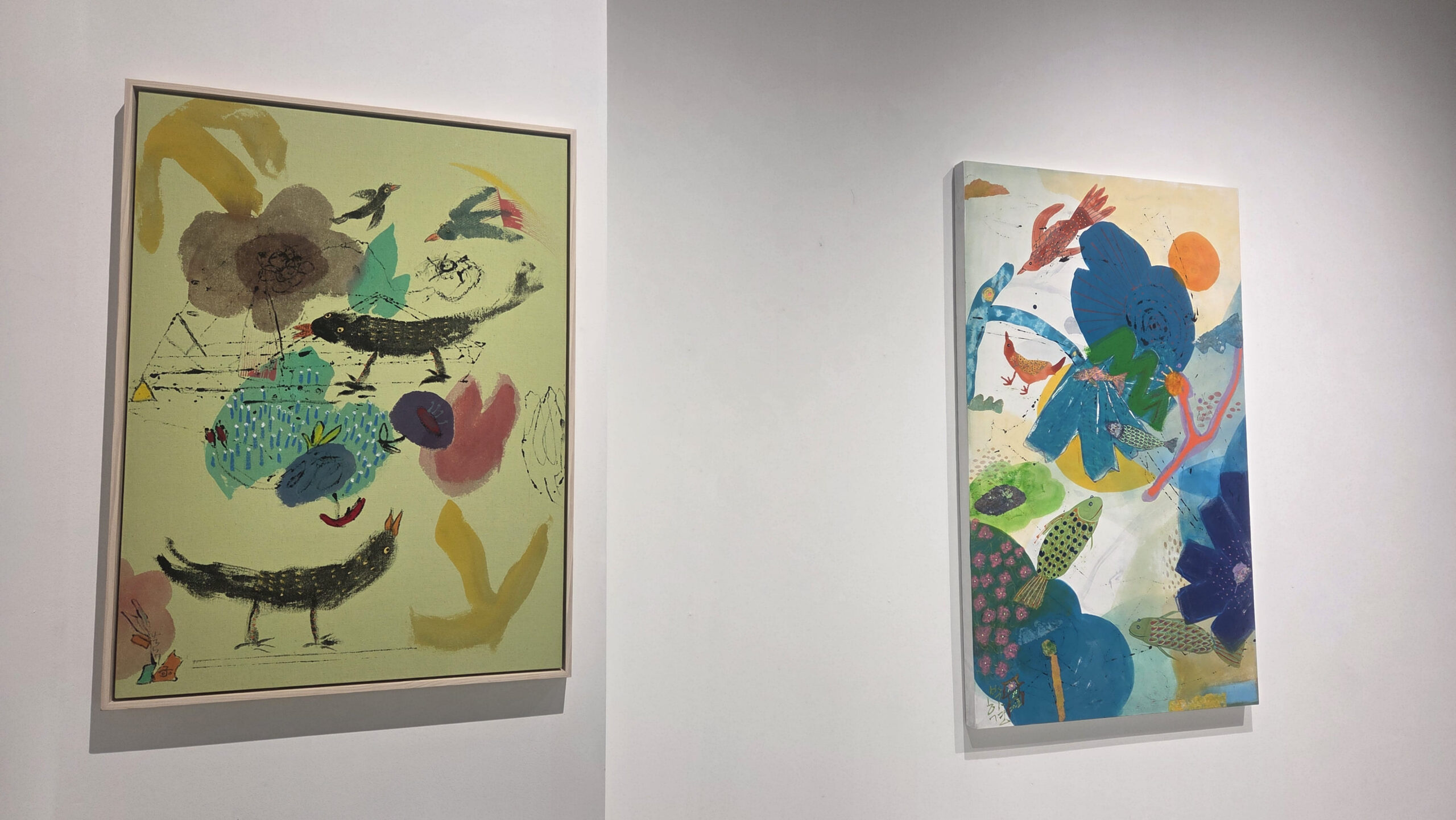
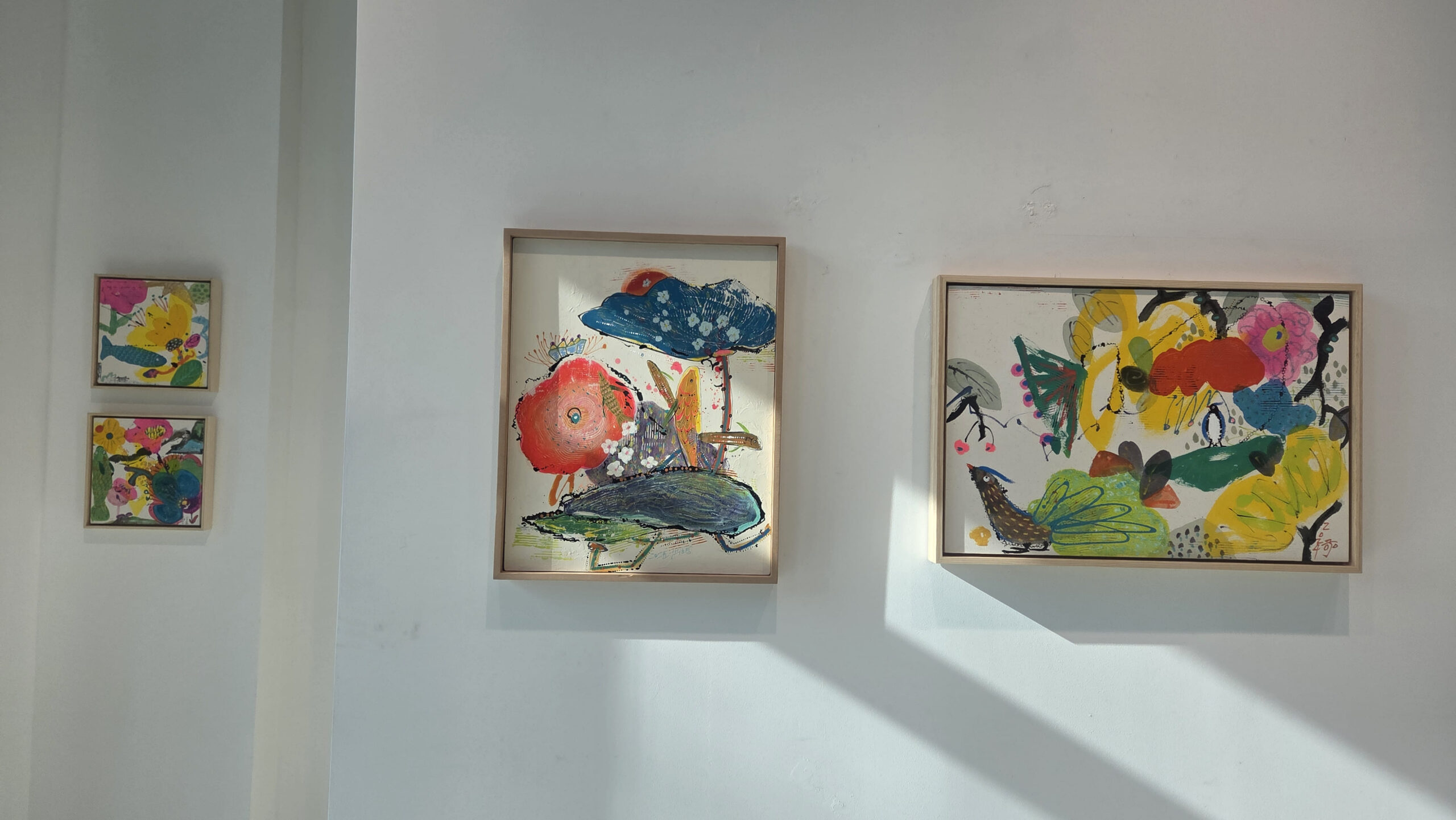
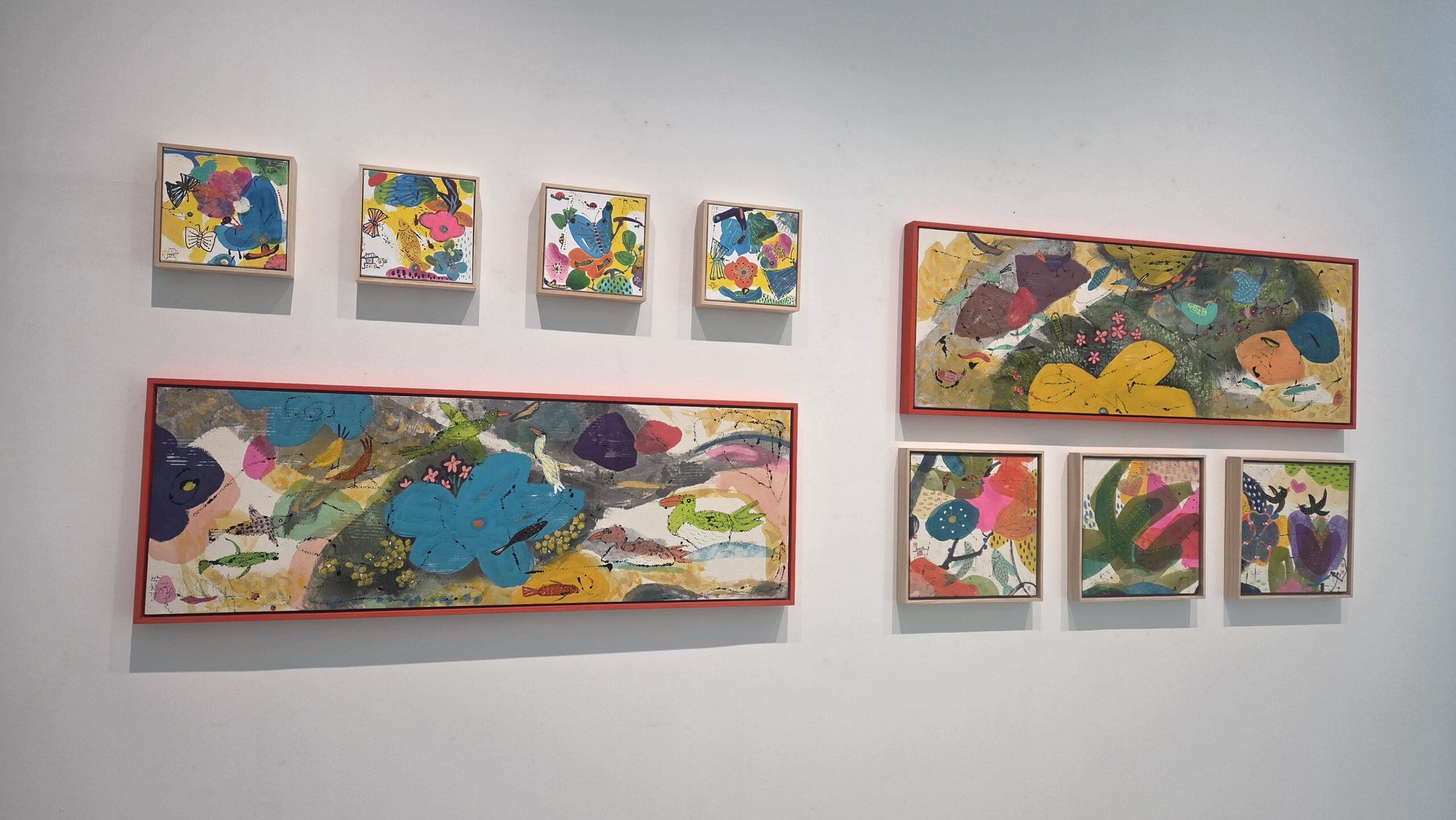
OMAE Gallery is honored to host the solo exhibition of Ha-kyung Park, the recipient of the 4th Monthly Minhwa Awards ‘Artist of Today’ (2024), from December 2 to December 13, 2025. OMAE Gallery, which seeks to find contemporary art that communicates globally while rooted in Korean tradition, proudly sponsors this exhibition for the ‘Artist of Today’ award winner, an artist who has played a central role in the development of contemporary Korean Minhwa (Korean Folk Painting). We cordially invite you to Contemplation; the Art of Play, a unique showcase of works that bridges the expressive freedom of traditional Minhwa with the bold experimentation of contemporary Korean painting.


Ha-kyung Park describes her work as “Paintings that Bring Happiness,” aiming to express happiness, joy, and pleasure. She notes, “What I seek to express in my paintings is happiness, joy, and delight. Hope and the blessing it brings are linked to joy through the power of positivity.” Her canvases are filled with brightly colored, free-spirited compositions where birds and fish are often anthropomorphized to represent family, expressing the fundamental desire for their health and prosperity. The vibrant colors and freely wandering lines are traces of joy, with even a single leaf seemingly to dance. Her process, “Meditation (Contemplation), which begins as a prayer of wish, becomes joy and is expressed as play (Yoohee),” captures this spirit, moving from strong, decisive lines at the start to fine, gentle lines—like a quiet smile—at the finish.


A defining feature of Ha-kyung Park’s work is the aesthetic of Gojolham—a beauty found in the seemingly unsophisticated, awkward, or pre-modern, which evokes simple, comforting delight. Critics highlight Ha-kyung Park as the foremost contemporary Minhwa artist to successfully reinterpret this Gojolham for a modern sensibility. Her subjects, seemingly drawn with the untutored hand of ancient folk painters—crooked, spontaneous, and imperfect—are simultaneously rendered with brilliant, clear colors and witty composition, revealing the skillful hand of a master. This paradox—the spontaneous beauty of Gojolham translated into a highly refined, contemporary visual language—is what makes her work unique. Her recent pieces show a tendency towards abstraction through increasing simplicity and conciseness, demonstrating a courageous and sharp spirit of experimentation rarely seen even amid the diverse and experimental trends of modern Minhwa.


The works in Contemplation; the Art of Play, while situated in the realm of contemporary Minhwa, resonate strongly with the lineage of modern Korean painting (Hangukhwa)—including masters like Park Saeng-gwang, Hwang Chang-bae, and Kim Sun-doo—characterized by the Powerful Freedom of Line, Rich Korean Coloring, and a Sense of Space and Rhythm. We invite you to experience the exhibition and consider for yourself how Ha-kyung Park’s playful expression of joy and hope connects the deep tradition of Minhwa with the dynamic future of Korean contemporary art.


No Reason


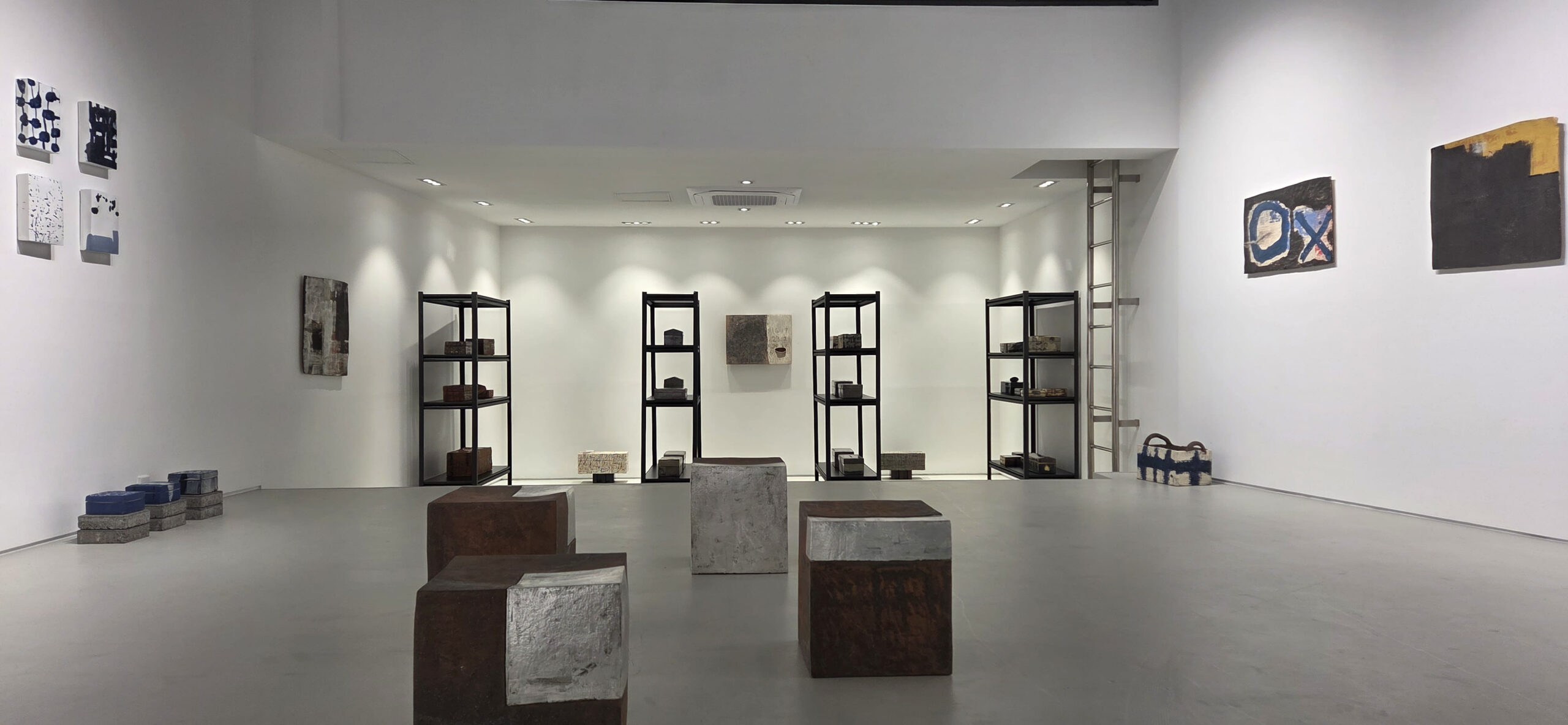
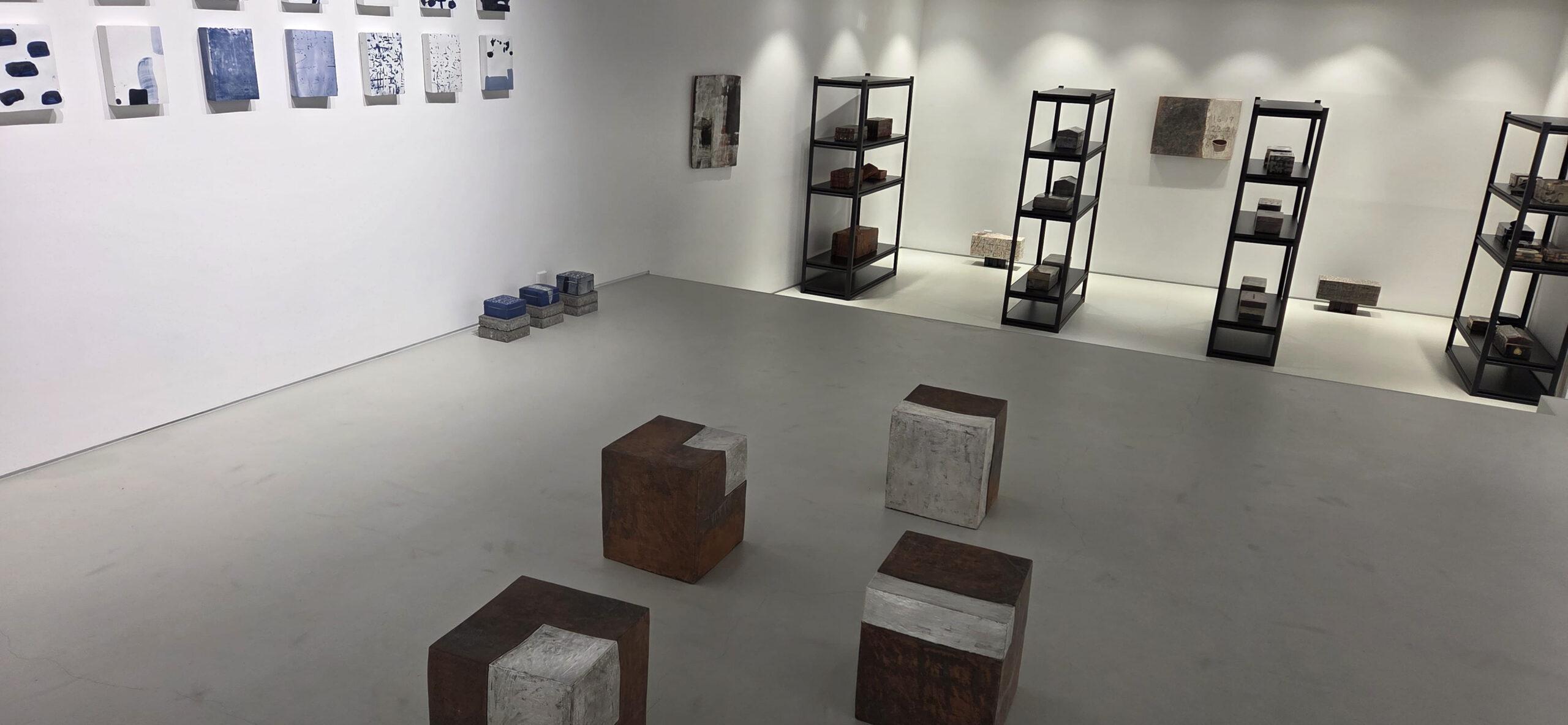
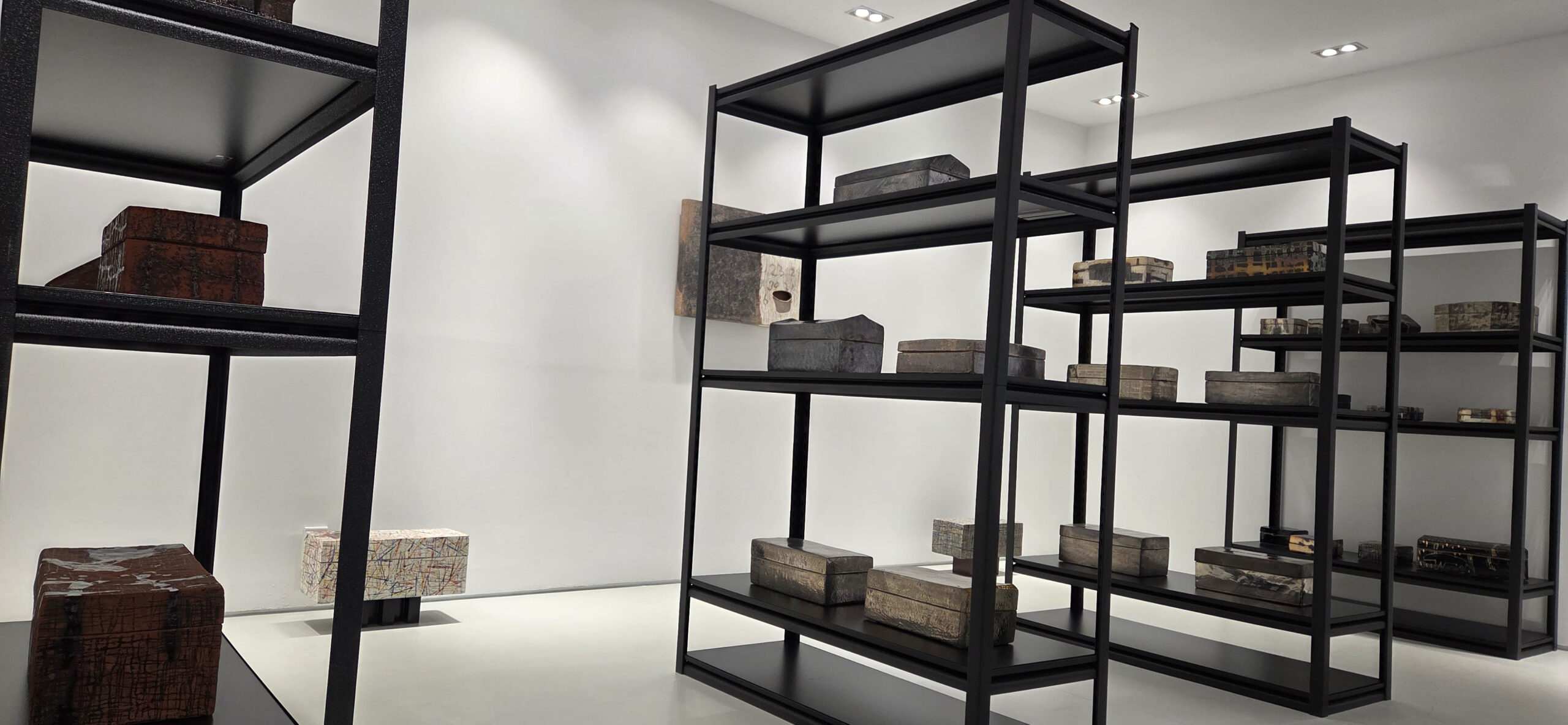
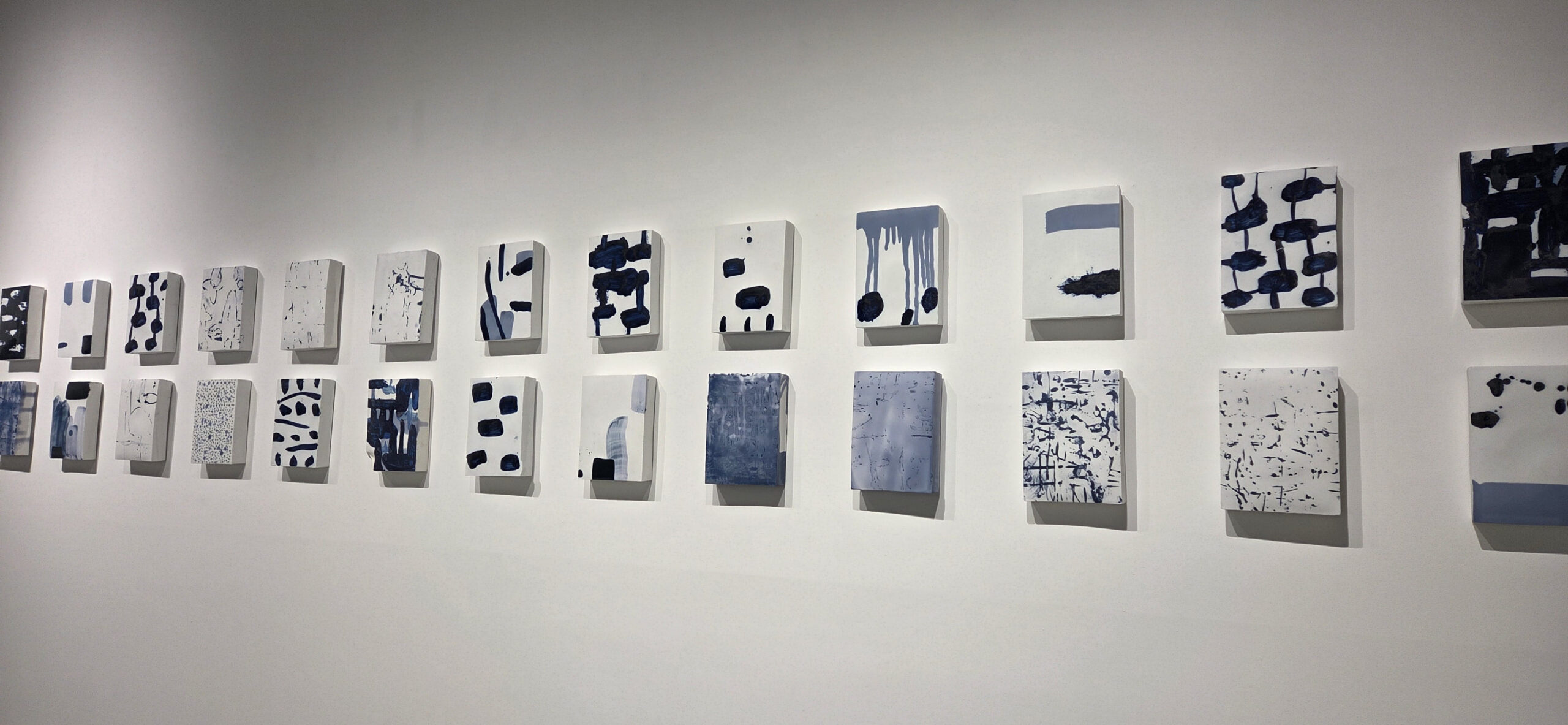
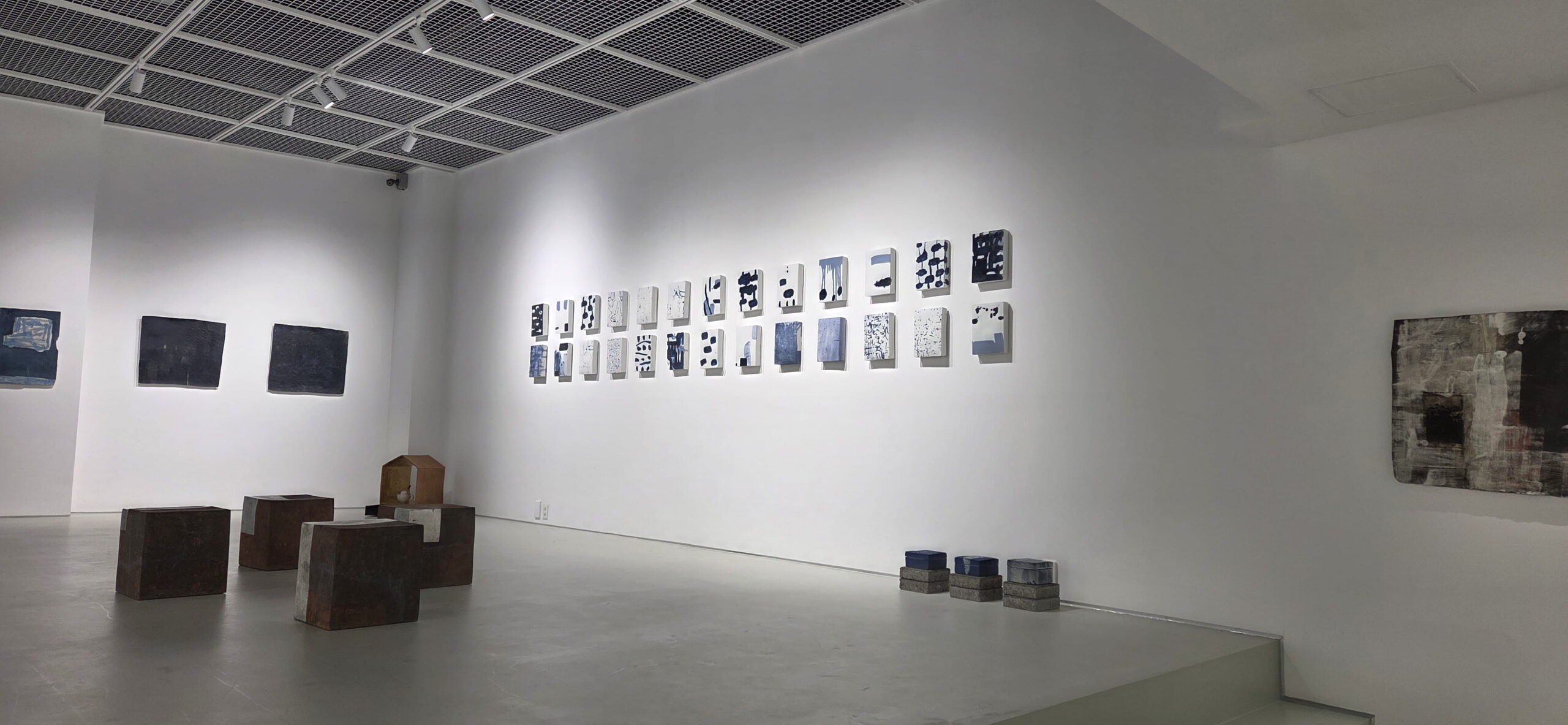
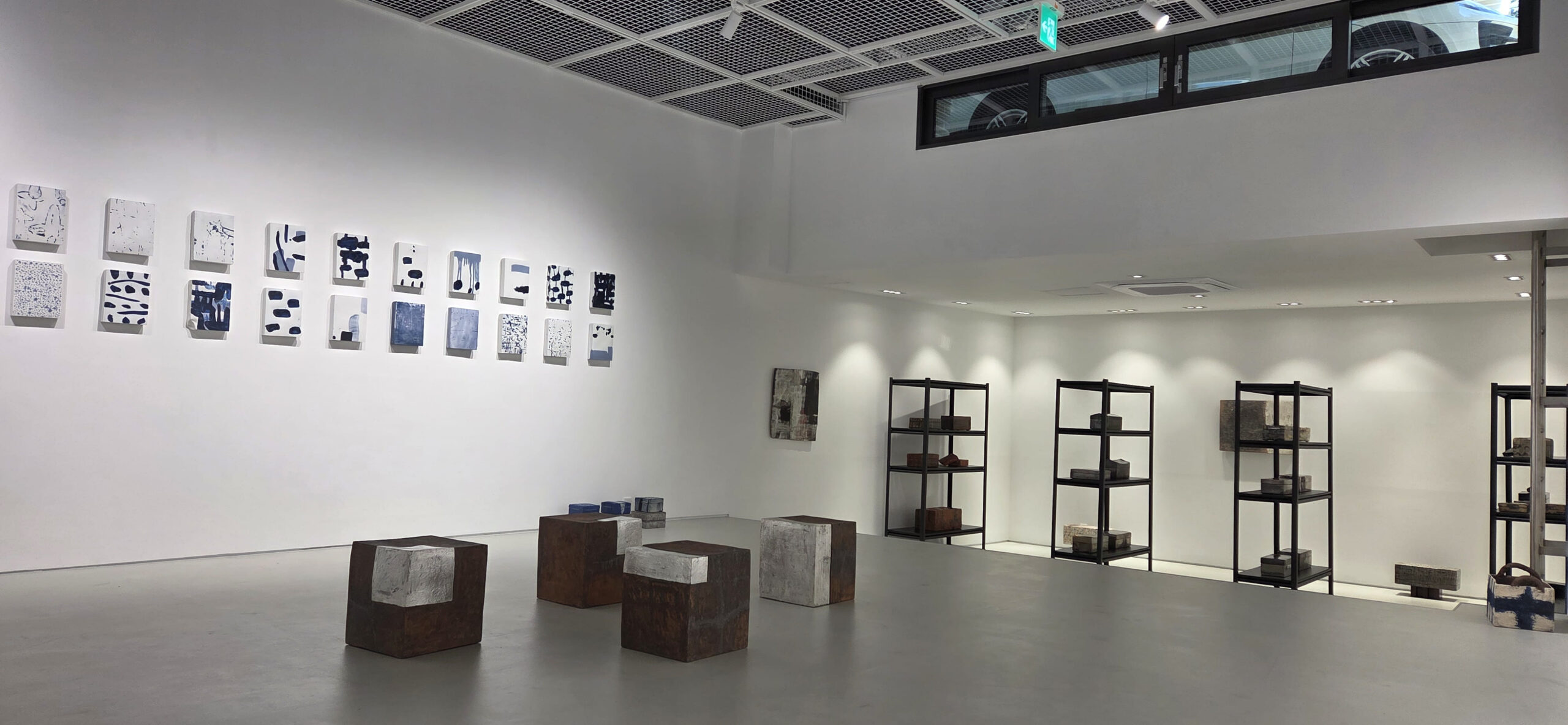
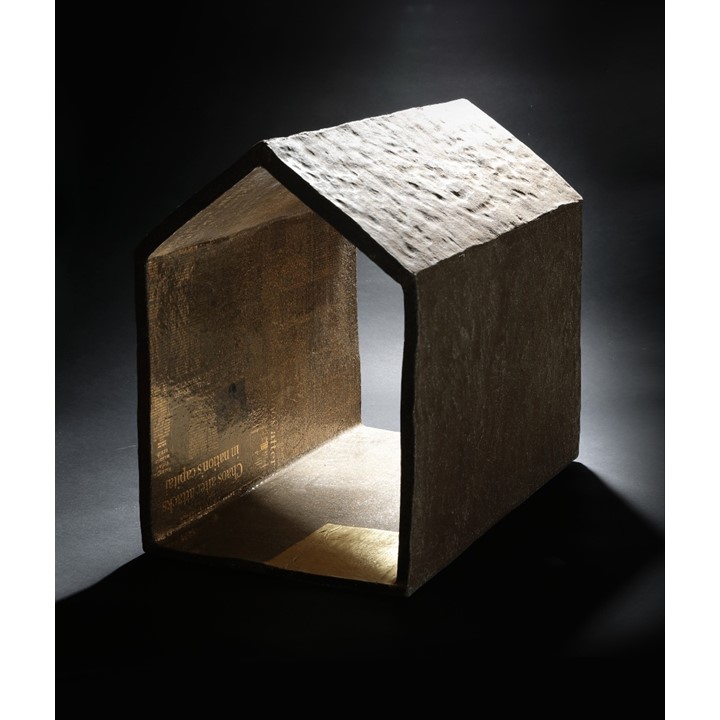
Artist Dae-hoon Kim translates the elemental forces of clay, water, and fire into a pictorial language, unfolding a sculptural meditation on existence, memory, absence, and trace. His practice is defined by a ‘multilayered structure’ where the materiality of ceramics overlaps with a painterly sensibility. The fired clay surface becomes a space for subtle language play, a visual field where oxides and chlorides are poured, rubbed, and layered, acting simultaneously as material, painting, and text.


This solo exhibition, 《No Reason》, investigates the presence of objects and the surrounding absence through cubic and rectangular forms that evoke ‘boxes,’ ‘chairs,’ ‘chests,’ and ‘houses.’ Images of a bowl of rice, a rocking horse, a home, or an apple appear on the clay canvases—fragments from the artist’s memory, sometimes left as collaged images, embedded texts, or engraved seals that testify to his inner landscape.
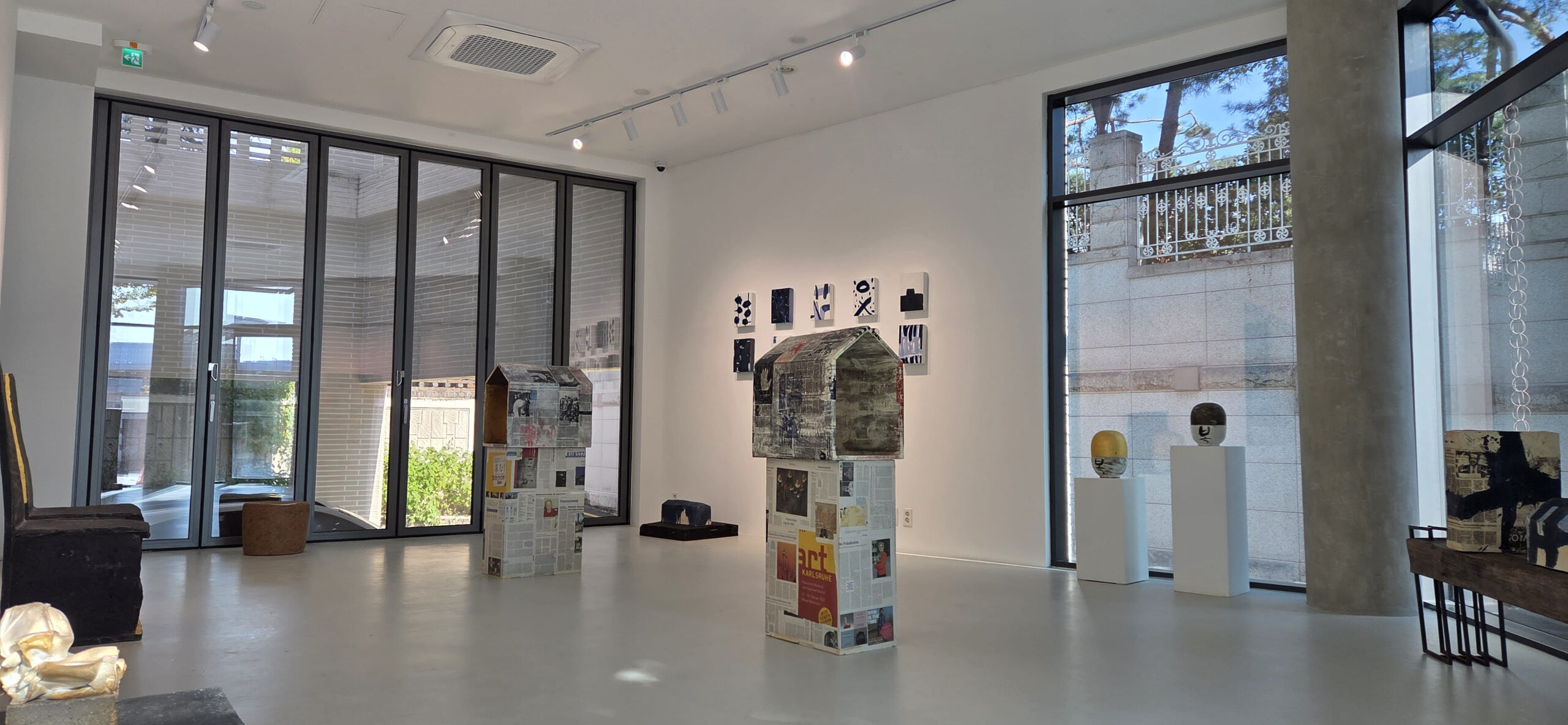
 

Kim states that the act of working with clay and firing it is a process of affirming existence, a relentless journey of searching for the ‘self’ even as images and words are erased and blurred. He weaves his own fundamental, ontological questions into the fabric of matter, painting, and language.
 

《No Reason》 is a field of new material sensation where craft and painting, form and language, abstraction and memory coexist—a record of artistic impulse that is pure because it is without reason, and yet absolutely necessary.
 

NUNU


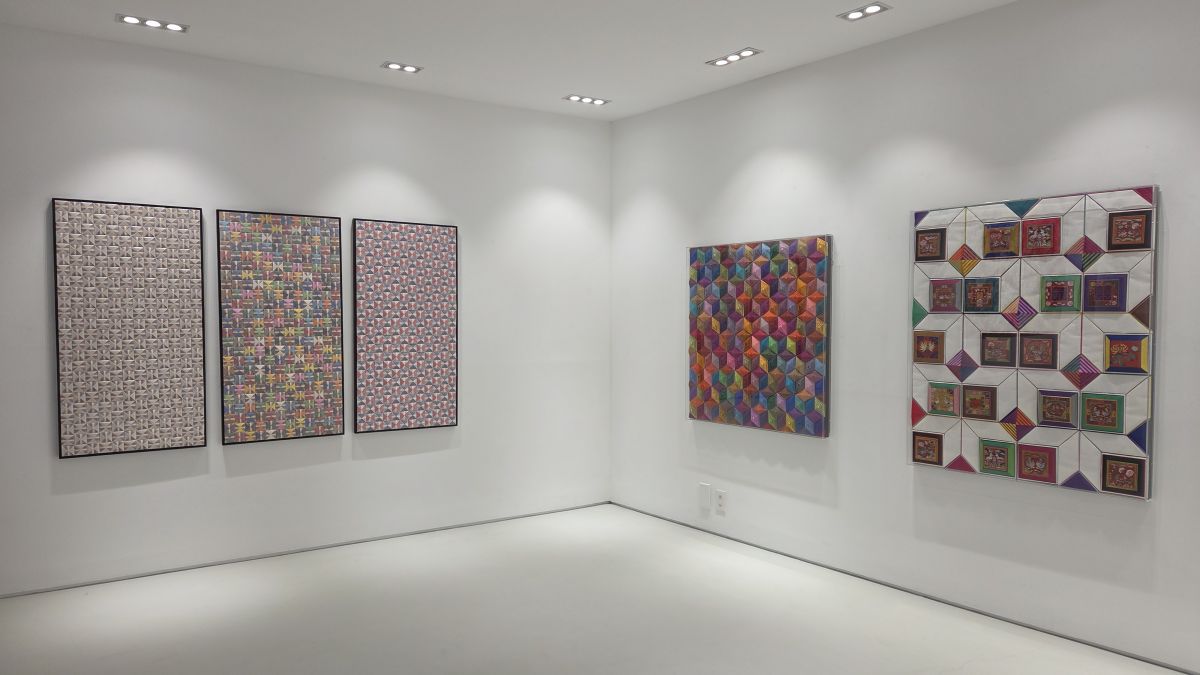
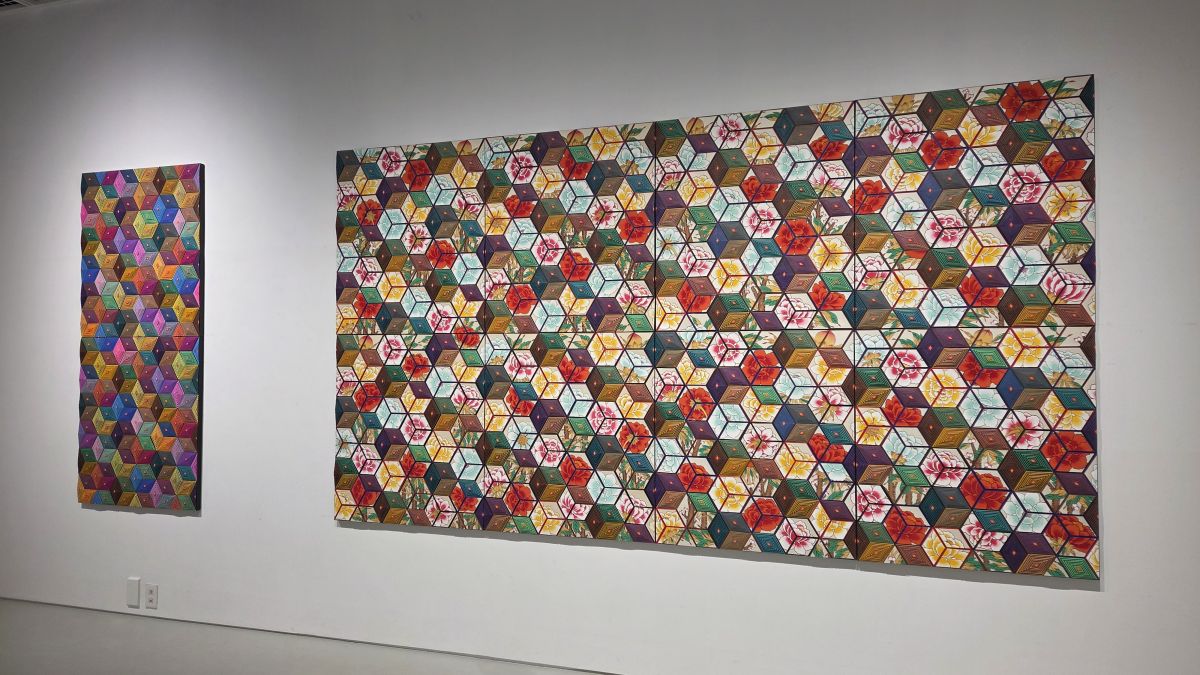
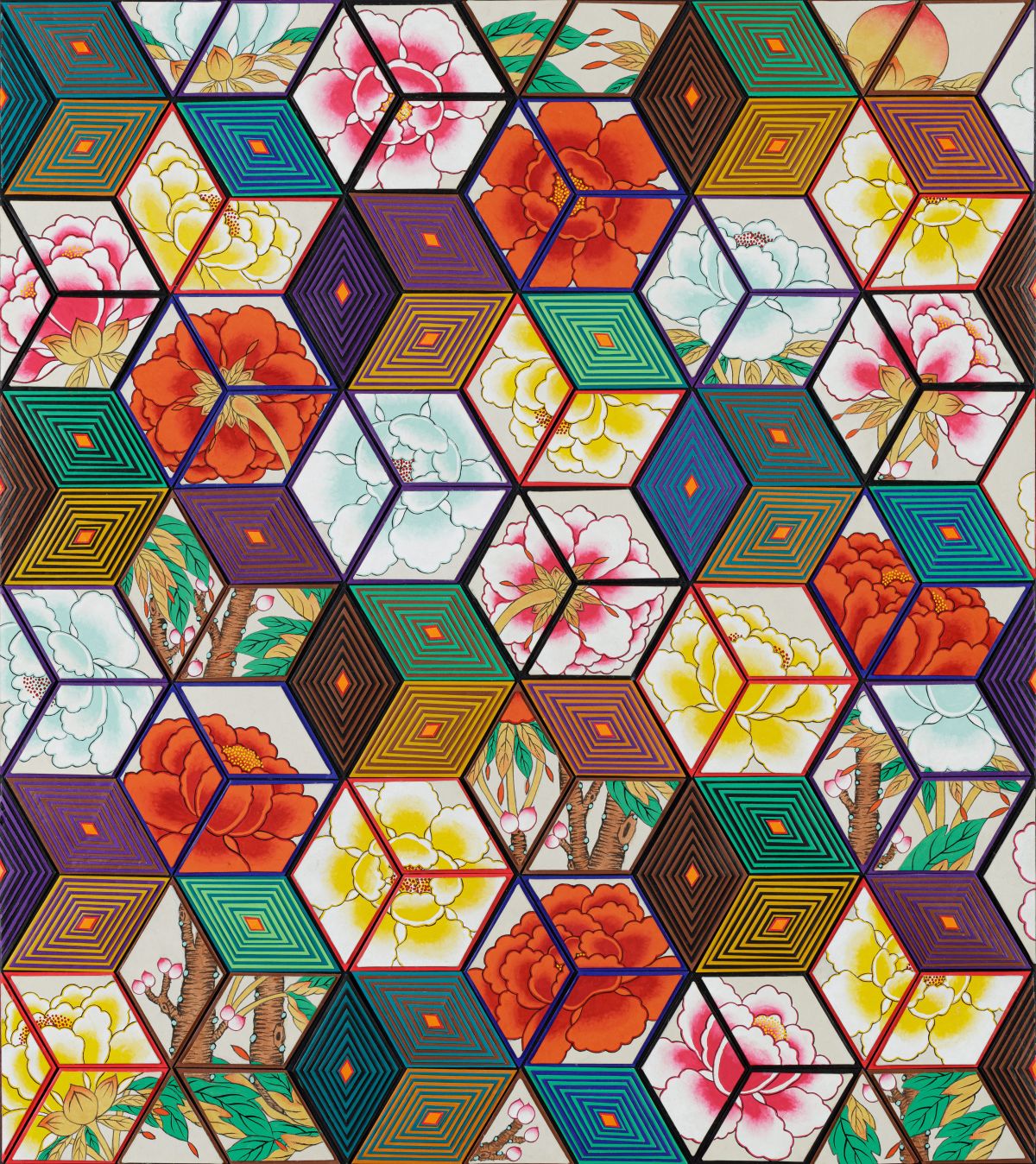
Cube Peony #1, 92x82cm, paper, hangi, pigment, 2024


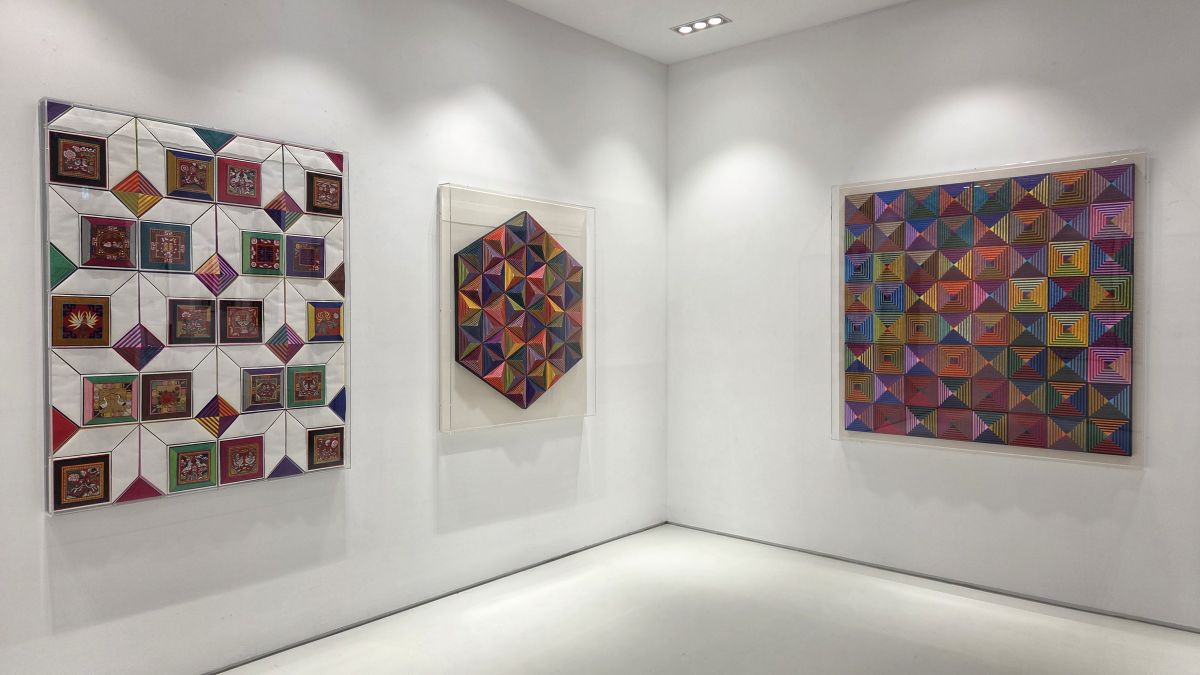
Eunjung Rhee constructs dimensional reliefs from folded paper, layering them with hanji and then painting motifs from traditional Korean minhwa—symbols of prosperity and beauty. Her process merges the meditative discipline of origami with the tactile depth of traditional craft, transforming flat geometry into vibrant fields of structure and color.


In her compositions, geometric abstraction becomes both a framework and a metaphor. The cube—precise yet infinite—multiplies across the surface like a rhythmic code, creating optical movement and spatial illusion. Beneath and within these modular forms, Rhee paints the lush imagery of minhwa, allowing the organic and the constructed, the spiritual and the material, to coexist in dynamic tension.


The result is a poetic geometry where tradition breathes within abstraction—a contemporary reinterpretation of bu-gwi-yeong-hwa (富貴榮華, wealth and glory) that invites viewers to discover harmony between order and life’s blooming vitality.


Sweet Dreams

Sweet Dreams

Light and Rest — Fragments of a Sweet Dream


The solo exhibition Sweet Dreams by artist Sun-joo Chung unfolds the wish for sweetness and deep rest that blossoms within the ordinariness of everyday life. Grounded in Korea’s traditional mother-of-pearl (nacre) craftsmanship, the artist engraves familiar motifs such as hearts, candies, and pillowcases onto her surfaces, seamlessly traversing the boundaries between tradition and modernity, East and West. The delicate shimmer of nacre oscillates between day and night, reality and dream, offering viewers tender and dreamlike moments of light.


For centuries, Korean pillowcases have been embroidered with auspicious patterns—flowers, butterflies, and mandarin ducks—symbols of good fortune and blessing. Chung reinterprets these motifs through a contemporary visual language, conveying a timeless message of blessing and serenity to those living today. In her compositions, popular icons like candies, hearts, and M&Ms are transformed through the iridescent luster of mother-of-pearl, gaining new emotional depth and resonance.


Sweet Dreams does not merely sing of sweet illusion. It is another name for the peaceful rest, the beautiful dream, and the quiet prayer for happiness that everyone longs for amid a weary and busy life. Like a warm pillow that rests on the border between reality and dream, Sun-joo Chung’s works offer each of us a brief moment to drift into a gentle, sweet dream.

The Sacred & the Profane

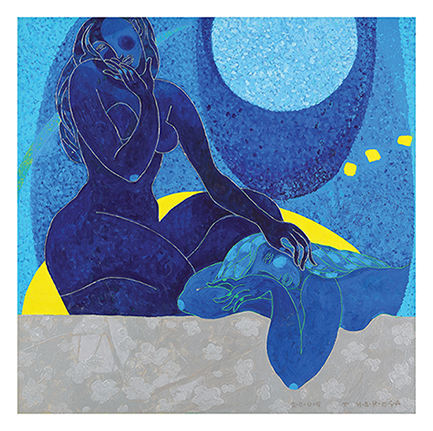
    Our Story, acrylic on canvas, 126x126cm, 2025


The Sacred & the Profane: Radiant Ecstasy
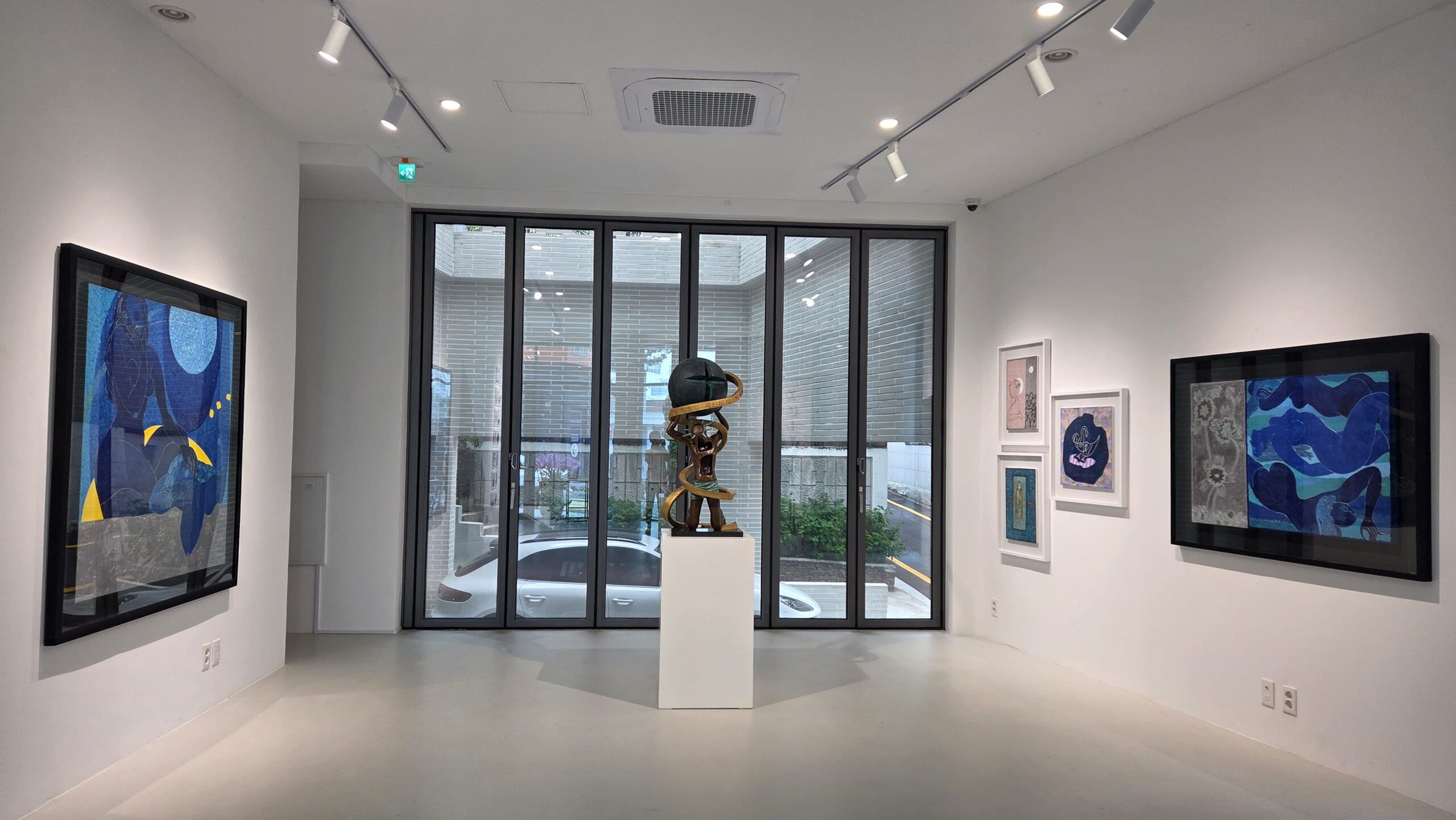
OMAE Gallery is pleased to present The Sacred & the Profane: Radiant Ecstasy, a solo exhibition by artist Mi-yeon Jung, on view from September 16 to October 2, 2025. This exhibition revisits one of the most enduring themes in both art and religion—the tension between the sacred and the profane—asking anew, within the realities of our time, what kind of light illuminates the human condition.


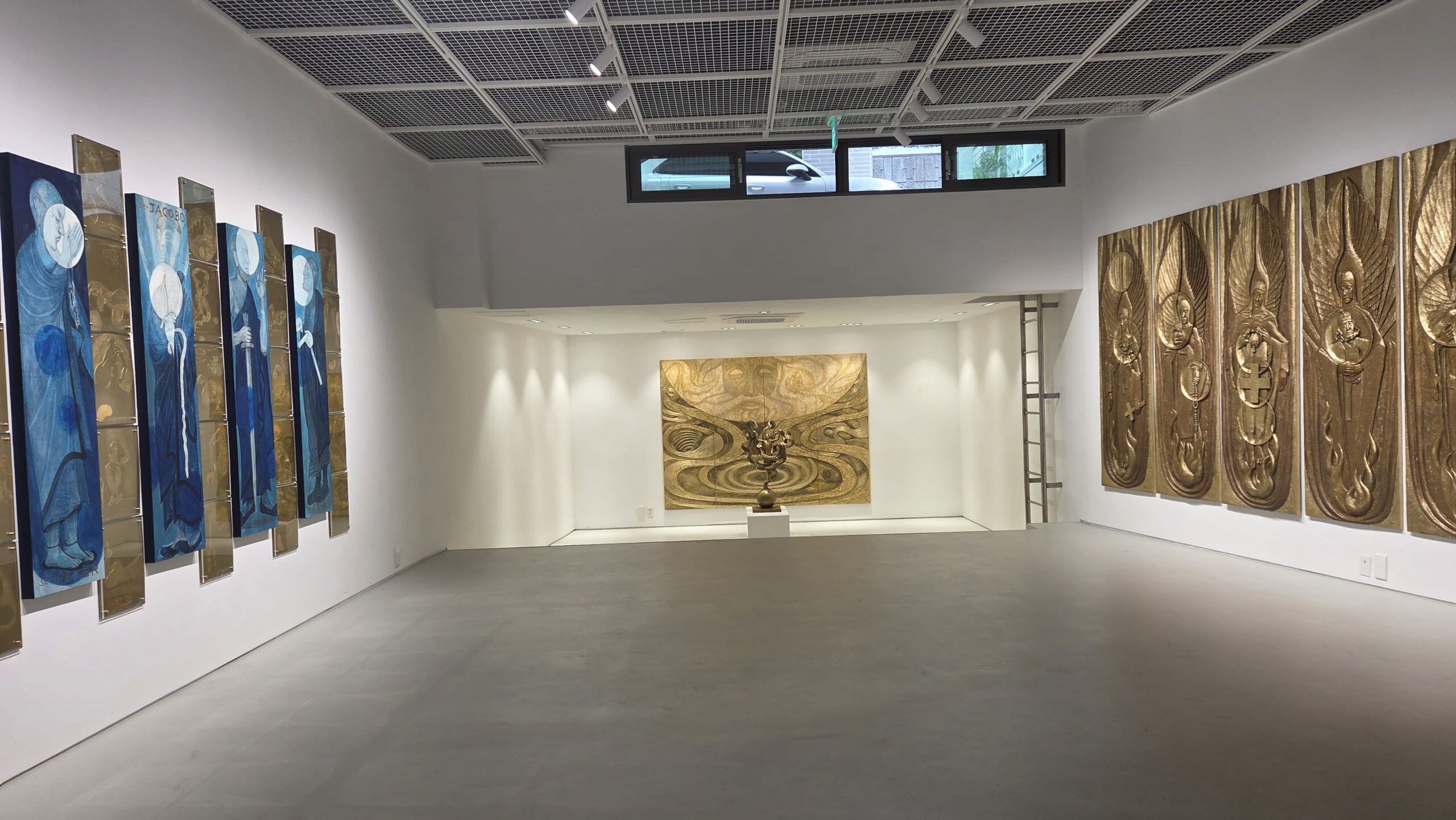
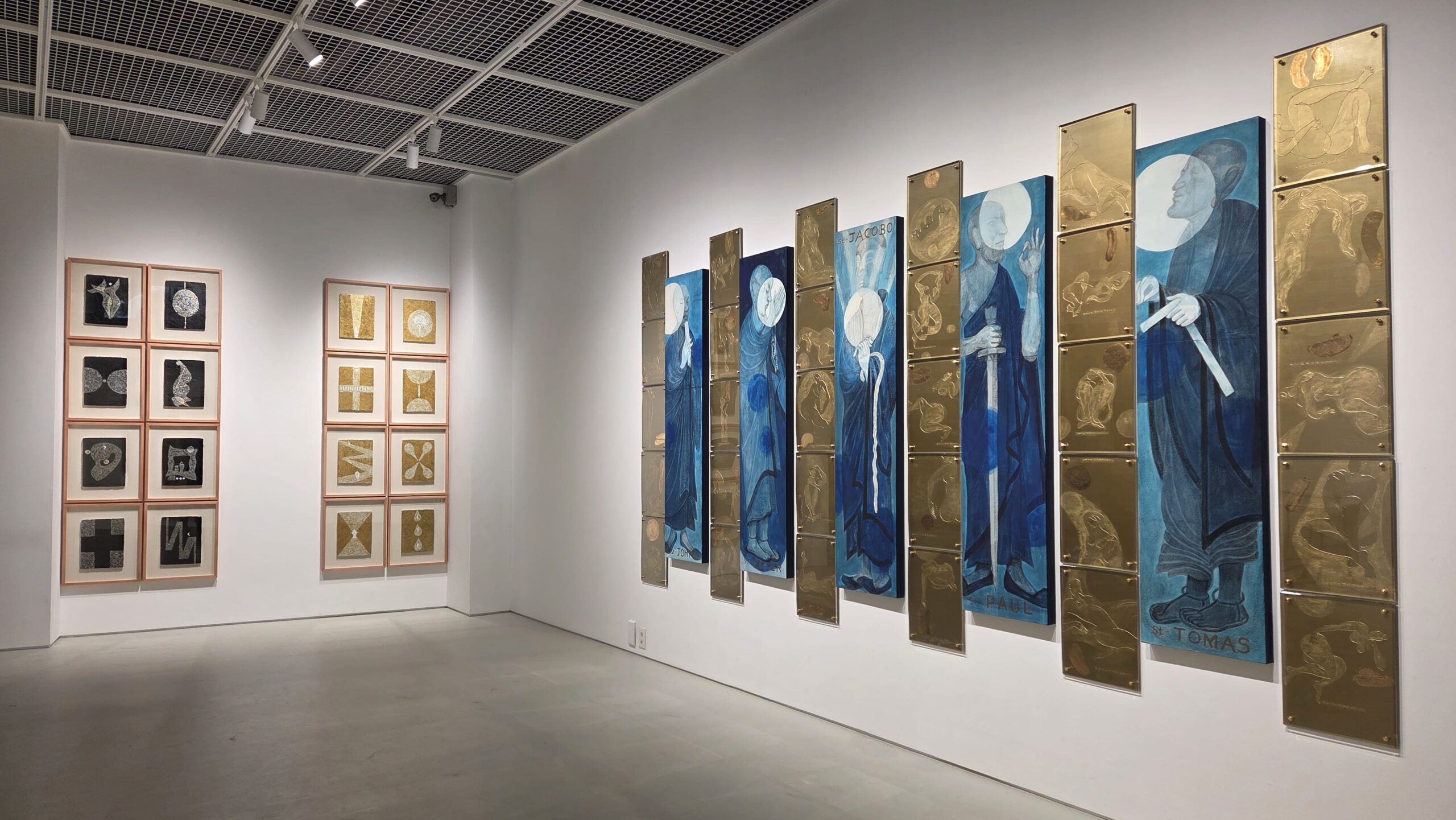
Jung’s works resist reducing the sacred and the profane to a simple opposition. Instead, they explore the luminous moments that emerge when boundaries collapse and worlds intersect—between Buddhism and Catholicism, tradition and contemporaneity. In her compositions, the ten disciples of Seokguram appear alongside female nude croquis; Buddhist symbols are transposed into Catholic contexts; and the interplay of blue and gold unfolds as a metaphor for the relationship between divinity and humanity. For the artist, the nude is not merely a drawing of the human body but the most direct and beautiful form of truth revealed in human existence.


For many years, Jung has explored the intersection of faith and art as a painter of Catholic icons. Through her iconography—published in the Archdiocese of Seoul Weekly Bulletin and integrated into church commissions—she has sought to create what she calls “paintings that strike the heart,” capturing the vitality of lived spiritual experience. In this exhibition, she extends that journey by bringing together the Buddhist legacy of her hometown Gyeongju with her Catholic faith, re-examining the sacred and the profane on an existential level.


As religious historian Mircea Eliade once wrote, “The sacred reveals itself through the profane, and in that moment, objects and places acquire an entirely different dimension.” Likewise, Jung reveals the radiant light of being that emerges where the sacred and the profane converge. More than an art exhibition, The Sacred & the Profane invites each viewer to discover new meaning in these dualities within their own lives, and to share in the radiant ecstasy that arises from that encounter.


Heritage Code

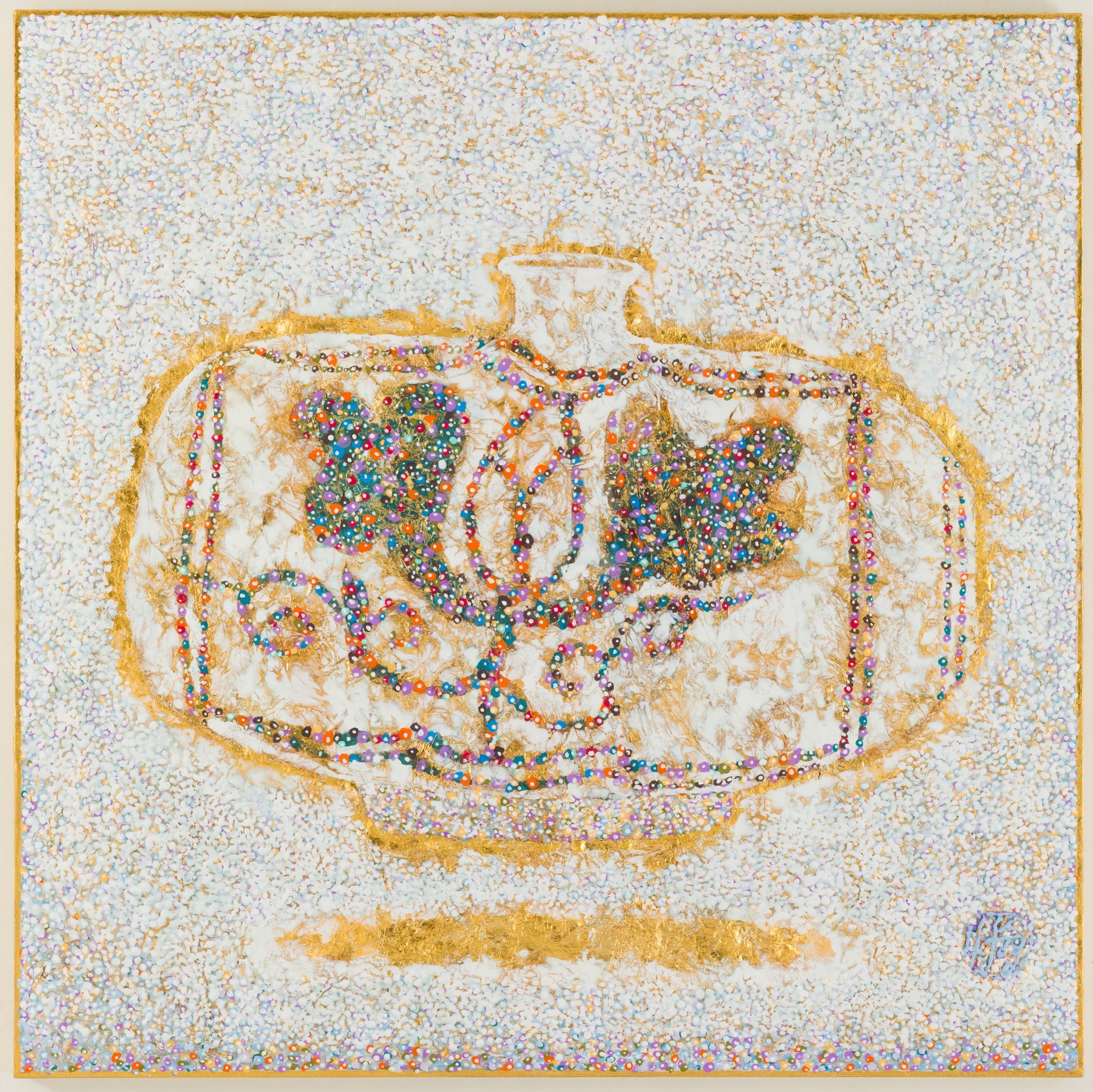
Soo-young Seo, Heritage Code 41, 75x75cm, 24k gold leaf, gold alloy leaf, stone pigment, Ink, 2025


OMAE Gallery is pleased to present Heritage Code, a series of works by artist Soo-young Seo, on view at the Collectors’ Lounge from August 26 to October 2, 2025.


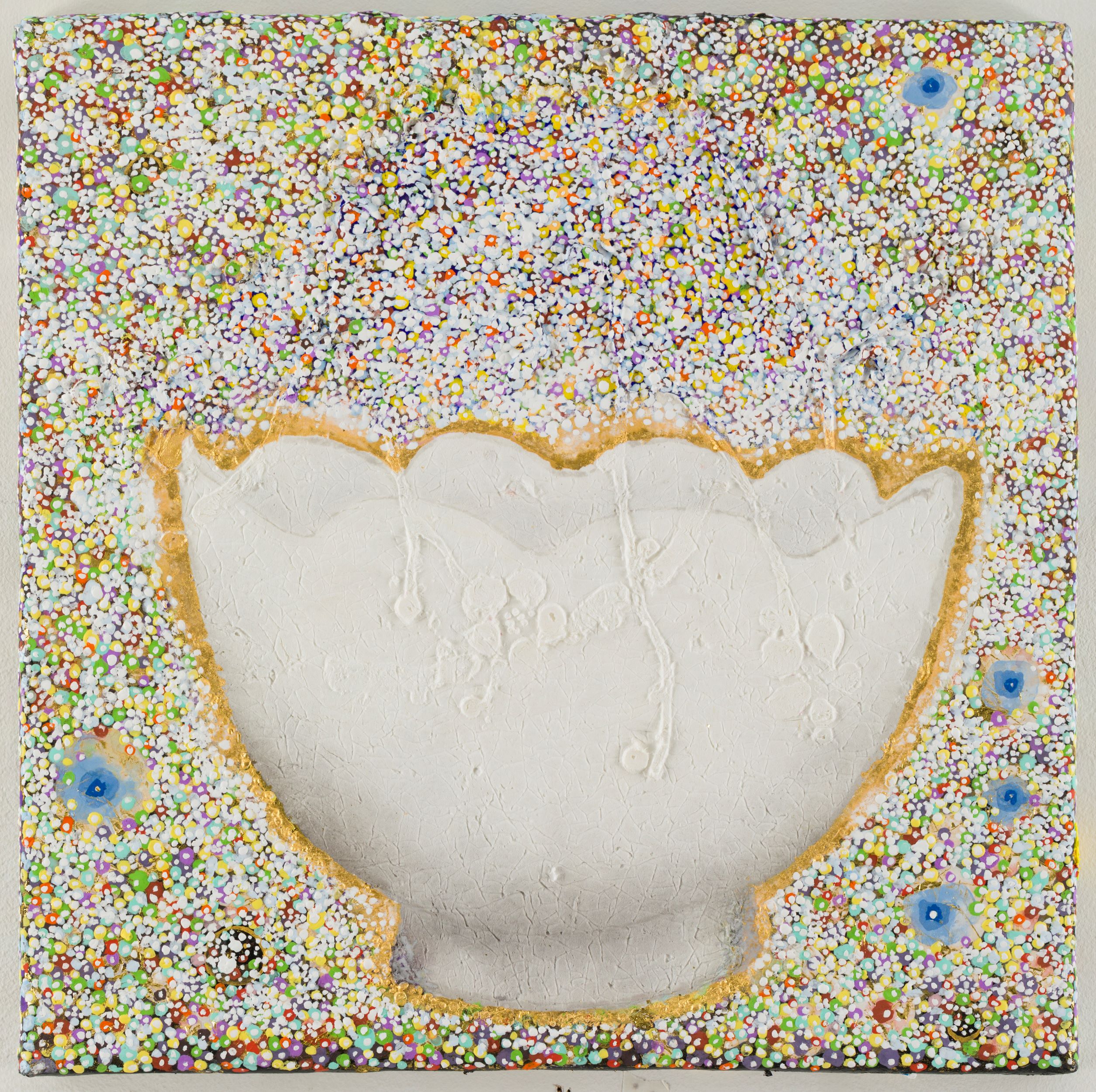
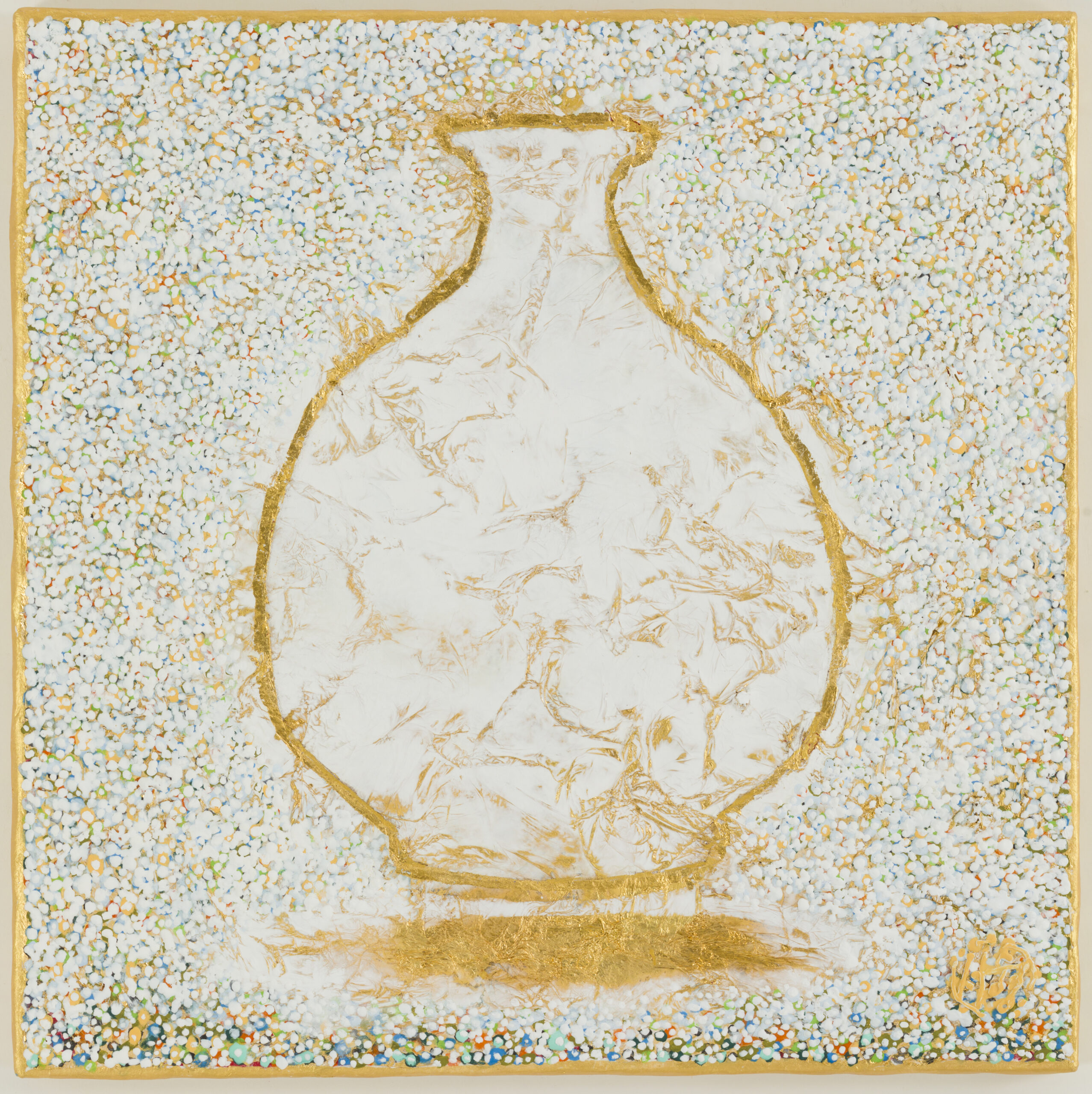
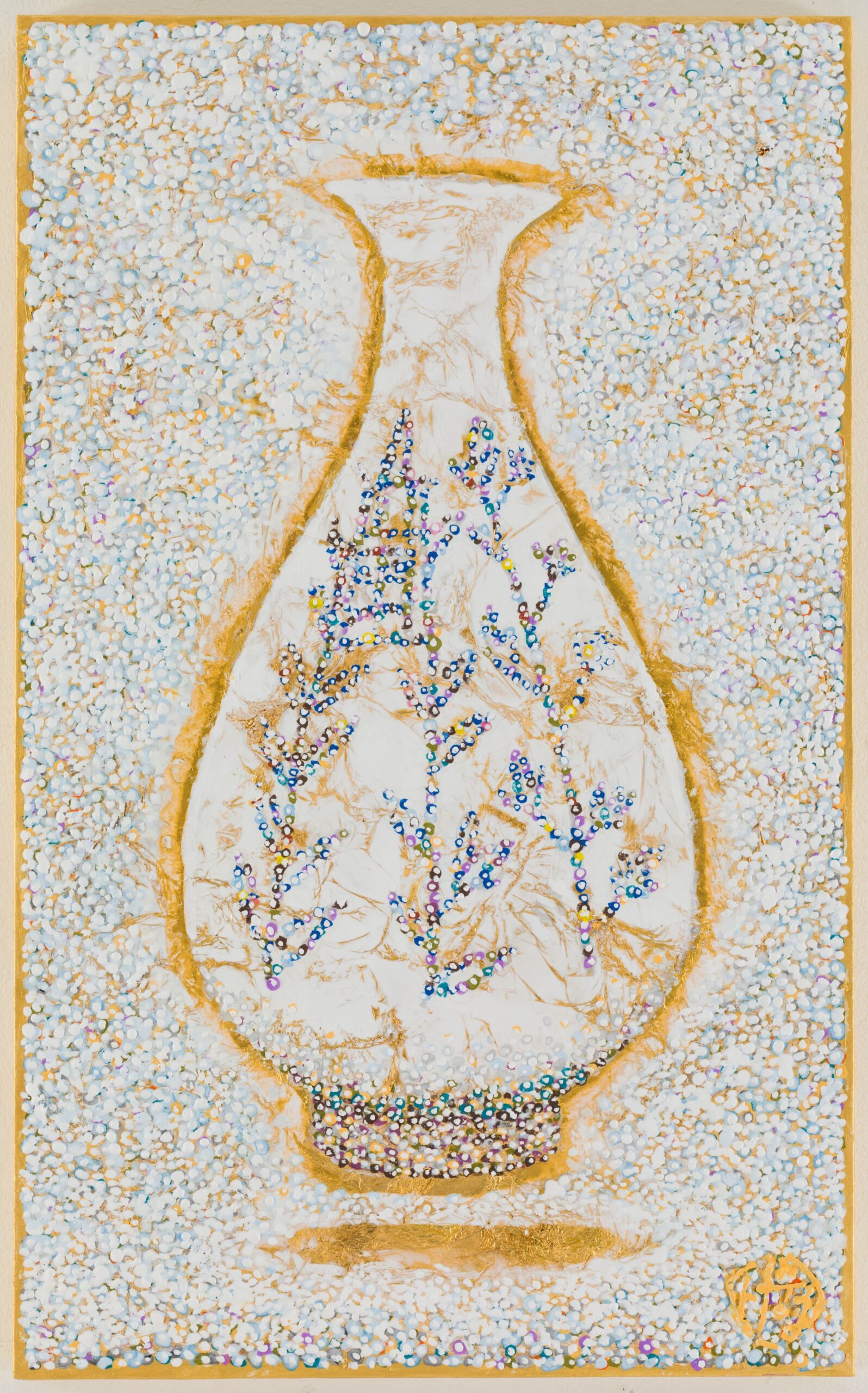
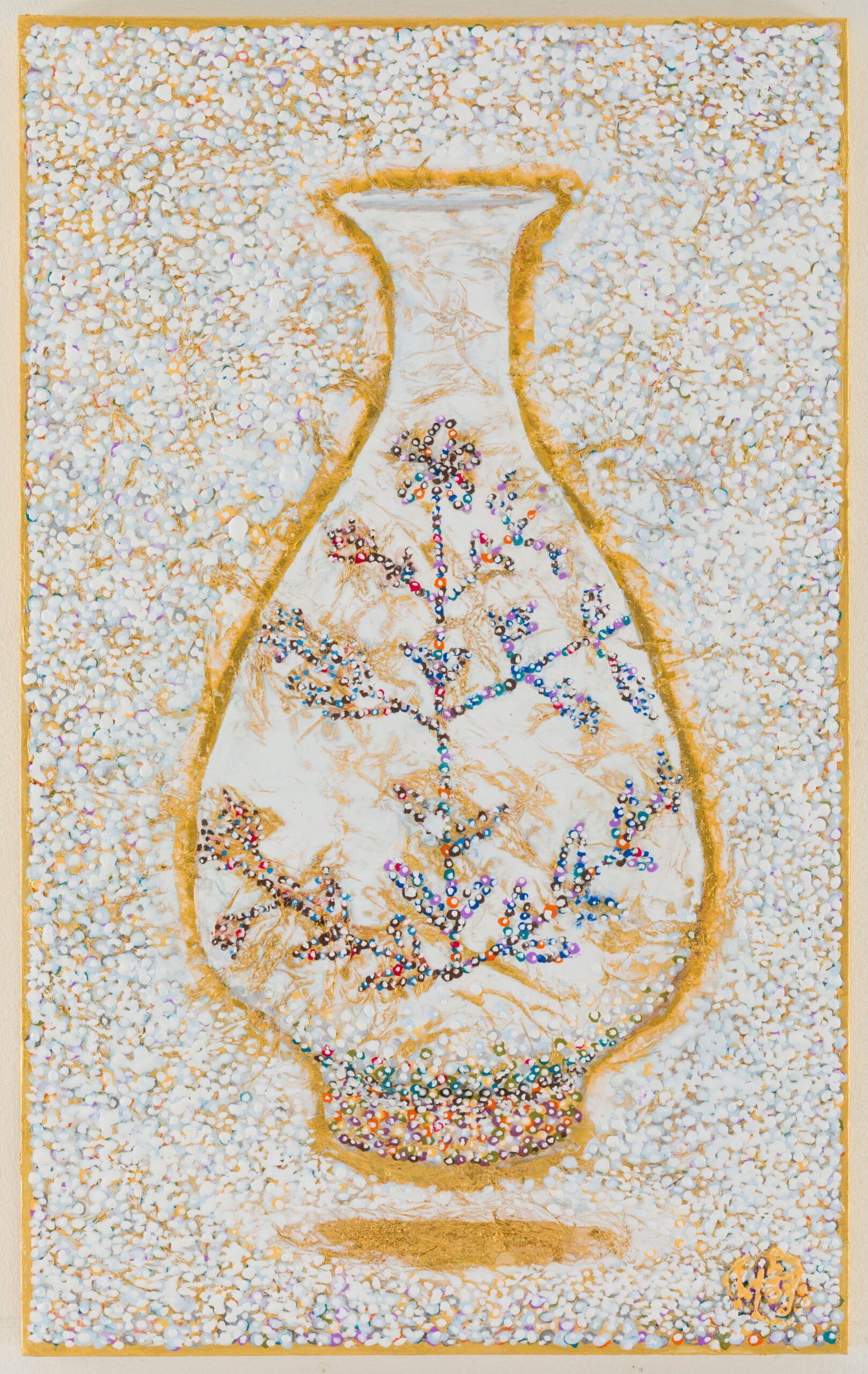
This special presentation highlights Seo’s distinctive approach to contemporary painting, where traditional aesthetics and motifs are reinterpreted through a refined, modern sensibility. Her Heritage Code series unfolds as a dialogue between past and present, weaving cultural memory into vivid visual codes that resonate with today’s audiences.


Throughout the exhibition period, OMAE Gallery will also host a range of exclusive programs for collectors, offering opportunities for deeper engagement with the artist’s practice and works.


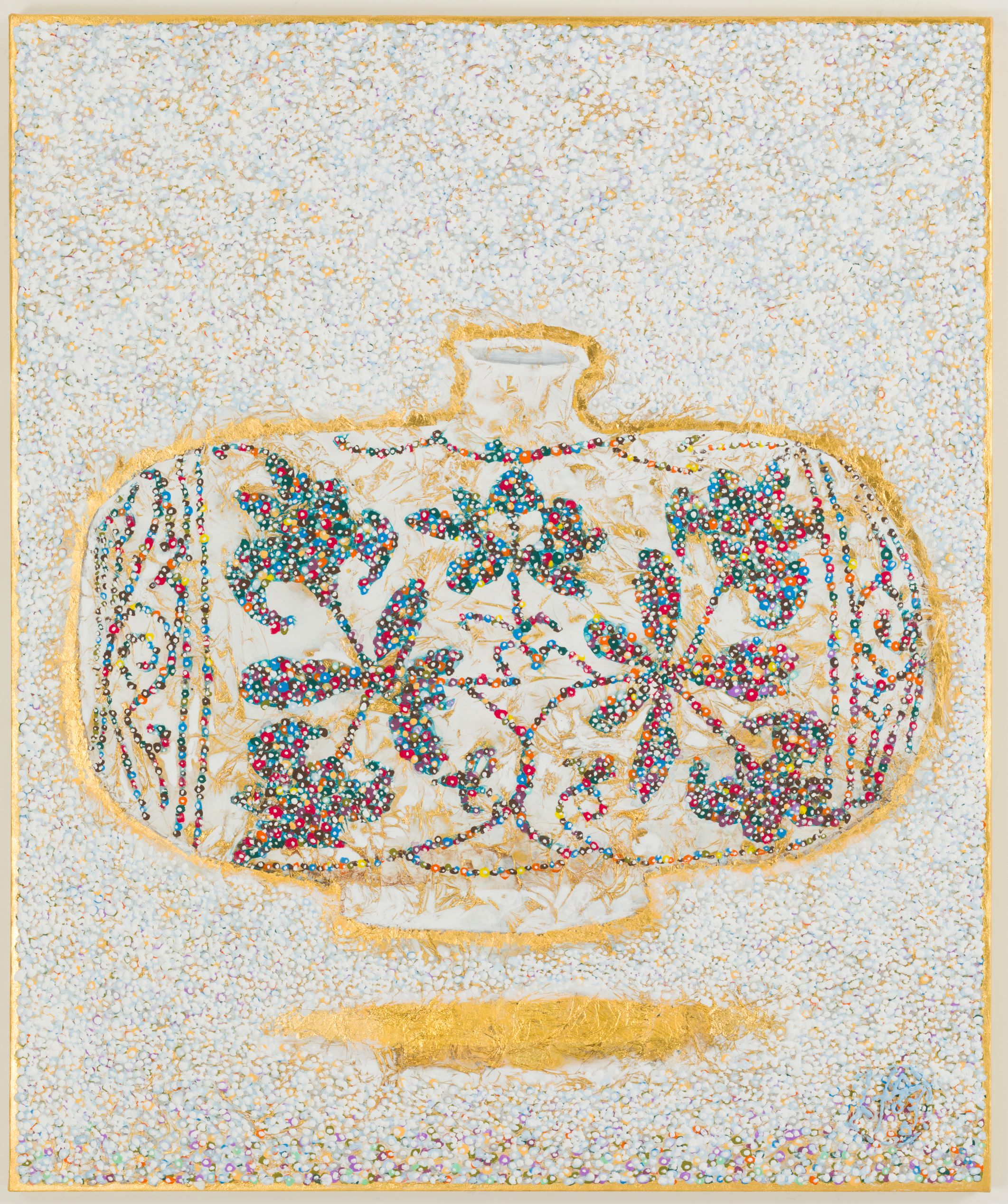
Soo-young Seo, Heritage Code 38, 72.5x61cm, 24k gold leaf, gold alloy leaf, stone pigment, Ink, 2025


Soo-young Seo, Heritage Code 39, 72.5x61cm, 24k gold leaf, gold alloy leaf, stone pigment, Ink, 2025


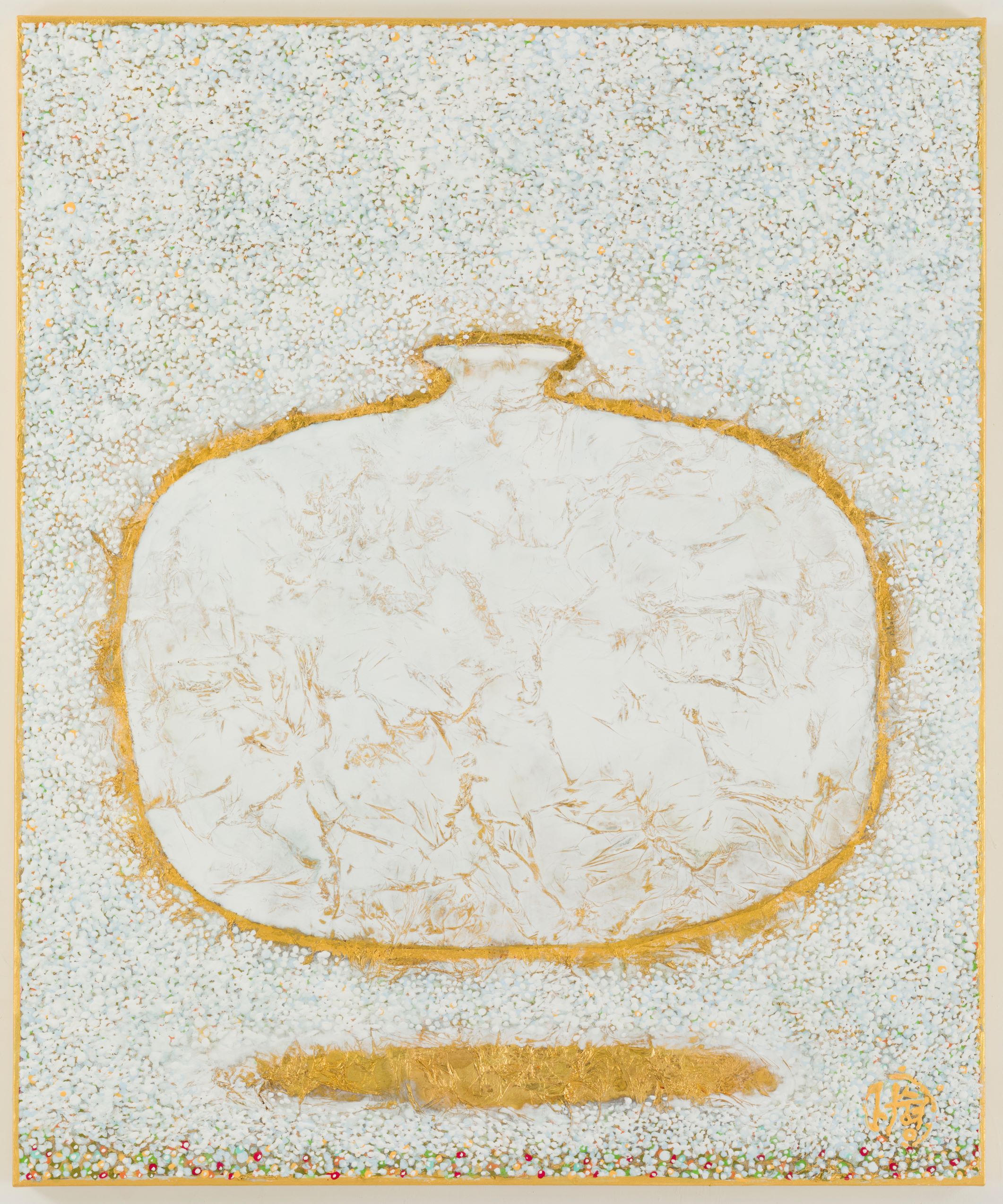
Soo-young Seo, Heritage Code 42, 45x45cm, 24k gold leaf, gold alloy leaf, stone pigment, Ink, 2025


Soo-young Seo, Heritage Code 45, 45x45cm, 24k gold leaf, gold alloy leaf, stone pigment, Ink, 2025


Soo-young Seo, Heritage Code 50, 52x32cm, 24k gold leaf, gold alloy leaf, stone pigment, Ink, 2025


Soo-young Seo, Heritage Code 50, 52x32cm, 24k gold leaf, gold alloy leaf, stone pigment, Ink, 2025