
Literati painting created with mother-of-pearl and Ott

OMAE Gallery is pleased to present the work of Sun-kab Kim, who creates contemplative paintings using mother-of-pearl and traditional lacquer on paulownia wood. His surfaces—minimal yet richly layered—suggest a convergence of color, material, and meditative form. Stripped of expressive brushstrokes or representational imagery, these works are not depictions but presences: weighty, luminous fields formed by the artist’s repetitive gestures of sprinkling, layering, and polishing. The embedded fragments of mother-of-pearl glimmer like constellations, inviting the viewer’s imagination to trace invisible connections across the pictorial plane—an act akin to stargazing, where meaning is not delivered but discovered.


Kim’s process draws deeply from traditional East Asian aesthetics, particularly the literati ideals of restraint, naturalism, and inward reflection. Working with paulownia wood—a material historically cherished by Confucian scholars for its quiet beauty and atmospheric sensitivity—he burns, sands, and lacquers the surface before applying powdered nacre in a series of tactile, layered interventions. The result is a field of controlled depth, where surface and substance are inseparable. These works do not offer a single reading, but rather open a space for contemplation, echoing the disciplined elegance and spiritual quietude of the scholar-painter tradition. In Kim’s hands, lacquer and mother-of-pearl become not merely materials, but vessels for time, memory, and the unseen.

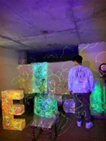
An Obsession with the Useless

OMAE Gallery is proud to present a solo exhibition by Min-seong Kim, whose hyperrealist paintings pay homage to traditional Korean embroidery, specifically the bokjumeoni (lucky pouch). First encountered in the 2019 exhibition Folk Painting Kaleidoscope, Kim’s work stood out for its intricate depiction of hand-stitched motifs, reinterpreted through contemporary painting. By the time of the 2021 Korea Traditional Craft Exhibition, her bokjumeoni series had dramatically expanded in scale—both physically and conceptually—transforming delicate, handheld forms into large, meditative canvases that exude energy, silence, and emotional depth. Kim’s paintings do more than imitate embroidery; they distill the timeless presence of craft into the language of fine art.


At the heart of Kim’s practice lies a fascination with time—each thread she paints carries echoes of the past, present, and future. Her depiction of knotted tassels speaks to the invisible ties between people, objects, and all things within the universe. What begins as an image of traditional ornament becomes, through his hands, a powerful meditation on continuity, longing, courage, and generational love. While rooted in Korean tradition, Kim’s work is anything but nostalgic—it offers a contemporary perspective on heritage, form, and meaning. As art in the 21st century grows ever more complex and multidimensional, Minseong Kim’s paintings remind us that tradition, when reimagined with sincerity and skill, can resonate universally.


From Korea with Love

For the artist, tradition is not a limitation but a wellspring of inspiration—a treasured source of repetition and continuity. By attentively listening to the echoes of the past, a subtle internal rhythm begins to stir, prompting a search for new paths toward joyful, contemporary reinterpretation. The challenge lies in balancing reverence for inherited forms with the desire to break free from rigid repetition. In this pursuit, the artist envisions a garden of freedom and happiness—one that grows not in opposition to tradition, but in harmony with it.

Self-Portrait: Three Ceramic Painters

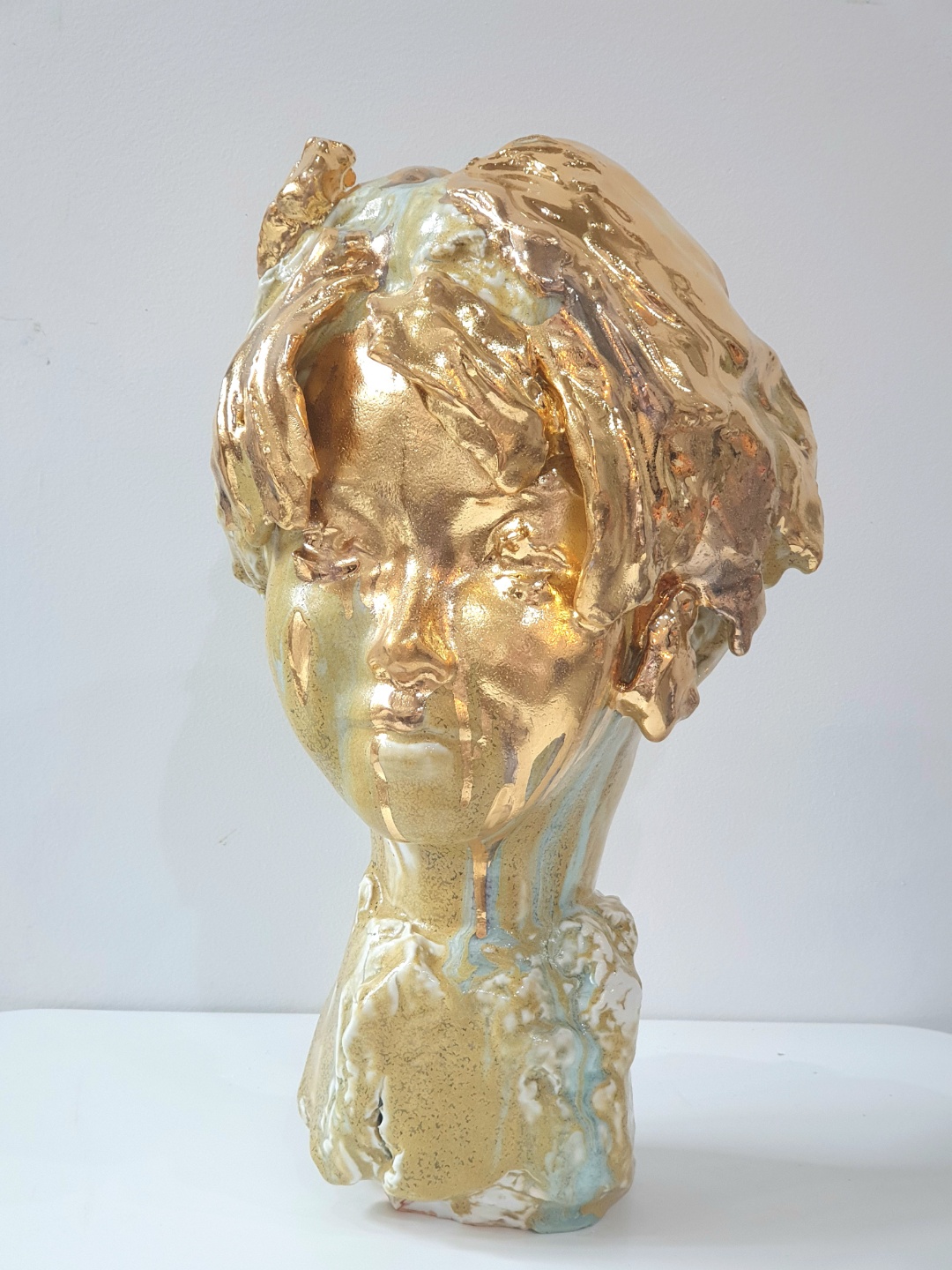
OMAE Gallery presents Self-Portrait: Three Ceramic Painters—a special exhibition spotlighting artists Myung-sun Kim, Juujuu Kim, and Jung-sun Yoon. While all three artists share the medium of ceramic painting, what truly unites them is their deeply personal and introspective journey expressed through their works. This exhibition focuses on the artistic process as a means of self-exploration, highlighting how each artist reflects on her identity through diverse visual languages rooted in ceramic form.


Rather than emphasizing a physical installation alone, the exhibition invites viewers to engage more closely with the artists’ thoughts and creative intentions through online dialogues. Throughout the exhibition period, audiences are encouraged to watch in-depth artist interviews on YouTube, where each artist shares the motivations and stories behind their work. By listening closely and viewing the artworks—either by advance reservation at OMAE’s exhibition space or through Artsy and Instagram @omaeco—visitors can draw parallels between the artists’ inner worlds and their own. In doing so, the exhibition becomes not just a showcase of form and material, but a platform for mutual reflection, empathy, and conversation.

Soul of Ten Thousand Years: Erosion of Eternity

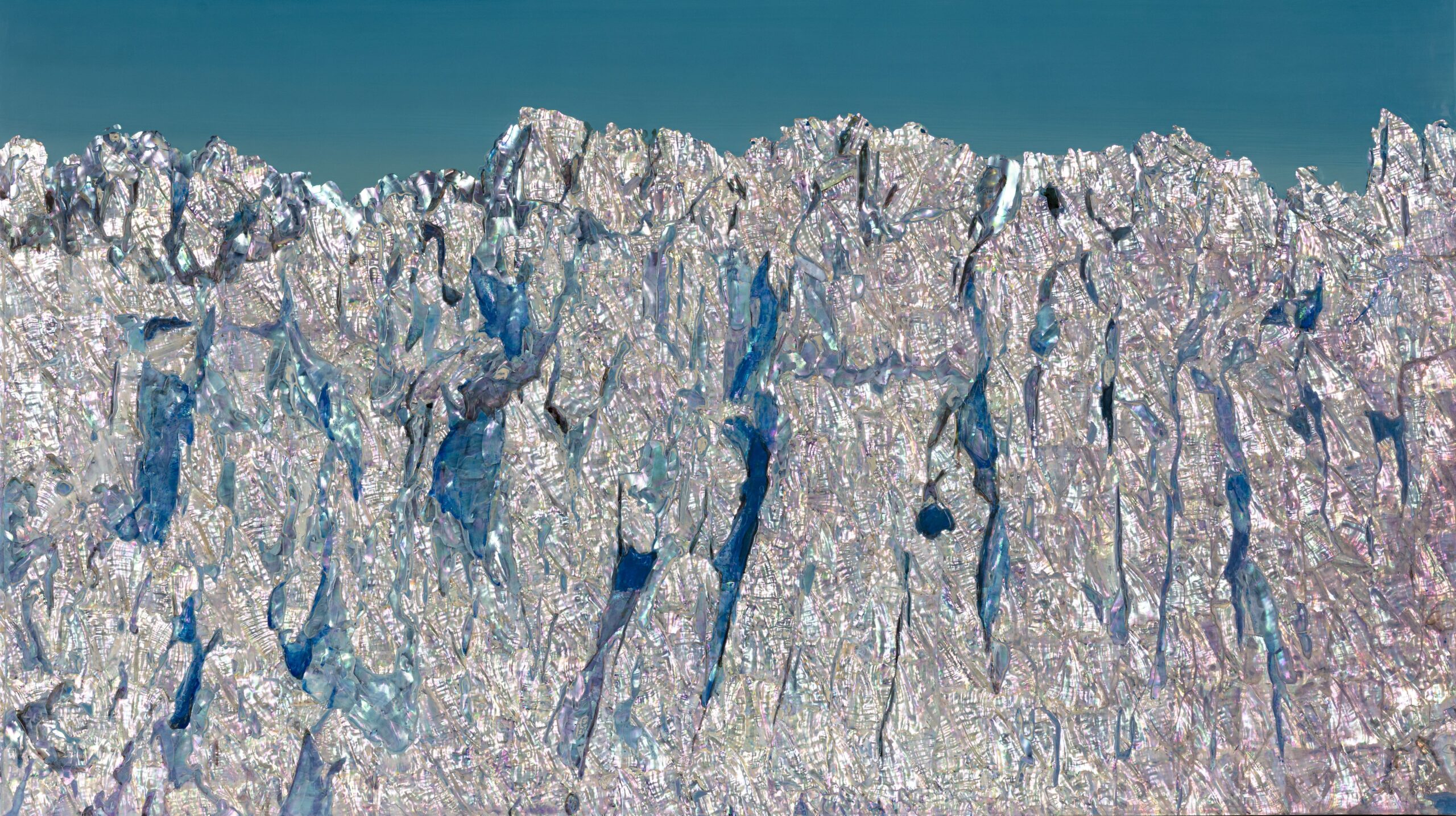
Born in Tongyeong and introduced to mother-of-pearl craft at the age of 13, Jong-Kim’s lifelong journey with najeon has evolved far beyond craftsmanship. What began as a vocation in youth has, over the decades, transformed into a profound expression of prayer and aspiration. Though widely recognized as a master artisan, Kim has always pursued something greater—a deep artistic vision beyond skill alone.


His technical mastery was affirmed when his works were acquired by the Metropolitan Museum of Art, while his artistic ambition came to light with the monumental 7-meter piece New Dream Journey to the Peach Blossom Land exhibited in 2021. Now, with the 2022 debut of his 12-piece Soul of Ten Thousand Years iceberg series, Kim signals not only a new chapter in his creative journey but a revolutionary moment in the history of Korean lacquer and mother-of-pearl art—where the hand of the artisan becomes the voice of the artist.

Bye Love – Reinterpretation of Kokdu

In traditional Korean funerary customs, wooden figurines known as kokdu were crafted to accompany the departed on their final journey, both adorning the bier and placed inside the coffin to ease sorrow and guide the soul. Far from being mere ritual objects, kokdu embody an enduring conversation between the living and the dead—a dialogue that offers comfort, continuity, and healing.


This exhibition reinterprets kokdu through the eyes of contemporary artists, who respond to personal and collective grief with warmth, resilience, and imagination. In the aftermath of the COVID-19 pandemic, which brought about immense loss and isolation, these works serve as visual rites of passage—ceremonies not of mourning alone, but of transformation and renewal. Through each piece, viewers are invited to encounter sorrow with tenderness and to rediscover the restorative power of love that transcends absence.


Fortune and Splendor: A Peony Story

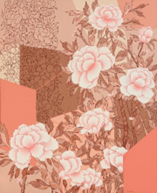
OMAE Gallery is pleased to present a solo exhibition by artist Lee Dona, whose work reimagines the traditional symbol of the peony (moran) as a contemporary expression of prosperity, happiness, and collective well-being. Through bold compositions that blend linear forms and three-dimensional space, Lee constructs a timeless visual realm—one that bridges past, present, and future. While her diverse artistic practice spans painting, lenticular images, video, media art, and installation, this exhibition takes a deliberate step back to focus solely on the peony motif. This choice reflects not only the artist’s deep connection to the subject, but also the seasonal resonance of the peony as a reminder of care, beauty, and shared humanity.


In a time marked by social distance and emotional isolation, Lee’s peonies bloom as vibrant, symbolic offerings—each a call to reconnect, reflect, and embrace one another with renewed warmth. Her peonies are not merely decorative; they are radiant orchestrations of color and form, filled with hope and emotional abundance. From blue to crimson, rising to radiant, her peonies invite us into a fantastical garden of shared dreams and timeless desires. As the year draws to a close, Fortune and Splendor, the spirit of this exhibition, encourages us to dive into a world where beauty, compassion, and joy are meant to be celebrated together.


Measuring the Accidental

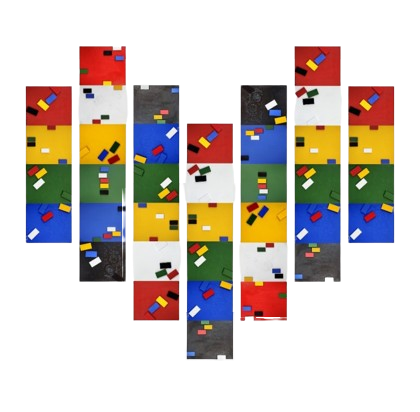
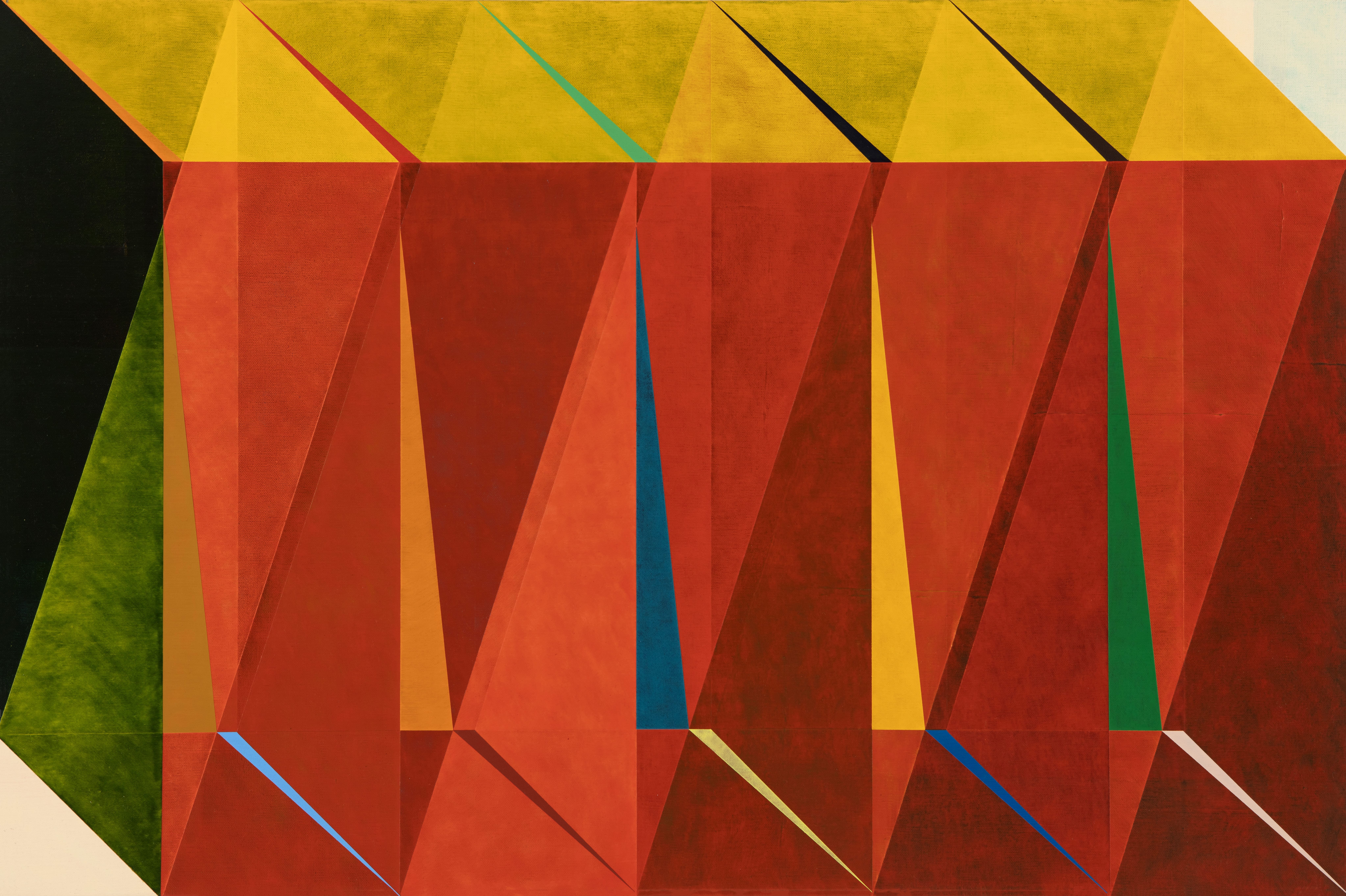
OMAE Gallery presents Measuring the Accidental – Infinite Layers, the ninth solo exhibition by artist Hwan-cheon Yong, on view from August 23 to September 26, 2021. The title reflects the artist’s realization that the changes occurring during the process of planning and making art are not so different from the cyclical and unpredictable nature of life itself. His intricately layered geometric compositions—marked by vivid colors and delicate patterns—are inspired by childhood memories of cracked mud walls and the bold hues encountered during his time in Africa. For Yong, drawing lines in color became a meditative act: a way to impose order onto emotional chaos and find psychological clarity through visual rhythm.


The artist describes his work as a convergence of contradiction—“what seemed accidental was in fact inevitable, and what felt certain was merely chance.” This tension lies at the heart of his practice. Educated in ceramics at Hongik University and further trained at Greatmore Studios in South Africa, Yong has developed a visual language that transcends disciplinary boundaries. His works are held in major collections including the Clayarch Gimhae Museum and the Korea Medical Foundation. For this exhibition, OMAE Gallery also presents a collaborative installation with textile artist Jungmin Oh, featuring a reinterpretation of the traditional Korean jogakbo (patchwork wrapping cloth), bridging contemporary art and craft in a shared exploration of layered meaning.