Alchemy of Light

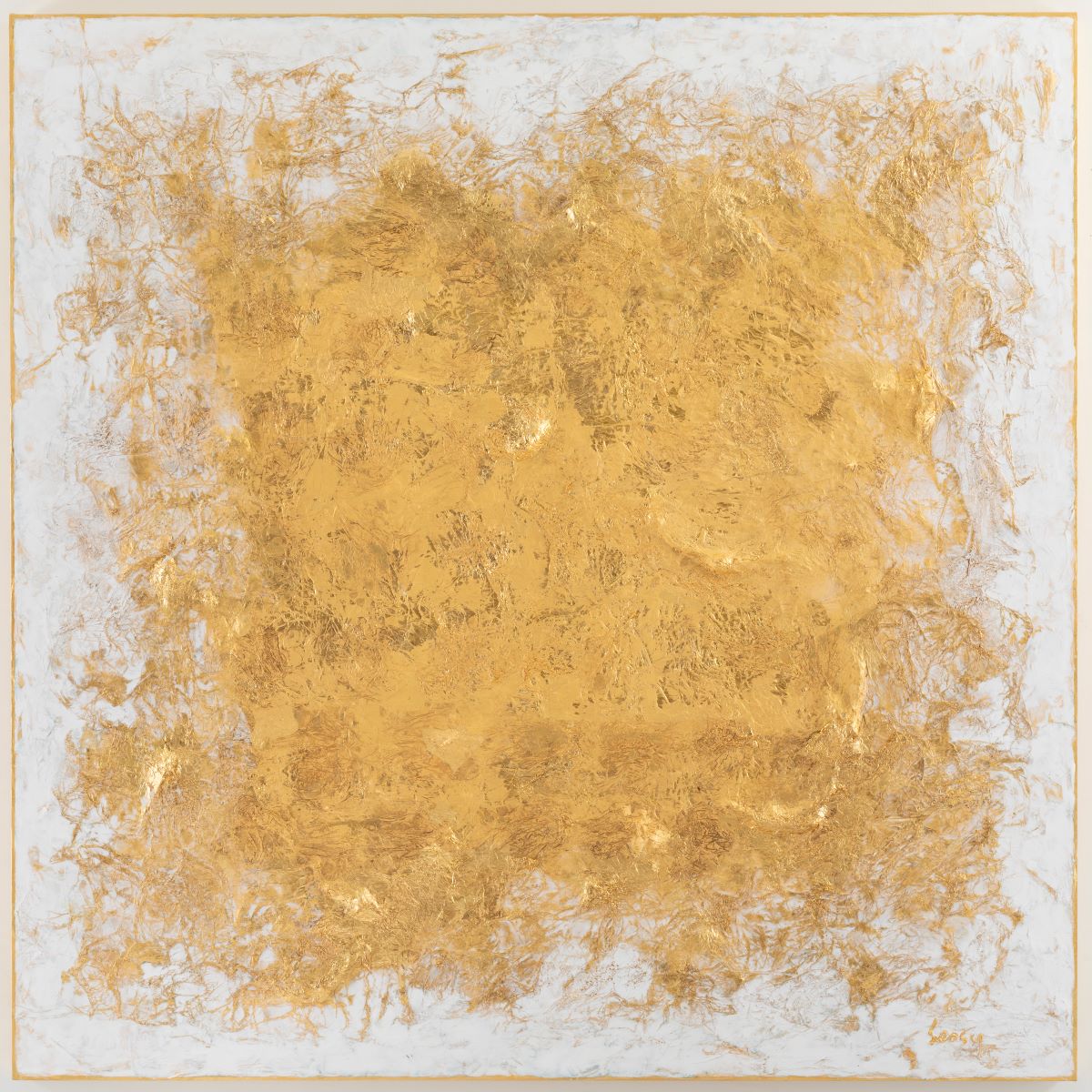
Seosy, The Labyrinth of Orign 181, mixed media with handmade Korean paper, 112x112cm, 2026


OMAE Gallery is honored to present Alchemy Of Light, a solo exhibition by artist  Soo-young Seo (SEOSY), running from September 1 through September 19, 2026. In an era dominated by weightless, transient digital imagery, SEOSY’s gold leaf abstractions summon back the essential powers of painting: the tactile sensation of matter, the meditative time of the hand, and the physical depth of the surface. Presenting her latest body of abstract work, the artist synthesizes traditional Korean materials—such as hanji (mulberry paper), stone powder, lacquer, and delicate gold leaf—into a dynamic relief-like structure where light and matter continuously converge.


Rather than treating gold as a symbol of status or mere ornamentation, SEOSY releases it as a living medium of light. Her surfaces, built through a rigorous process of layering, folding, pressing, and intentional fissuring, exist at the boundary between painting and sculpture. The resulting textures form a subtle relief that continuously transforms with the viewer’s physical movement and the shifting surrounding illumination. As light refracts through the delicate cracks and strata of the canvas, the artwork comes alive, offering a sensory and spatial encounter that engages both vision and touch.


In her critical essay, art critic Jeong-ju Choi analyzes SEOSY’s gold leaf abstraction by identifying four key aesthetic elements embedded within her work: The Surface of Origin, The Circular Cosmos, The Order of Fissures, and The Abyss of Light. Through these core dimensions, SEOSY masterfully bridges Eastern concepts of empty space and Western traditions of transcendent light, transforming noble gold into an interior, spiritual resonance. Alchemy Of Light invites viewers into a sanctuary of slow contemplation, urging us to move beyond passive observation and experience the profound depth emitted by the painting itself.

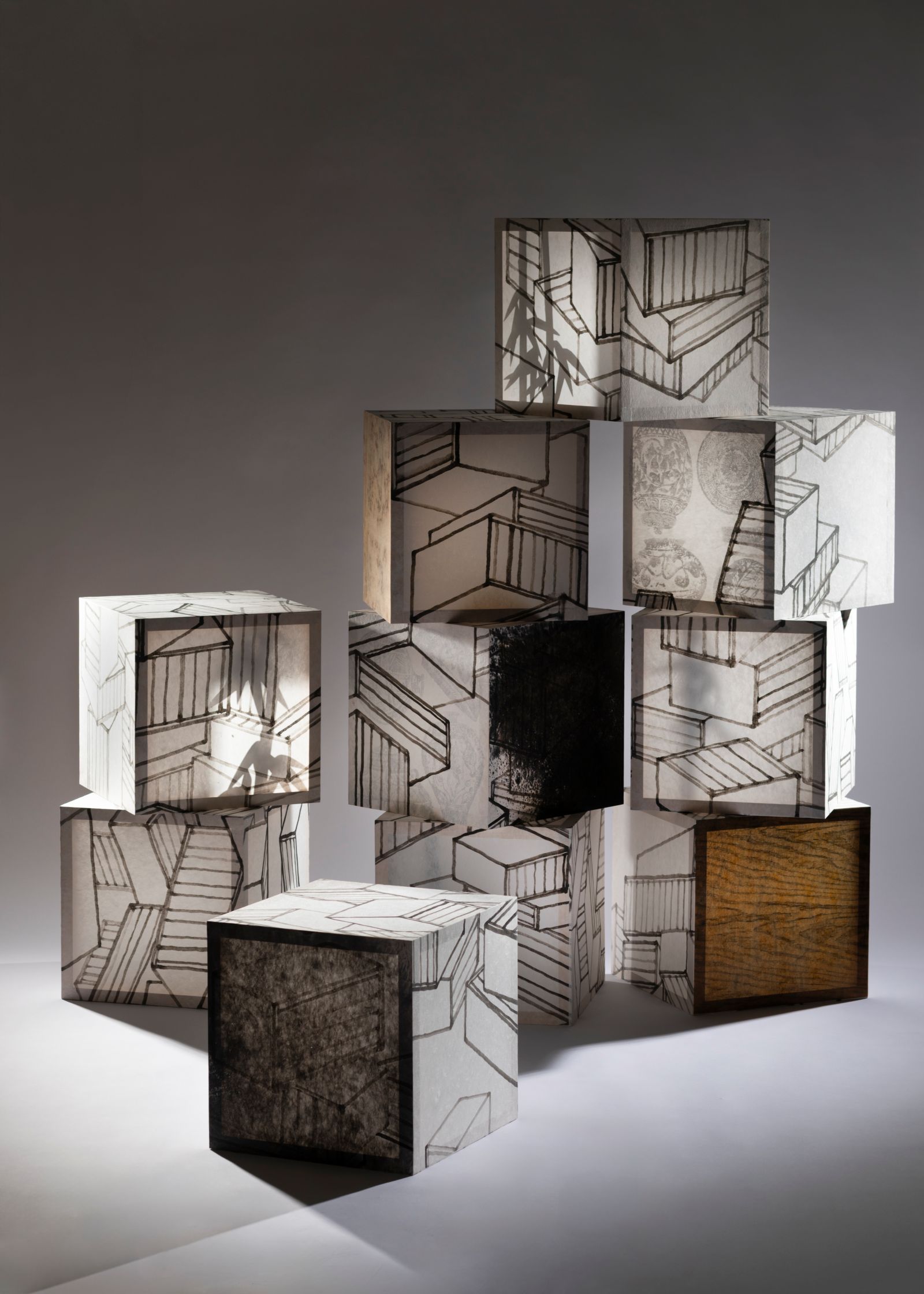
 

A Walk Through Time and Space: Layers of Thought


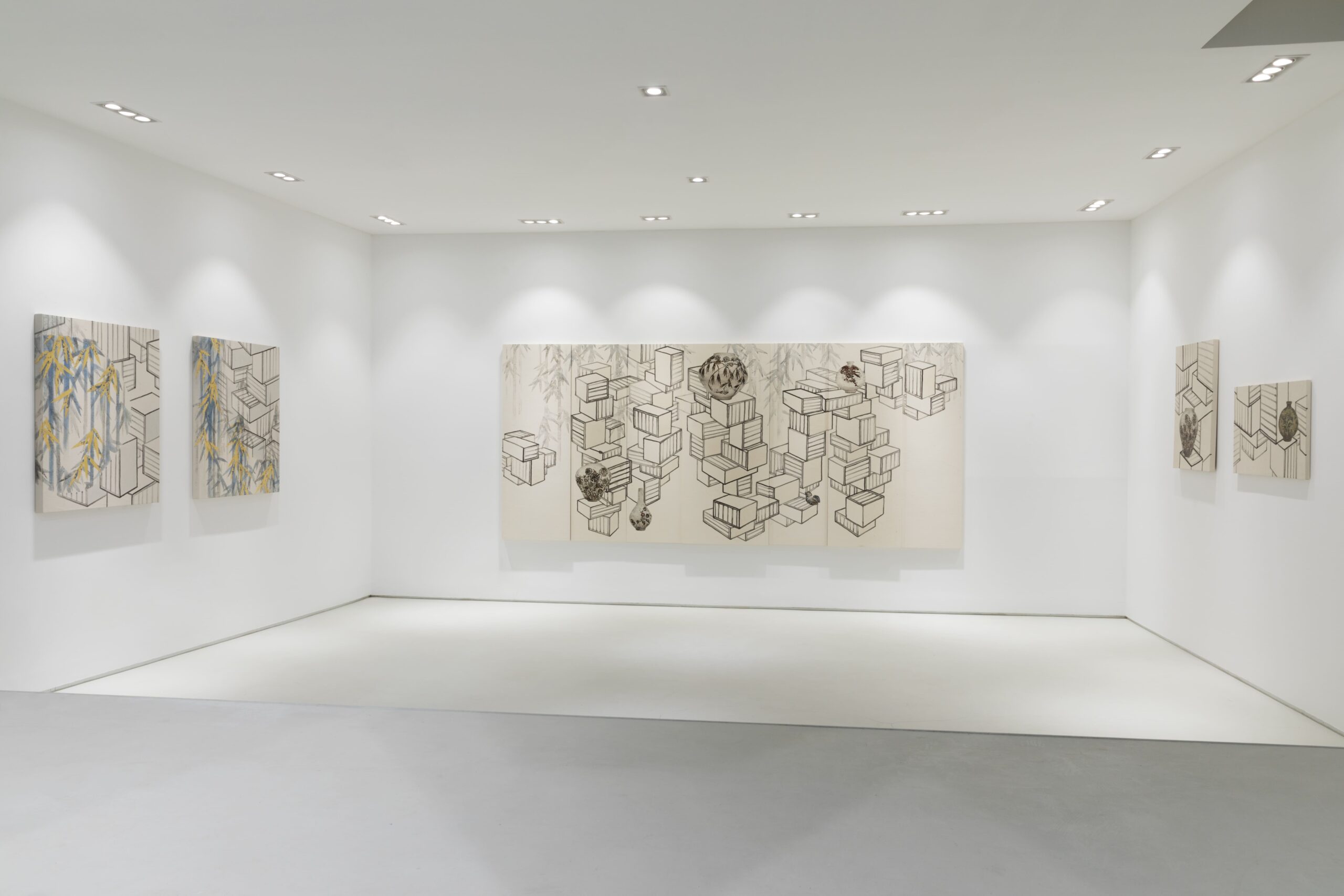
OMAE Gallery presents a solo exhibition by artist Kang-mi Kim, who offers an original reinterpretation of “Chaekgado,” a still-life painting style from the Joseon Dynasty that uses books as its subject, through a modern perspective.


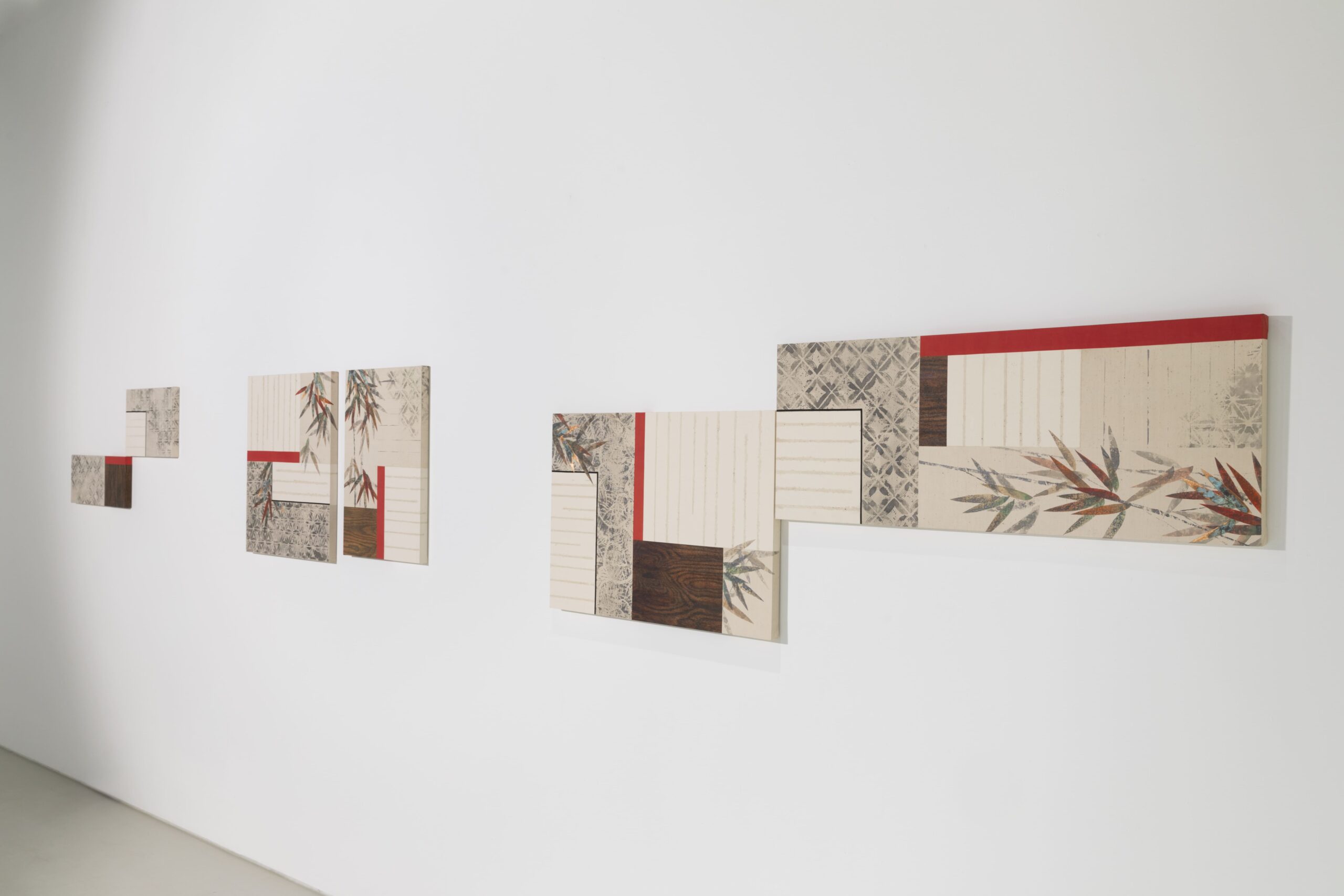
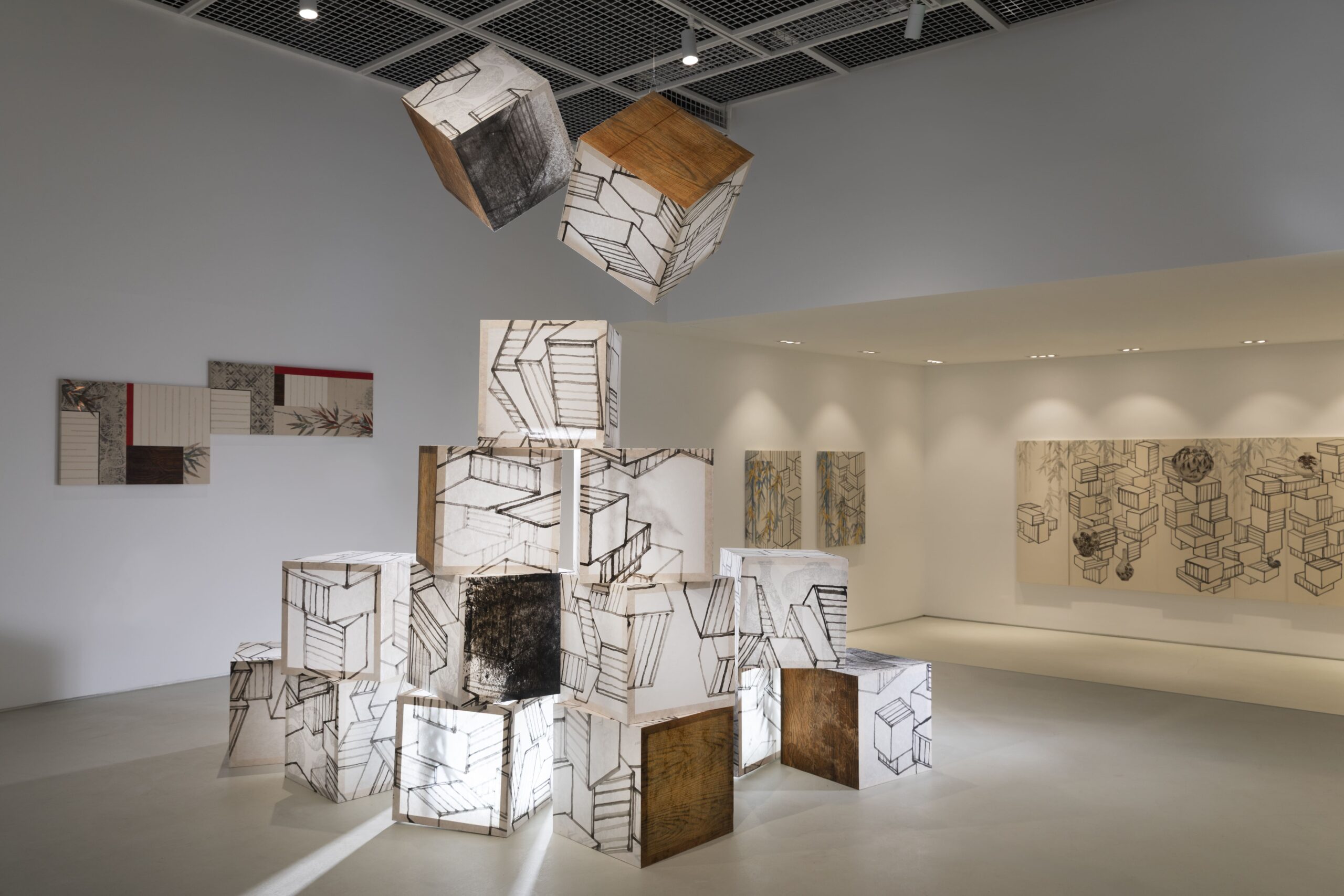
The artist focuses on the inherent formal power and geometric essence of the historical composition known as chaekgado. It removes the classical chaekgado’s characteristic intense colors, decorative patterns, and iconography symbolizing immortality, leaving only the book and its protective cover, and outlines them with delicate, dense ink lines. As a result, a refined ink-wash world unfolds, blending vertical and horizontal grids with a pure abstract and geometric rhythm reminiscent of modernist minimalism.


Kang-mi Kim’s work transcends the flatness of traditional painting and expands into three-dimensional space through an installation format that draws viewers into it. The hanging scrolls gently tilt downward, and by suspending the stacked books in midair as if they were a landscape, they break the conventional rectangular frame’s mold. On the floor, paper boxes wrapped in hanji paper hold drawings containing parts of the book, revealing a tactile presence that directly engages the gallery space. This spatial intervention encourages visitors to move through the space, and the physical presence of the visitors along with the shifting gaze reveal various perspectives, light, and time, dynamically bringing the work to life. What stabilizes the center of this linear composition is the three-dimensional bamboo structure attached to the wall.


In Eastern tradition, bamboo and books symbolized the ideals of the scholar, the voices of ancestors, and the pursuit of wisdom. However, in Kang-mi Kim’s artistic world, the striking black bamboo forms function as flexible “nodes” shaped through enduring hardship, expanding space into a place of introspective reflection. By combining the structural rhythm of chaekgado with the physical weight of bamboo, the artist bridges the aesthetic sensibility of Korean tradition with the language of modern space, offering serene contemplation and profound visual resonance.